

When the IB gets loud, sleep is usually the first thing your teen bargains away.
It starts innocently: “I’ll just finish this one problem set.” Then it becomes a pattern: midnight notes, 6 a.m. panic review, a new personality built on caffeine and willpower. The tricky part is that it can look like dedication. But in the IB, the brain doesn’t reward heroic exhaustion. It rewards recall, accuracy, and calm execution.
If you’re a parent reading this, you don’t need a lecture about discipline. You need a way to help your teen protect sleep without adding conflict, guilt, or another system they won’t use. That’s what this guide is for: practical, exam-season friendly habits that work inside real IB pressure.
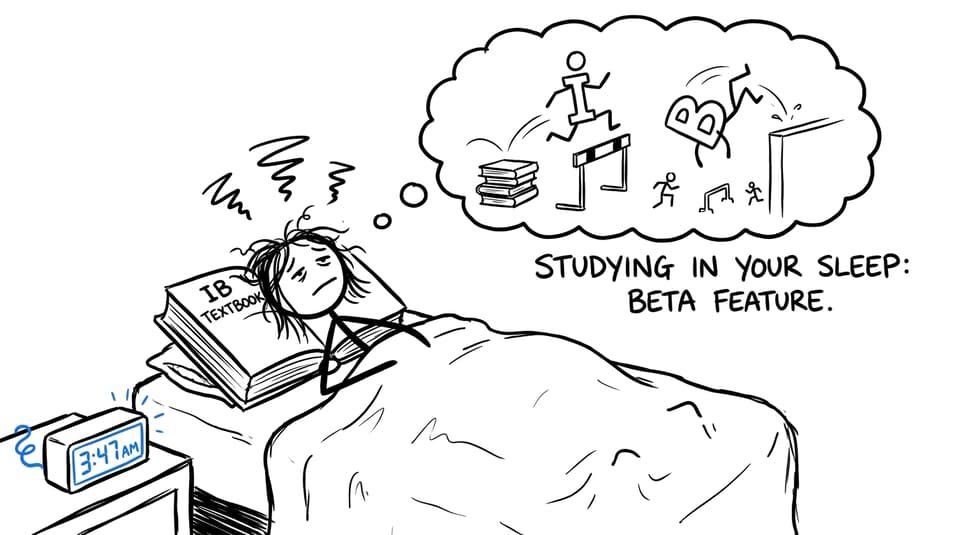
IB sleep checklist (save this for exam weeks)
-
Pick a fixed wake-up time and hold it steady.
-
Aim for 7--9 hours most nights (consistency beats perfection).
-
Set a hard stop for heavy study 60--90 minutes before bed.
-
Use late evenings only for light recall (flashcards, quick review), not new content.
-
Make the bedroom cool, dark, quiet, boring.
-
Keep phones out of bed (and ideally across the room).
-
Use a 5-minute “worry list” to park anxious thoughts.
If you want a ready-made routine built around those ideas, RevisionDojo’s guides on sleep and exam pacing are a strong start, especially Best Sleep Routine for IB Students (That Actually Works) and How Sleep Impacts IB Performance (and Your Final Grades).
Why sleep is a hidden advantage in IB
Teen brains typically need about 8--10 hours. During the IB, that matters more, not less, because your teen is asking their brain to do three expensive things at once: learn, retain, and perform on demand.
When sleep slips for days in a row, the cost shows up in predictable ways: slower recall, weaker focus, sharper mood swings, and more exam anxiety. Students often respond by studying longer, which steals more sleep, which worsens performance. It’s a loop.
A calmer loop looks like this: study earlier, stop on time, sleep, and wake up with a brain that can actually cash in the work.
What keeps IB students up at night (and what parents can do)
Late-night workload creep
In the IB, the work expands to fill the hours you give it. If there’s no “end,” your teen’s brain never gets the signal to power down.
Parent move: help them choose a visible finishing line. Not “finish everything.” Something like: “At 9:45, you switch to light review. At 10:30, screens off.” The point is not control. It’s predictability.
A structured plan helps here. Sharing one article can be less confrontational than giving advice, like How to Create a Balanced IB Study Schedule.
Screen-time that feels like “just a break”
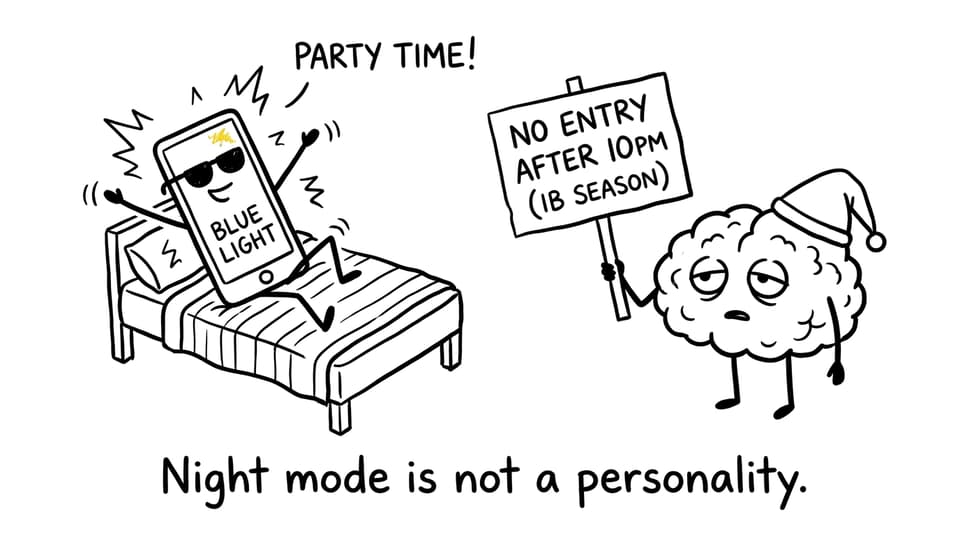
Phones at night are rarely restful. They keep the mind reactive and the body awake.
Parent move: don’t argue about “screen addiction.” Offer a trade: phone charges outside the room, and they choose a low-friction wind-down (shower, stretching, light reading, music). Make it easy.
Anxiety that hijacks bedtime
In IB season, students don’t just fear exams. They fear the feeling of not being ready.
Parent move: teach a “parking ritual.” A small notebook by the bed. Five lines:
-
What I’m worried about
-
What I can do tomorrow
-
What I can’t solve tonight
Then close it. This turns vague stress into contained information.
A parent-approved IB sleep plan that doesn’t start fights
Use “better study,” not “more study” language
Many teens hear “sleep more” as “care less.” Reframe it: sleep is part of training.
A great way to do this is to tighten the study loop earlier in the day. RevisionDojo is built for efficient, marks-focused work: Study Notes to clarify quickly, Questionbank to apply immediately, Flashcards for daily recall, and AI Chat to get unstuck without spiraling.
If your teen tends to grind without direction, share How to Study for IB Exams Without Burning Out or Why Rest Is Productive in IB Exam Season.
Replace all-nighters with “confidence loops”
All-nighters feel productive because they’re dramatic. But for IB performance, a smaller routine wins more often:
-
15--25 minutes: Flashcards (active recall)
-
20--30 minutes: a small targeted Questionbank set
-
10 minutes: review mistakes and stop
This creates the feeling of readiness without stealing tomorrow’s brain.
For exam-week pacing, IB Exam Night Checklist: 15 Things Before Sleeping is a practical anchor.
Make mornings the “light leverage” time
If your teen insists they need more hours, suggest moving the extra work to morning. The brain is often cleaner then, and it doesn’t sabotage sleep.
Parent move: help remove friction the night before (bag packed, clothes ready, breakfast simple). Small logistics reduce late-night stress.
Use realistic practice early enough to sleep
A common reason students stay up is uncertainty: “I don’t know what the exam will feel like.”
RevisionDojo reduces that uncertainty with Mock Exams, Predicted Papers, and Grading tools that make feedback immediate and specific. When students know what to fix, they stop doom-studying.
Two good reads to guide the final stretch are IB: The Last 2 Weeks Before Exams (What Matters) and How to Stay Sane During IB Exam Season.
Closing: the IB doesn’t reward exhaustion
The IB can make sleep feel optional. But the students who finish strong usually aren’t the ones who stayed up the latest. They’re the ones who built repeatable days: focused work, honest practice, clear stopping points, and real recovery.
If you want to help your teen manage sleep during IB exams, don’t try to micromanage. Help them build a system that ends earlier. RevisionDojo makes that system simpler: Questionbank for targeted practice, Study Notes for fast clarity, Flashcards for active recall, AI Chat when they’re stuck, plus Mock Exams, Predicted Papers, Grading tools, a Coursework Library, and Tutors when the pressure peaks. Better structure in the afternoon is what buys sleep at night.