

There’s a specific look an IB student gets at 9:47 p.m. It’s not panic, exactly. It’s the quiet conviction that if they stop, everything falls apart.
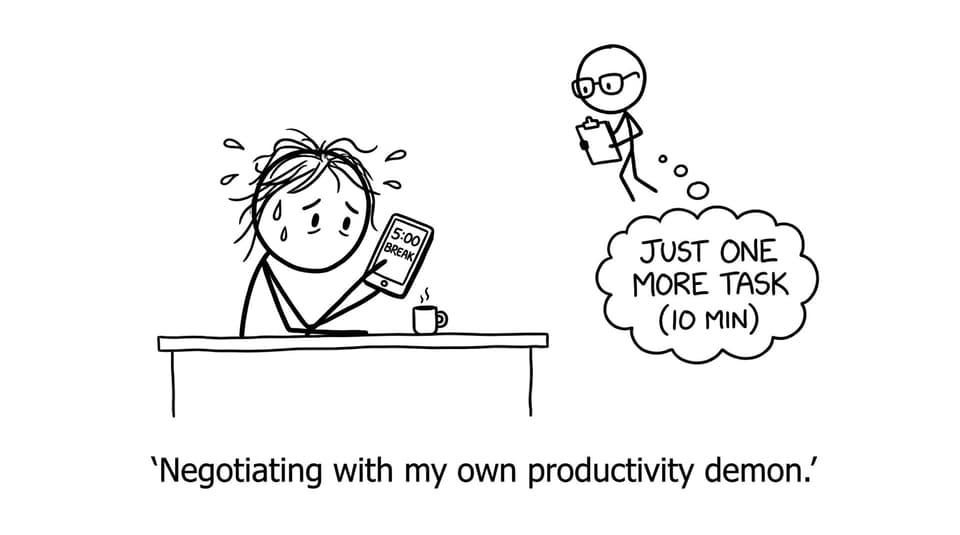
Maybe you’ve seen it: your teen closes their laptop, stands up… then sits back down two seconds later, guilty for even considering a break. In IB exam season, rest can feel like stealing time from the future.
But the truth is calmer than the guilt suggests: healthy breaks are not the opposite of progress in IB. They’re part of how progress actually sticks.
A quick checklist to make IB breaks feel “earned”
Use this when your teen is stuck in the “I can’t stop” loop:
-
Keep breaks short, timed, and predictable (5-15 minutes).
-
Name breaks as a study tool, not a reward.
-
Choose break activities that reset the body (movement, food, water, sunlight).
-
Separate “break” from “scroll” (phones can turn a pause into a sinkhole).
-
Praise systems (time blocks, practice loops) instead of praising long hours.
If you want a reference point for what effective breaks look like during long revision, this guide is a strong anchor: How to Use Breaks Effectively During Long Study Sessions.
Why IB students feel guilty about taking breaks
Guilt is often a logic problem disguised as an emotion. In IB, your teen’s brain runs a simple equation:
More time studying = better grades.
It feels sensible, but it’s incomplete. Here’s what gets left out:
-
The workload is endless by design. EE, IAs, CAS, subject content, and exam technique can expand to fill every evening.
-
Comparisons are constant. Someone is always “doing more,” or at least posting like they are.
-
Perfectionism confuses caution with control. A break feels risky, so avoidance looks like discipline.
-
They’ve been burned by procrastination before. So the brain labels all pauses as dangerous.
If your teen is also struggling with stress spikes close to exams, pair breaks with calming routines from: How to Prevent Panic Attacks During IB Exam Season.
How parents can encourage healthy IB breaks without triggering guilt
Use language that makes breaks part of IB performance
Try swapping:
- “Take time off.”
For:
- “Take a recovery block so the next IB session is higher quality.”
Small reframes matter because IB students often fear that rest means they “weren’t serious.” You’re not asking them to care less. You’re helping them train like someone who cares a lot.
Make breaks time-bound, not vague
Guilt loves ambiguity. A break with no edges feels like falling.
Suggest a simple rhythm:
-
25 minutes focused work
-
5 minutes break
-
After 4 cycles, a longer 20-30 minute reset
This is also why structured methods feel so good to IB students: the rules remove negotiation. If your teen likes concrete systems, this is a useful read: How to Revise for IB Math Using the Pomodoro Technique.
Help them “close the loop” before the break
One reason IB students dread breaks is that they pause mid-confusion. Encourage a tiny end-of-block ritual:
-
Write the next step on a sticky note (one sentence).
-
Save the file and close tabs.
-
Decide the first task after the break.
That way the break isn’t a cliff. It’s a bridge.
RevisionDojo supports this kind of loop naturally: quick clarity with Study Notes, practice with Questionbank, retention with Flashcards, and quick fixes via AI Chat when they’re stuck. If your teen needs a broader set of study efficiencies, point them to: IB Revision Hacks: Quick Tips for Efficient Studying.
Offer “break menus” to reduce decision fatigue
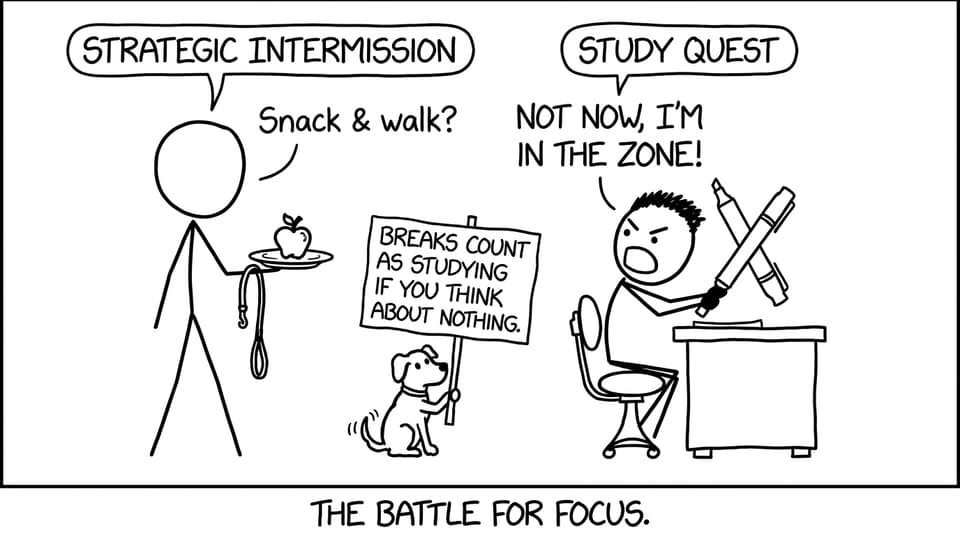
When a teen is tired, choosing a break can feel like another task. Create a short list:
-
7-minute walk
-
refill water + quick snack
-
stretch + wash face
-
sit outside for sunlight
-
10-minute shower reset
Avoid anything that easily spills over time (endless videos, social media). If tech is the problem, this is worth reading together: IB Tech Boundaries: Use Technology Without Losing Control.
Praise efficiency, not endurance
If you compliment “how long they studied,” you accidentally teach that exhaustion is evidence.
Instead, praise:
-
“You did a timed set and reviewed mistakes.”
-
“You used a break, then came back on time.”
-
“You stopped when your focus dropped and restarted cleanly.”
That’s the mindset behind high-performing IB routines, and it’s echoed in: What Are Healthy Study Habits for Balancing IB and Life?.
What to avoid saying (even if it’s well-meant)
-
“Other students study longer than you.” (Comparison fuels guilt.)
-
“Just push through.” (Sometimes the brain can’t.)
-
“If you really wanted a 7, you’d…” (Turns rest into a moral failure.)
-
“Take a break” with no structure. (Vagueness creates anxiety.)
If your teen is nearing exams and feels like everything is urgent, these two planning posts can reduce the background noise:
Closing: make breaks part of the IB plan, not a pause from it
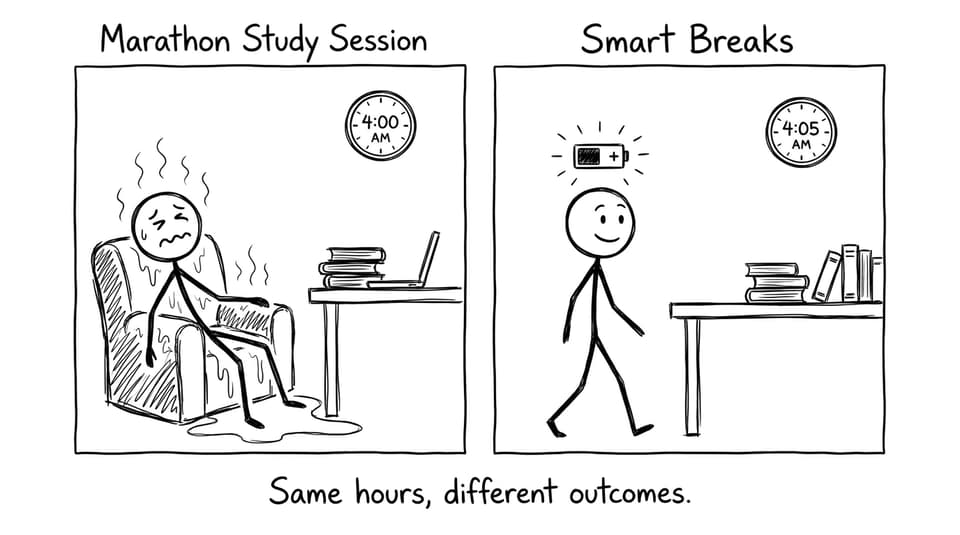
IB success rarely comes from heroic, endless evenings. It comes from repeatable cycles: focus, practise, review, recover, return.
If you want your teen to take healthy breaks without guilt, give the break a job. Time it. Name it. Attach it to a clear next step.
And when they’re ready to study with less chaos, RevisionDojo can be their home base: Study Notes for fast clarity, Questionbank for exam-style practice, Flashcards for daily recall, AI Chat for quick unblocking, plus Grading tools, Predicted Papers, Mock Exams, a Coursework Library, and Tutors when feedback needs to be specific. Start with one small improvement today: one timed study block, one timed break, then one clean restart. That’s how confidence compounds in IB.