


When profits look fine but the bank balance panics
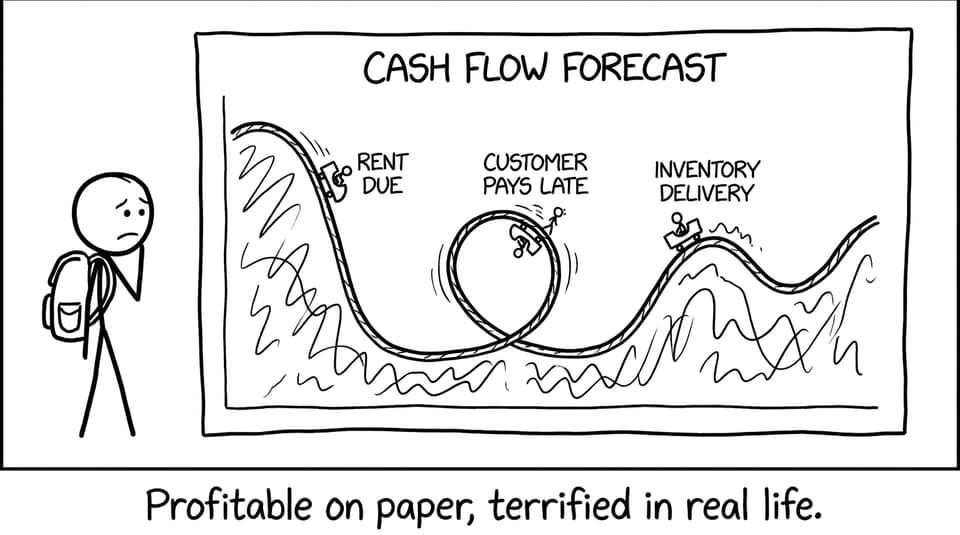
In IB Business Management, cash flow is the quiet force that decides whether a business can breathe. You can be “profitable” on paper and still fail on Friday because wages are due on Monday and customers pay late next month. That gap between earning money and having money is where cash shortages live.
If you can explain that story clearly in an exam, you are already ahead. And if you can add strategies that improve cash flow without damaging long-term performance, you are writing like a top-band student.
Cash flow checklist (fast exam-ready overview)
Use this quick checklist for IB Business Management data response or evaluation questions:
-
Speed up cash inflows (get paid sooner)
-
Slow down cash outflows (pay later, wisely)
-
Reduce cash tied up in working capital (especially inventory)
-
Forecast cash flow so shortages are visible early
-
Add stability with diversified revenue
-
Use short-term finance as a bridge, not a lifestyle
For the syllabus framing, start with RevisionDojo’s core cash flow hub: 3.7 Cash flow.
Strategies businesses use to improve cash flow (and how to write them)
Speed up customer payments (inflows)
A classic IB Business Management move is improving receivables. Businesses can invoice immediately, tighten credit terms, and follow up consistently. Some offer small discounts for early payment or make digital payment frictionless (the easier it is to pay, the sooner cash arrives). In exams, link this to lower liquidity risk and fewer overdraft costs.
RevisionDojo helps you anchor the concept difference that examiners love: Difference between profit and cash flow.
Control inventory levels (free trapped cash)
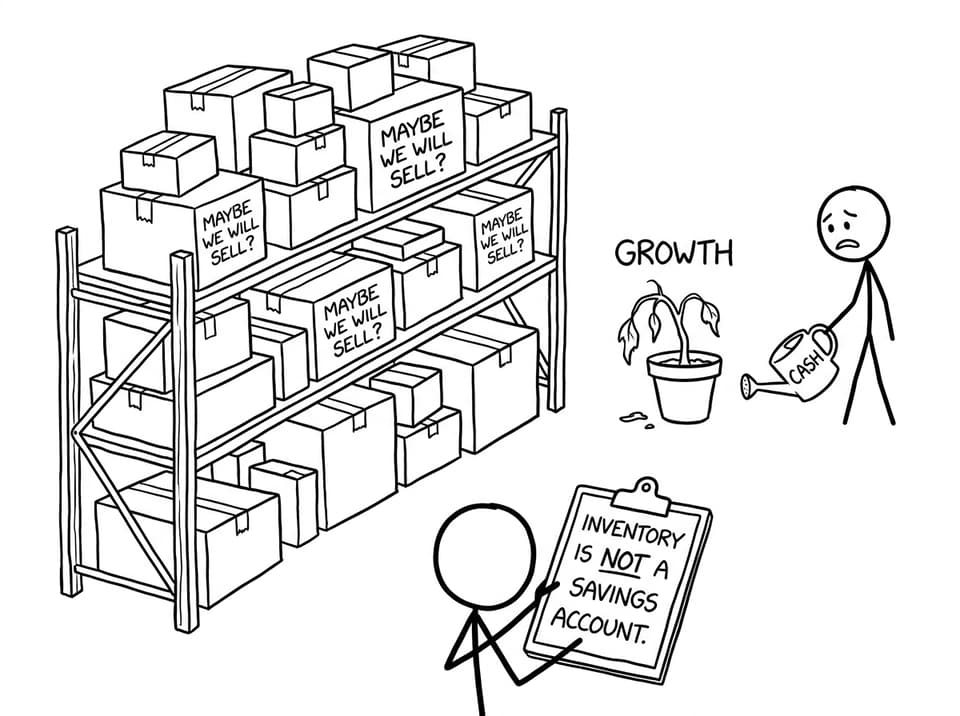
Inventory is useful, but it can quietly swallow cash. Too much stock locks money into unsold goods; too little creates stock-outs and lost sales. Better demand forecasting, selling slow-moving items, and using just-in-time methods (where feasible) all improve cash flow.
To connect this to liquidity performance, revise: Strategies to improve liquidity ratios and Liquidity ratios notes.
Reduce unnecessary expenses (outflows)
Cost control improves cash flow because less cash leaves the business each period. Students often write “cut costs” and stop there. Better: be specific. Negotiate supplier prices, reduce waste in operations, delay non-essential upgrades, or streamline staffing patterns. In evaluation, note the trade-off: cutting too far can reduce quality, motivation, or long-term growth.
Forecast cash flow to spot shortages early
Cash flow forecasting turns panic into planning. A forecast estimates inflows and outflows so managers can see when the closing balance might drop too low and respond early (delay purchases, chase debts, arrange finance). In IB Business Management, always state that forecasts reduce uncertainty but depend on assumptions.
Use RevisionDojo’s focused notes: Cash flow forecasts.
Manage credit terms with suppliers (slow outflows)
Businesses can negotiate longer payment periods with suppliers to keep cash longer. This is especially helpful when customers pay later than suppliers demand. In exam answers, balance it: longer terms improve cash flow, but may harm supplier relationships or remove early-payment discounts.

For a syllabus-aligned list you can quote and apply, revise: Strategies for dealing with cash flow problems.
Use leasing and short-term finance carefully
Leasing spreads payments over time, protecting cash flow versus a large one-off purchase. Short-term finance (like an overdraft) can bridge temporary gaps, but it adds interest costs and risk if the gap becomes permanent. A strong IB Business Management evaluation explains when finance is a tactical fix versus evidence of deeper operational problems.
How to turn these ideas into exam marks (RevisionDojo workflow)
If you want these cash flow points to show up under timed pressure, use RevisionDojo like a routine, not a library:
-
Drill exam-style practice in the Cash flow Questionbank
-
Lock in definitions with Flashcards for 3.7 Cash flow
-
Clarify steps with Lessons for 3.7 Cash flow
-
Use AI Chat and Grading tools to tighten evaluation, then build Mock Exams and use Predicted Papers for realistic practice (all inside IB Business Management resources)
Final takeaway
Cash shortages are rarely dramatic at first. They feel like small delays, slightly higher inventory, one more month of “we’ll pay next week,” until the business runs out of room. In IB Business Management, the strongest students show how to improve cash flow through faster inflows, smarter outflows, forecasting, and sensible financing.
Build those skills with RevisionDojo’s Study Notes, Questionbank, Flashcards, AI Chat, Grading tools, Predicted Papers, Mock Exams, Coursework Library, and Tutors, and turn cash flow from a scary topic into easy marks.