

When “fair” stops being a word and becomes a decision (MYP)
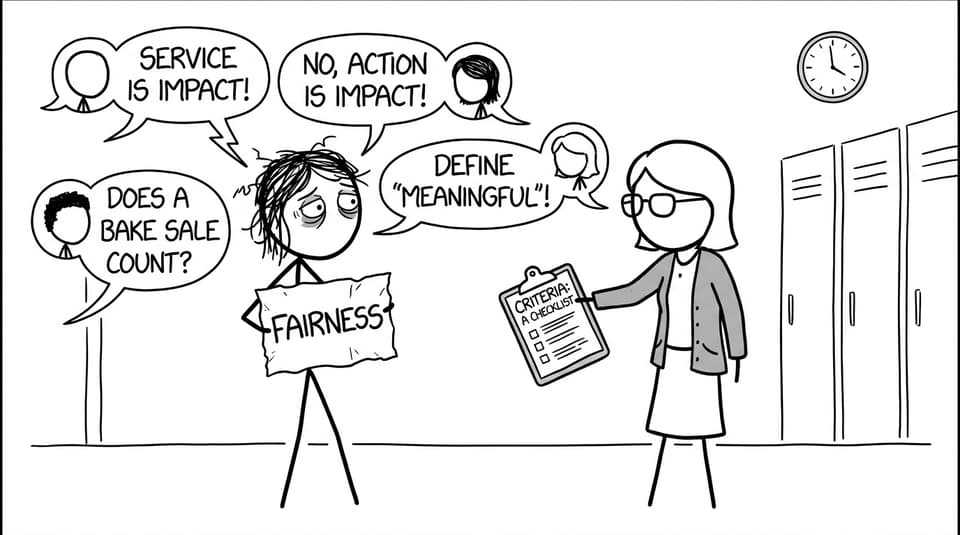
In the MYP, “fairness” is one of those words everyone agrees with until you have to act on it.
It shows up the moment your group chooses a charity, designs a campaign, or writes a statement of inquiry. Someone asks, “But who decides what’s fair?” Another person says, “Can we measure impact?” And suddenly your neat plan turns into a real-world problem, with real trade-offs.
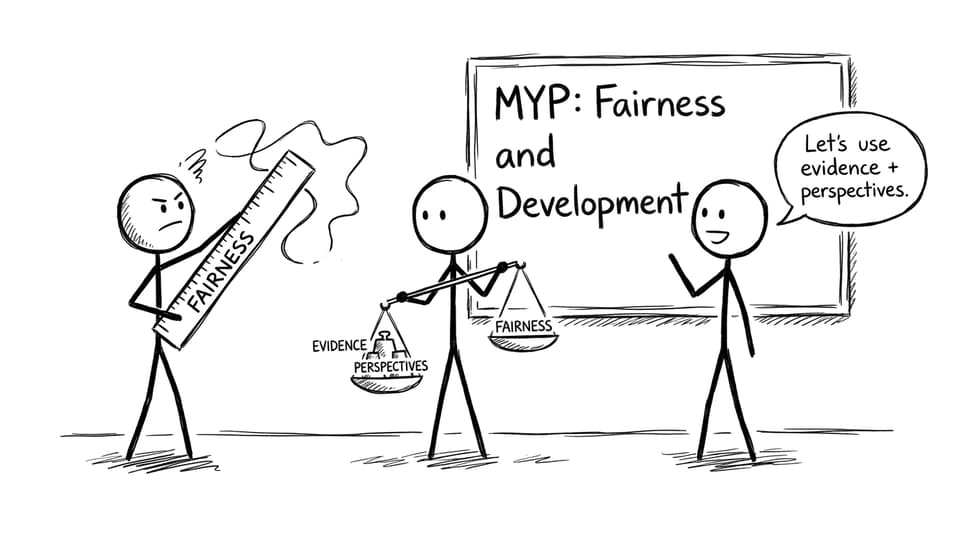
That tension is exactly why MYP uses the Global Context Fairness and Development. It pushes you to connect learning to justice, rights, access, and human dignity, while still doing the student thing: producing evidence, reflecting clearly, and showing skills under assessment.
Quick checklist: what makes a strong MYP fairness project?
Use this fast checklist before you commit to any MYP social justice idea:
-
One clear issue (not “inequality,” but a specific inequality)
-
A defined community (who is affected, and how do you know?)
-
A measurable change (attendance, feedback, awareness shift, resources delivered)
-
Evidence you can collect weekly (photos, logs, surveys, drafts, data)
-
A reflection loop (what changed in your thinking, not just what you did)
-
A clean Global Context link to Fairness and Development (justice, equity, rights, access)
If your context link still sounds like a slogan, read MYP Personal Project Global Contexts Explained and borrow its “why sentence” method.
What “Fairness and Development” means in MYP (and why it matters)
Fairness and Development is one of the six MYP Global Contexts. It invites you to ask a deceptively simple question: what are the consequences of our common humanity?
In practice, this context points you toward:
-
Equal opportunities and access to resources
-
Rights, justice, and human dignity
-
Power, privilege, and social systems
-
Ethical development and moral responsibility
This matters because MYP isn’t only about knowing content. It’s about explaining systems, evaluating choices, and communicating a reasoned position. If you’re revising Individuals and Societies, you’ll see this skill-focus clearly in MYP Individuals and Societies Criteria Explained.
Social justice projects that actually fit MYP subjects
A good MYP Fairness and Development project doesn’t float above schoolwork. It borrows subject tools and aims them at a real issue.
Individuals and Societies: turning inequality into an argument
This is the most direct home for Fairness and Development in MYP.
Project angles that work:
-
Trade and fairness: run a short awareness campaign comparing “ethical” labels, and evaluate what they can and cannot guarantee. Use Fair trade Notes to keep your definitions sharp.
-
Development choices: create a simple explainer for younger students on the difference between economic growth and development, with case indicators and limitations. Support it with Development strategies Notes and Development indicators Notes.
-
Social movements: build a mini glossary + timeline wall (digital or physical) for your class, based on one movement’s goals, tactics, and outcomes. Start with Social justice movements Notes.
If you struggle with writing structure, use How to Structure High-Scoring MYP Individuals and Societies Essays as your blueprint. It’s the difference between “I researched a lot” and “I argued well.”
Language and Literature: fairness through voice
In MYP, literature is where “fairness” becomes personal. Your project can focus on perspective, representation, and whose stories get heard.
High-yield ideas:
-
Write and perform a short spoken-word piece based on interview data (with consent and anonymity).
-
Create a set of editorials or speeches for different stakeholders in one local issue (students, administrators, community).
-
Build a “misinformation vs evidence” mini guide on a justice topic, then test it on peers and revise.
The trick is to treat writing like evidence: drafts, peer feedback, revisions, and a reflection trail.
Sciences and Design: equity meets innovation
Innovation can reduce inequality, or widen it. That ethical tension is perfect for Fairness and Development in MYP.
Try:
-
Prototype an accessibility improvement at school (signage, navigation, digital readability), test it with users, iterate.
-
Design a low-cost “how to verify sources” flowchart for science claims linked to health and access.
-
Run a small study on barriers to participation in a school activity (cost, time, transport), then propose and evaluate solutions.
Arts: advocacy without losing complexity
Art projects score when they are specific, researched, and intentional.
Ideas:
-
Photo series on “access” in your community: ramps, language, transport, pricing.
-
A short theatre scene showing how power works in everyday dialogue.
-
A poster set that visualises one statistic about inequality, paired with a written artist statement explaining choices.
Five MYP social justice project ideas you can start this week
These are realistic MYP projects that produce evidence quickly:
-
Local access audit: map one accessibility barrier in school, propose fixes, collect before/after feedback.
-
Peer tutoring micro-program: focus on one unit, track attendance and confidence surveys.
-
Fair trade awareness sprint: run a 2-week campaign with a quiz, then evaluate what changed.
-
Environmental justice explainer: show how one climate impact hits low-income communities harder, using credible sources.
-
Digital advocacy blog: publish 4 posts with citations, comments analysis, and a reflection on ethical communication.
For more structured inspiration, combine Community Project Ideas for MYP Year 3 and 4 Students with How to Guide MYP Community Project Planning.
Reflection and assessment: the part that saves your grade
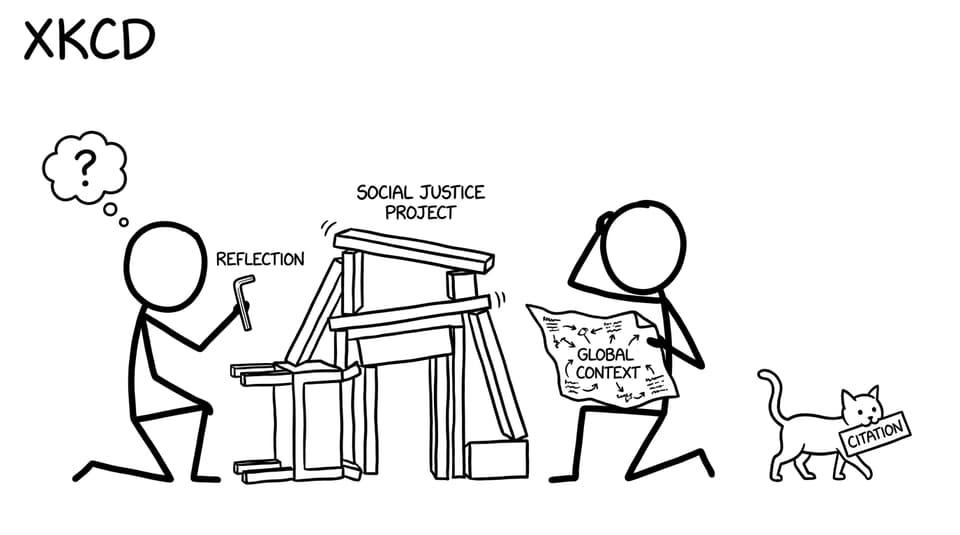
In MYP, reflection is not a diary. It’s proof of thinking.
Try these reflection prompts:
-
What did I believe at the start, and what evidence complicated it?
-
Where did power show up in my project (decision-making, voice, access)?
-
What did my data/feedback force me to change?
-
If my action helped one group, who might it have excluded?
If you’re doing Service as Action, use Designing Effective MYP Service as Action Programs to keep your inquiry-action-reflection cycle tight.
How RevisionDojo helps you turn MYP projects into exam readiness
The quiet benefit of a Fairness and Development project is that it trains the exact MYP skills your exams reward: research, explanation, evaluation, and communication.
RevisionDojo makes that easier to do consistently:
-
Study Notes to lock in key definitions and case examples fast
-
Flashcards to memorise terms like equity, development indicators, and rights language
-
Questionbank to practise exam-style reasoning in Individuals and Societies
-
AI Chat to tighten a statement of inquiry or clarify an argument without rewriting your voice
-
Grading tools to check whether your writing actually matches the criteria
-
Mock Exams and Predicted Papers to build timing and confidence under pressure
-
Coursework Library for models of clear structure and reflection
-
Tutors when you need feedback that’s specific, not generic
Start exploring the full MYP hub here: Middle Years Program (MYP) on RevisionDojo.
Closing: fairness is a skill, not a slogan (MYP)
Fairness and Development in the MYP is a reminder that education isn’t only about being right. It’s about seeing what your choices do to other people, and proving your thinking with evidence.
Build a project that is small enough to finish, focused enough to measure, and honest enough to reflect on. Then use RevisionDojo to turn that work into exam strength through Study Notes, Flashcards, Questionbank practice, Grading tools, and Mock Exams.
When your MYP work connects justice to clear reasoning, you don’t just learn about fairness. You learn how to build it.