

Introduction: the comment that stung (and the one that saved you)
Two minutes after you swap drafts, a classmate circles a paragraph and writes: “unclear.” No explanation. No next step. Just a small word that lands like a verdict.
That moment is familiar in IB. Feedback shows up constantly, but it often feels like weather: something that happens to you. The shift that changes everything is simple: treat peer feedback as a skill you can run on purpose, not a judgment you endure.
When you take ownership of peer feedback in IB, you don’t just collect opinions. You build a repeatable system: ask better questions, get clearer answers, and turn comments into marks. That system matters most close to exams, when every week needs to translate into measurable improvement.

A quick IB peer feedback checklist (save this)
Use this as your default peer feedback routine in IB:
-
Choose one goal for the session (clarity, evidence, structure, evaluation, command terms).
-
Give your peer criteria-based prompts, not “any thoughts?”
-
Ask for two upgrades and one risk (what might an examiner dislike?).
-
Convert feedback into a 3-step edit plan within 10 minutes.
-
Track patterns across weeks (recurring issues are your real syllabus).
If you want peer feedback to be more than vibes, pair it with exam-style practice from RevisionDojo’s Questionbank so you can test whether the improvements actually hold under pressure.
Why IB peer feedback matters more than you think
Peer feedback works because it creates a mirror you can’t hold alone. In IB, your biggest threats are rarely “not studying enough.” They’re blind spots: unclear logic, weak evaluation, missing subject language, or an argument that makes sense only in your head.
Peer feedback helps you build two exam-winning abilities:
-
Evaluative judgment: recognizing what “good” looks like in a real IB response.
-
Transfer: applying what you notice in someone else’s work to your own answers.
If you’re writing coursework, this becomes even more powerful. A single peer can catch a mismatch between your claims and your evidence weeks before it costs marks. RevisionDojo’s guide on how to improve your IA through peer feedback connects the same idea to draft cycles and revision timing.
The mindset shift: from “being evaluated” to “running an experiment”
Most students dislike peer feedback for one reason: it feels like social grading. Someone else has an opinion, and you have to absorb it politely.
Try a more useful IB frame:
-
Your draft is a hypothesis.
-
Feedback is data.
-
Your rewrite is the next iteration.
This mindset keeps you calm. It also makes you selective. Ownership doesn’t mean applying every suggestion. Ownership means deciding, with reasons, what will raise performance.
When you want fast clarity on whether a suggestion matches examiner expectations, use RevisionDojo AI Chat to sanity-check wording, command terms, and structure, then lock the corrected idea into daily recall via Flashcards.
How to ask for peer feedback that actually helps (IB prompts)
Weak request: “Can you check my work?”
Strong IB request: “Can you check this specific skill against this criterion and give me a next step?”
Try these prompts depending on what you’re preparing for:
For essays (Humanities, English, TOK-style writing)
-
“Where does my line of argument stop being convincing, and why?”
-
“Which paragraph is most likely to lose marks for being descriptive?”
-
“Can you underline my evaluation sentences and tell me if they’re real evaluation?”
If you’re revising structure, pull a relevant section from Study Notes and ask your peer to check whether your answer matches the expected shape.
For sciences and math-style responses
-
“Which step in my working would an examiner likely not award?”
-
“Do I state the assumption/units/uncertainty clearly enough?”
-
“What’s the fastest alternative method?”
Then run targeted practice on the same skill using the RevisionDojo IB Question Bank guide so feedback turns into repetition, not a one-off fix.
How to give better IB peer feedback (without becoming harsh)
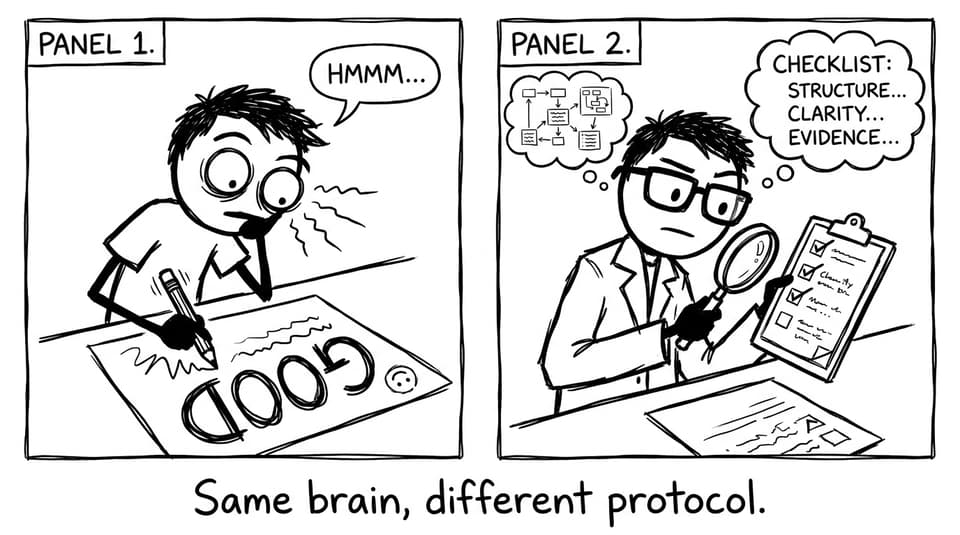
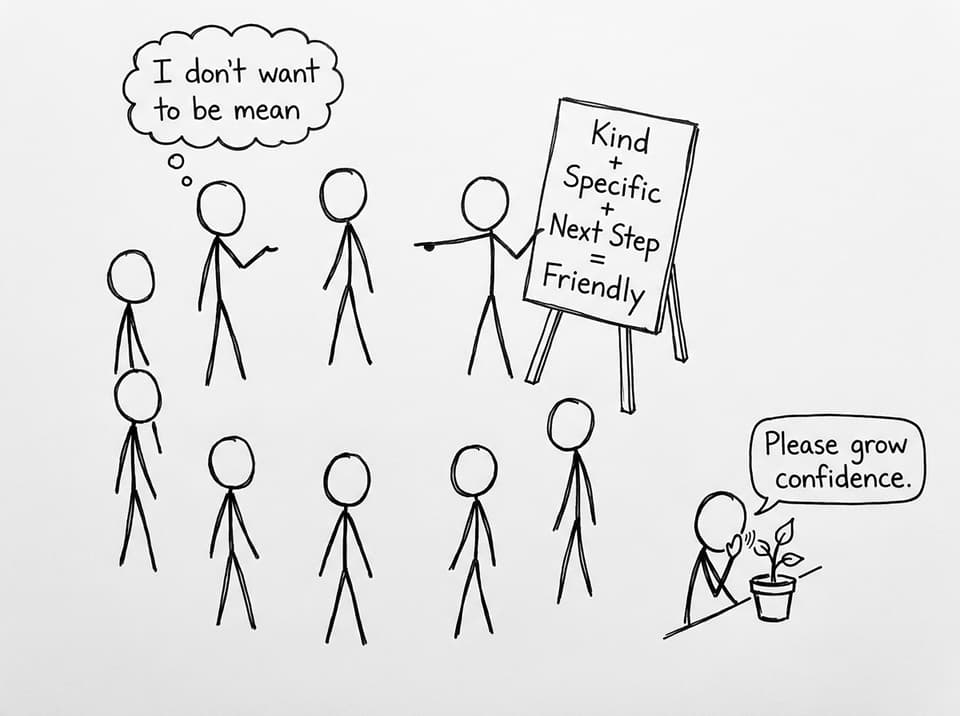
Your job is not to be nice. Your job is to be useful. In IB, useful feedback has three properties: specific, criterion-aware, and actionable.
A simple framework:
Notice (describe, don’t judge)
Say what you see: “Your topic sentence claims X, but the evidence below supports Y.”
Name the effect
Connect it to marks: “This reads as description, so it might cap your analysis level.”
Next step
Give an upgrade: “Add one sentence explaining why the evidence proves X, using the key term from the syllabus.”
If you’re unsure what “mark-worthy” language looks like, open a high-scoring example in the Coursework Library and compare sentence patterns. That’s a fast way to calibrate your feedback to IB expectations.
Structures that make IB peer feedback feel safe (and effective)
Peer feedback fails when it’s unstructured. It thrives when the session has guardrails. Here are three that work well for IB students preparing for exams:
Two rounds, two lenses
-
Round 1: clarity (does it make sense?)
-
Round 2: criteria (does it score?)
This stops the common problem where you argue about opinions instead of marks.
The “3 comment limit” rule
Each peer must give:
-
1 strength that should be kept
-
1 weakness that likely costs marks
-
1 specific rewrite suggestion
Less volume, more quality.
Anonymous micro-feedback (when nerves are high)
If your class is tense, collect comments anonymously for the first few sessions. Psychological safety matters in IB because students are often juggling coursework, predicted grades, and exam pressure simultaneously.
When you want to simulate exam pressure after improving a draft, use Predicted Papers or a timed section from a subject page like IB Biology Resources. Then bring the resulting responses back into your peer feedback loop.
Turning IB peer feedback into marks: the ownership loop
Ownership is the part most students skip. They read comments, feel something, and move on.
Instead, run this loop every time:
Translate comments into tasks
Bad: “Needs more evaluation.”
Good: “Add one limitation + one implication sentence in paragraph 3 using key term X.”
Choose what to apply (and justify what you ignore)
In IB, not all feedback is equal. If a peer suggests a change that conflicts with the rubric, you’re allowed to decline. Write one line: “Not applying because it reduces focus / breaks the command term / adds description.”
Re-test under exam conditions
After edits, do 10-15 minutes of timed practice on the same skill using the Questionbank. Improvement that survives timing is real improvement.
If you’re working on coursework drafts, RevisionDojo’s IB Coursework Grader and its grading tools can help you convert peer feedback into criterion-by-criterion upgrades, faster and with less guesswork.
Closing: make peer feedback your unfair advantage in IB
In IB, the students who improve fastest aren’t always the ones who work the longest. They’re the ones who build tighter loops: attempt, feedback, revise, re-attempt.
If you take ownership of peer feedback, you stop waiting for the perfect comment and start designing the process that produces useful ones. Then you turn those comments into edits, and those edits into marks.
When you’re ready to run that loop at full speed, RevisionDojo brings the full toolkit together: Study Notes, Flashcards, Questionbank, AI Chat, Grading tools, Predicted Papers, Mock Exams, the Coursework Library, and Tutors. Start with one peer feedback session this week, then prove the improvement with timed practice on RevisionDojo.