
If you have ever stared at a question asking whether a bond is polar and felt your brain go oddly quiet, you are not alone. In IB Chemistry, electronegativity can feel like a small detail until the exam makes it the whole story: why HCl behaves differently from H2, why water is weird, why some molecules dissolve and others refuse.
The good news is that electronegativity and bond polarity follow a simple logic. Once you learn to narrate that logic clearly, you earn marks quickly and consistently in IB Chemistry.
Electronegativity in IB Chemistry (the one-line definition)
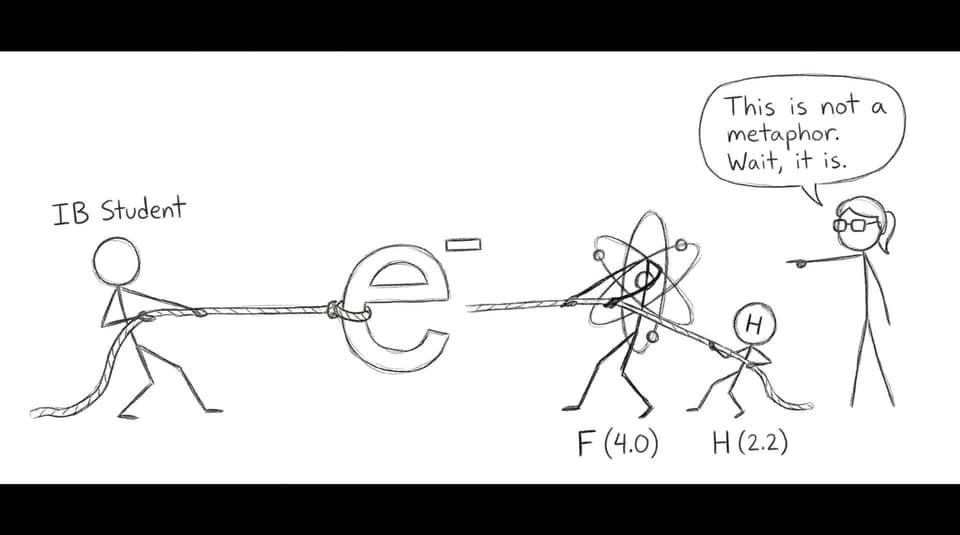
Electronegativity is the ability of an atom to attract the shared electrons in a bond. Fluorine is the most electronegative element (about 4.0 on the Pauling scale), which is why it almost always “wins” the electron tug-of-war.
In IB Chemistry, you are expected to link electronegativity trends to atomic structure:
-
Across a period (left to right): electronegativity increases (higher nuclear charge, smaller radius)
-
Down a group: electronegativity decreases (more shells, more shielding)
If you want a trend explanation you can quote cleanly, use Electronegativity Trend Across a Period: IB Chemistry Guide and connect it to Effective Nuclear Charge Explained.
Bond polarity: what the examiner wants you to say
Bond polarity is about unequal sharing of electrons. When one atom attracts the bonding pair more strongly, you get:
-
δ− on the more electronegative atom
-
δ+ on the less electronegative atom
This is the language that scores in IB Chemistry. For a syllabus-aligned definition and examples, revise with Bond Polarity (S2.2.5) Notes and keep IB Chemistry Key Definitions open during quick reviews.
Using ΔEN to predict bond type (fast exam method)
In IB Chemistry, bond polarity questions usually reduce to one move: calculate the electronegativity difference (ΔEN).
A helpful guideline:
-
ΔEN = 0: nonpolar covalent
-
small/moderate ΔEN (roughly 0.1 to 1.7): polar covalent
-
large ΔEN (greater than about 1.7): ionic character dominates
The boundaries are not rigid, and stating that bonding is a continuum is often a nice finishing sentence.
Exam-style mini example: ranking polarity
Given (Pauling): C 2.5, O 3.5, Cl 3.0, H 2.1
-
C-O: ΔEN = 1.0
-
C-Cl: ΔEN = 0.5
-
C-H: ΔEN = 0.4
Ranking (most to least polar): C-O > C-Cl > C-H
This is exactly the kind of quick comparison that shows up repeatedly in IB Chemistry multiple choice and short-response sections.
Why polarity keeps showing up everywhere
Polarity is not a side topic. It is a bridge concept in IB Chemistry, connecting bonding to properties and mechanisms.
-
Intermolecular forces: polar molecules can have dipole-dipole attractions
-
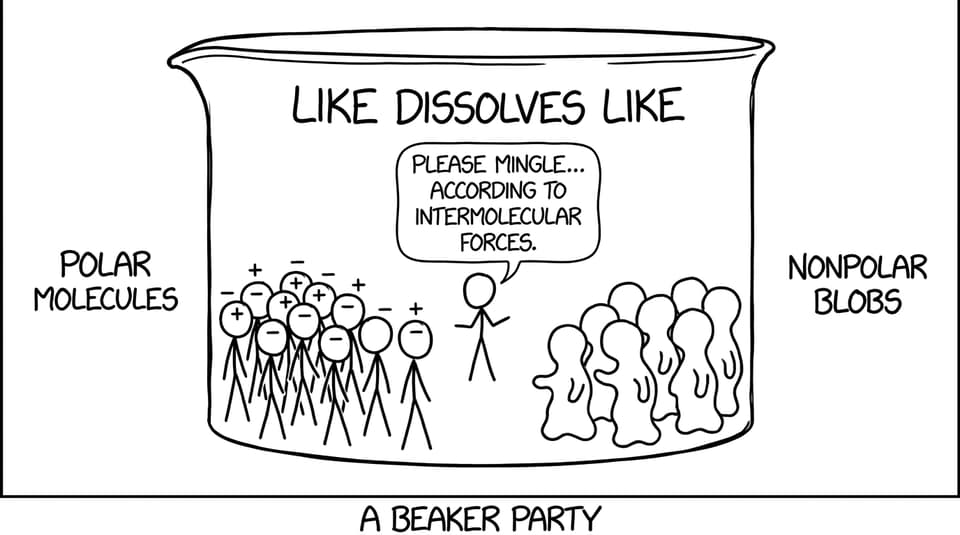
Solubility: “like dissolves like” (polar with polar)
-
Boiling points: stronger attractions usually raise boiling points
-
Reactivity: bond polarization often explains nucleophiles, electrophiles, and partial charges
To reinforce this link, revise Intermolecular Forces Explained and the core unit page 4.4 Intermolecular forces.
The classic trap: bond polarity vs molecular polarity
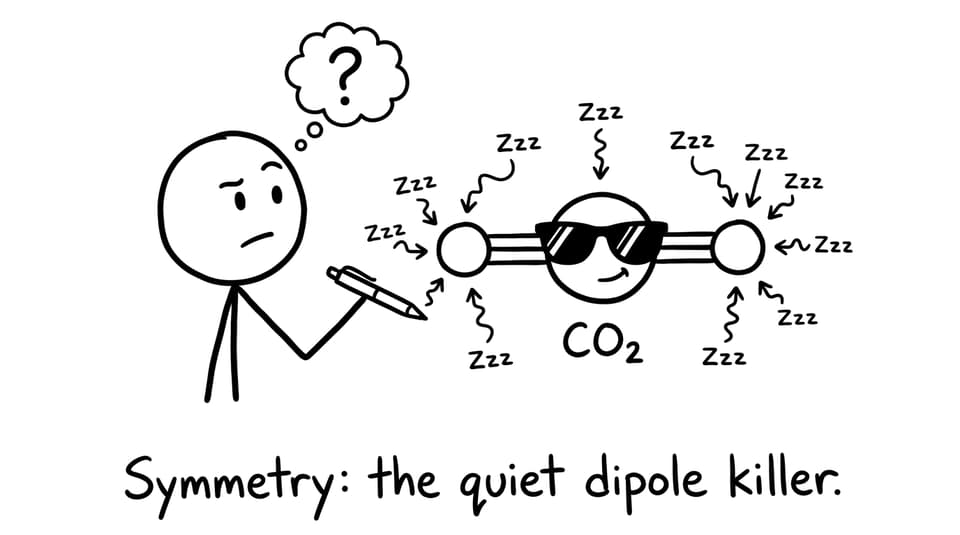
A molecule can contain polar bonds and still be nonpolar overall if the geometry makes dipoles cancel.
CO2 is the standard example: each C=O bond is polar, but the linear shape cancels dipoles. Another favourite is CCl4: polar C-Cl bonds, but tetrahedral symmetry cancels the net dipole.
For a clear walkthrough, use Is CCl₄ Polar or Nonpolar? IB Chemistry Explained and connect it to shape logic with Why does molecular shape depend on electron pair repulsion.
Quick checklist for IB Chemistry exam questions
-
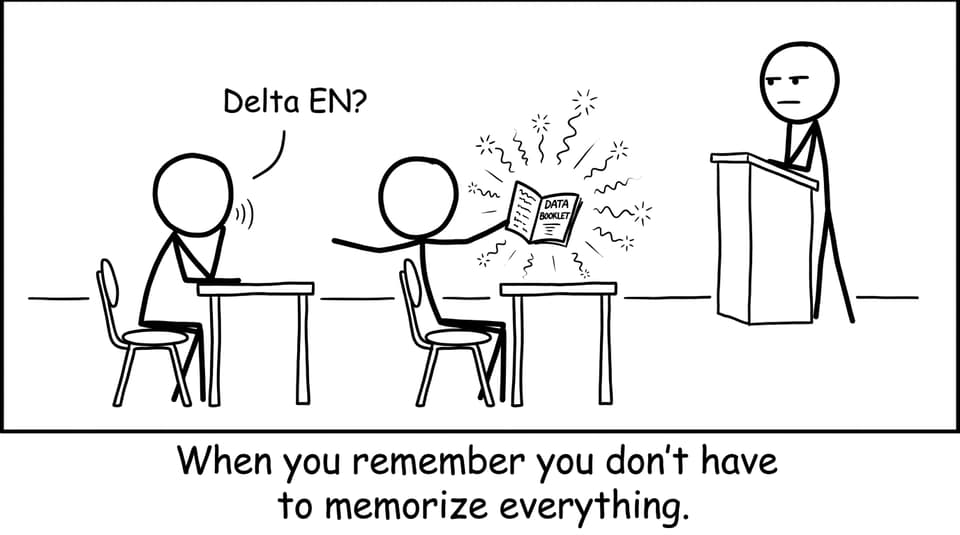
Identify the bond and grab electronegativity values (data booklet helps)
-
Calculate ΔEN and classify the bond (nonpolar/polar/mostly ionic)
-
Add δ+ and δ− labels if asked
-
If the question is about the whole molecule, check geometry and cancellation
-
Link polarity to a property (IMFs, solubility, boiling point, reactivity) for explanation marks
Conclusion: turn electronegativity into easy marks
Electronegativity is the quiet driver behind bond polarity, and bond polarity is the driver behind half the explanations you write in IB Chemistry. When you can compute ΔEN, assign δ+ and δ−, and then zoom out to molecular shape, you stop guessing and start explaining.
To lock it in, use RevisionDojo’s Study Notes, drill exam-style comparisons in the Questionbank, strengthen recall with Flashcards, and check your reasoning with AI Chat and the Grading tools. Add Mock Exams and Predicted Papers when you are close to the real thing, and if you want targeted help, the Tutors and Coursework Library support the bigger picture beyond just one topic. In IB Chemistry, clarity is confidence, and polarity is one of the fastest places to build both.