


Introduction: the sentence that changes the whole week
It often starts quietly. A student sits down to revise, opens a notebook, and feels… nothing. Not laziness. Not defiance. Just a kind of tired that makes even “easy” tasks feel expensive. Then the sentence arrives: “I think I want to drop IB.”
If you’re an IB student preparing for exams, that thought can feel like stepping to the edge of a cliff. Your brain immediately runs the worst-case simulation: universities shutting doors, teachers disappointed, friends moving on without you, and you replaying the decision for years.
But consequences in IB are rarely one single event. They depend on timing, your school’s options, and what you switch to (not only what you leave). The goal of this guide is to help you think clearly: what actually changes if you drop IB, what stays true, and what smart alternatives exist when the workload feels impossible.
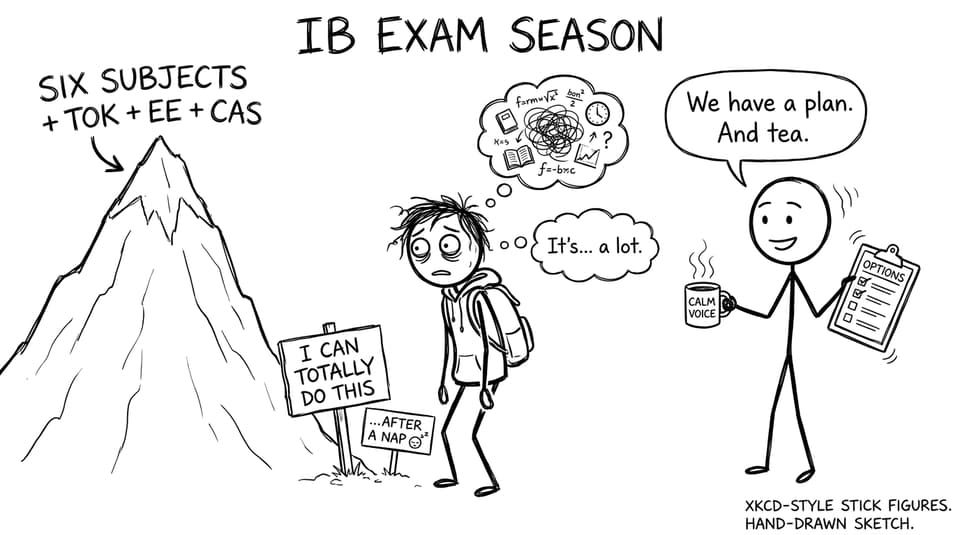
Quick checklist: decide with data, not panic
Use this short list before you make any irreversible IB decision:
-
Identify what “drop IB” means at your school: leaving the programme entirely vs switching to IB Course Certificates.
-
Check timing: DP1 vs early DP2 vs close to exams.
-
Ask your IB coordinator what changes are allowed after registration in your session.
-
Write down target countries/universities and confirm entry requirements.
-
Decide what you’re optimizing for: mental health, admission certainty, subject strength, or time.
-
Build a two-week evidence plan: one realistic revision loop, then reassess.
If you want a practical study reset while you think, use How to Study for IB Exams When You Feel Behind.
What “dropping IB” can mean (and why wording matters)
When students say they want to drop IB, they often mean one of three things:
Leaving the full IB Diploma pathway
This means you stop pursuing the full IB Diploma requirements. In many schools, that triggers a switch to a national diploma or another school-based qualification.
Switching to IB Course Certificates
This is the “I can still keep the subjects I’m good at” route. You complete one or more individual IB courses and receive certificate results for those subjects, without doing the full core requirements. Learn the details in What Is the IB Course Certificate and How Does It Compare to the Full IB Diploma? and Full IB Diploma vs Individual IB Courses: What’s the Difference?.
Dropping one subject in DP2
Some students try to reduce load by dropping a subject late. This can remove eligibility for the full IB Diploma and is often restricted after registration. See Can You Drop a Subject in IB Year 2?.
This is why consequences in IB aren’t one-size-fits-all. The outcome depends on which door you’re actually opening.
The biggest consequences: admissions, credits, and competitive edge
University admissions consequences in IB
The full IB Diploma is widely understood by admissions teams because it signals breadth (six subjects) plus the core (TOK, EE, CAS). Dropping the Diploma can reduce competitiveness in systems where the Diploma is the expected currency.
That said, many universities still value strong IB subject results and rigorous course choices, especially if your alternative qualification is clear and well-supported by your school. If you move to IB Course Certificates, you may still present high-level academic evidence in specific subjects, which can be meaningful depending on the country and institution.
If you’re weighing this switch, read What If My Teen Wants to Drop from Full IB to Certificates?. Even if you’re not a parent, the decision logic is the same: diploma vs certificates, timing, and downstream requirements.
Potential credit or placement consequences
In some universities, high scores in certain IB Higher Level subjects can translate into advanced placement or credit. Dropping the Diploma doesn’t always erase subject-level recognition, but the “bundle advantage” of the full IB credential may be smaller.
Reputation and references
Some students worry that dropping IB will brand them as someone who “couldn’t handle it.” In practice, references depend on your relationships and professionalism, not a label. A thoughtful switch, explained with maturity, is usually easier to defend than staying in IB while burning out and collapsing at the end.
Timing: the hidden lever in IB decisions
Timing changes almost everything in IB.
DP1: more flexibility, lower switching cost
If you are early in IB, your school may be able to pivot you into another programme without major gaps. You’ll still need to catch up on whatever the new system expects, but you likely have enough runway.
Early DP2: possible, but paperwork and assessment pressure increase
This is where IB choices become sticky. Internal assessments, TOK deadlines, and exam preparation often overlap. Your school may still allow changes, but options narrow quickly.
Close to exams: the consequences get expensive
Late changes can create a double burden: you’re stressed and you’re rebuilding a plan. If you’re in this zone, it’s often wiser to reduce chaos first. That could mean shifting one HL to SL, asking for support, or building a minimal, repeatable revision system before making the big decision.
A helpful reference point: learn the structure of exam practice and timing using IB Mock Exam Tips: Expert Strategies for Better Performance and IB Predicted vs Specimen Papers: What They Mean.
Wellbeing consequences: relief, grief, and identity
The strangest part of dropping IB is that two emotions can be true at once.
You may feel immediate relief because the pressure drops. Sleep returns. You can think again. But you may also feel grief: not for the programme itself, but for the version of you that was “supposed” to complete it.
Here’s the real consequence to watch: if you treat your decision as an identity verdict (“I failed IB”), you carry that story into everything else. If you treat it as a strategic choice (“This pathway fits my goals and health”), you recover faster.
If you’re feeling brittle during exam season, this is worth reading: How to Stay Sane During IB Exam Season. It’s not motivation. It’s maintenance.
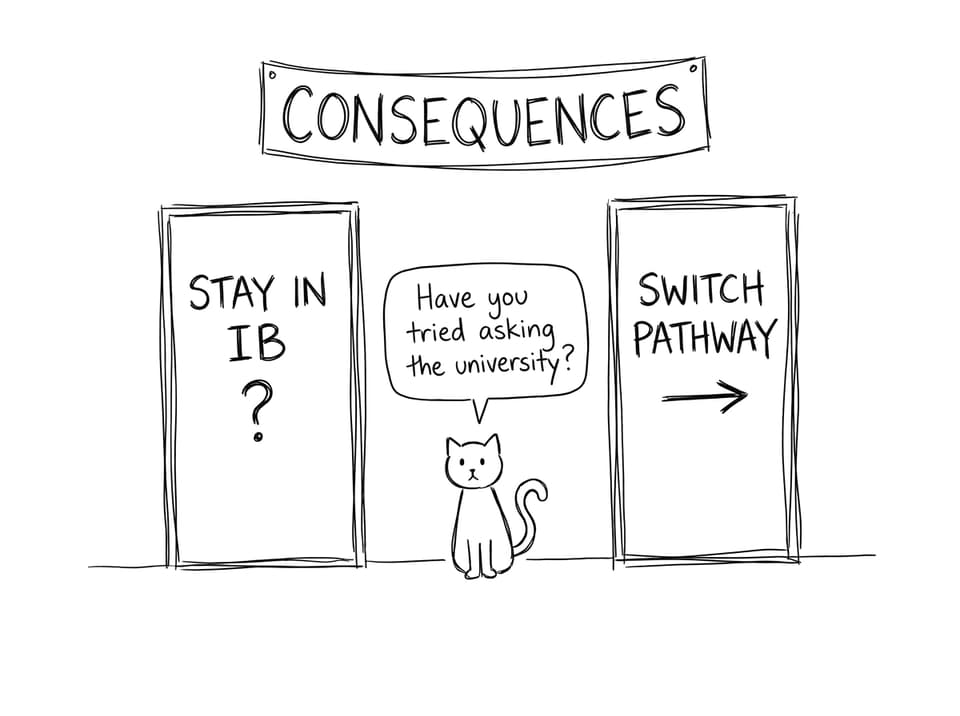
Alternatives that reduce IB pressure without detonating the plan
Before you fully drop IB, consider options that keep future choices open:
Shift the load instead of quitting
Some schools allow changes like moving an HL to SL or adjusting subject combinations. The point is not to “make IB easy.” It’s to make it survivable.
Switch to IB Course Certificates
For some students, certificates are the best compromise: you keep the rigor where you’re strong and remove the parts that are causing system-wide overload. If you’re not clear on the trade-offs, start with My Child Wants to Drop IB, What Are the Consequences? and then compare pathways in Full IB Diploma vs Individual IB Courses: What’s the Difference?.
Stay in IB, but change how you study
Sometimes the programme isn’t the problem. The approach is. Rereading notes for hours can make IB feel infinite. A tighter loop makes it finite.
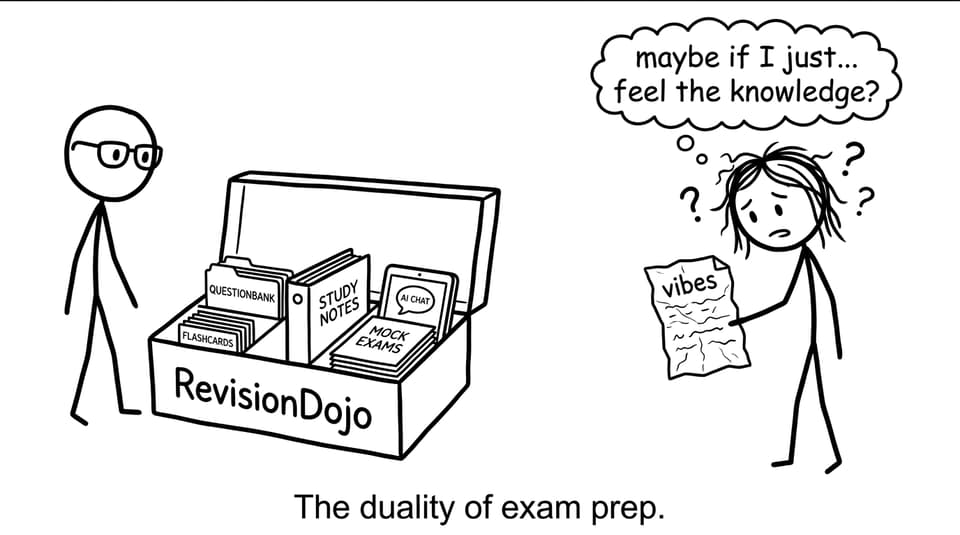
RevisionDojo is built for that loop: Study Notes to clarify, Flashcards for active recall, Questionbank for exam-style practice, AI Chat when you’re stuck, Grading tools to make feedback concrete, plus Predicted Papers and Mock Exams to train timing. If coursework anxiety is bleeding into revision, the Coursework Library and Tutors can keep you moving.
For a clear roadmap, see RevisionDojo App: The Smarter Way to Prep for IB Exams.
Conclusion: choose the version of IB that protects your future self
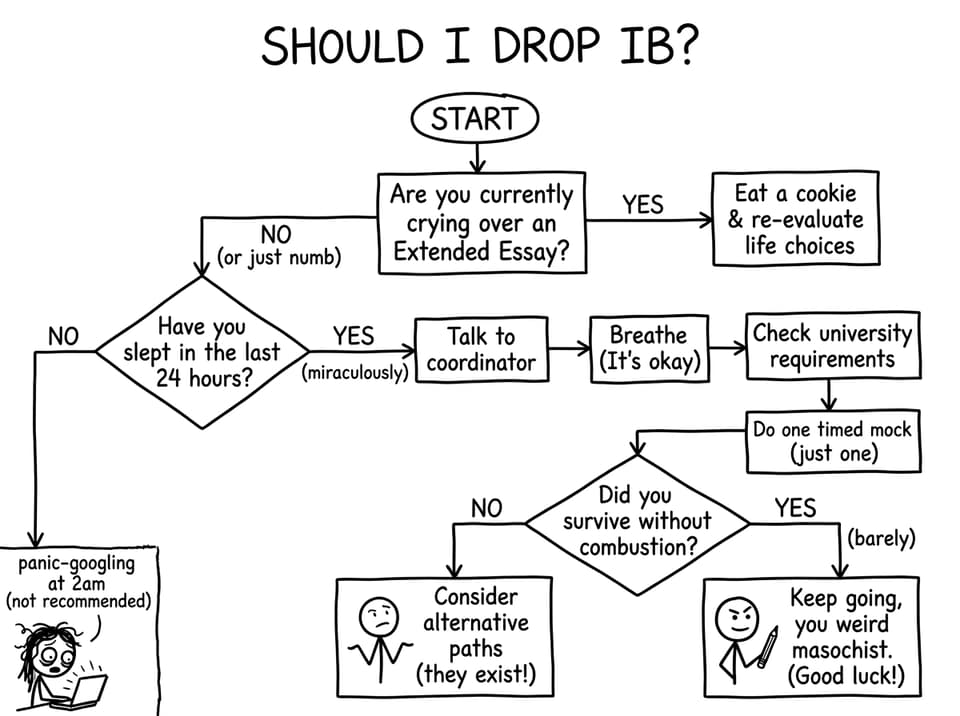
Dropping IB has consequences, but most of them are not moral consequences. They’re logistical ones: admissions expectations, timing, and what credential replaces the Diploma. For some students, staying in IB and changing the study system is enough. For others, switching to IB Course Certificates or another pathway is the healthier, smarter move.
If you’re preparing for exams and you feel stuck, don’t decide in the fog. Build clarity first: check requirements, talk to your coordinator, and run a two-week plan that shows whether IB is truly the problem or whether your approach needs an upgrade.
When you’re ready to rebuild calmly, RevisionDojo gives you one place to do it: Questionbank, Study Notes, Flashcards, AI Chat, Grading tools, Predicted Papers, Mock Exams, the Coursework Library, and Tutors. Your next step doesn’t have to be dramatic. It just has to be deliberate, and aligned with the life you want after IB.