
A physics formula can look reassuring on a page. Then the exam changes the angle, adds an unfamiliar graph, and asks you to explain what the result means. Suddenly, remembering the formula is only the beginning.
That is the real challenge of IB Physics: students must connect conceptual understanding, mathematical reasoning, data analysis, and clear written explanations. RevisionDojo IB Physics covers that full journey for both Standard Level and Higher Level students, including topic-based Study Notes, Flashcards, a Questionbank, exam preparation, AI support, and resources for the scientific investigation.
The short answer is yes, RevisionDojo covers IB Physics at both SL and HL. Its resources follow the current course structure first assessed in 2025, including the five organizing themes, HL-only material, Paper 1 and Paper 2 preparation, and IA support.
RevisionDojo IB Physics at a glance
Students can use RevisionDojo to:
- Learn each syllabus area through structured IB Physics Study Notes
- Practise individual topics in the IB Physics Questionbank
- Review formulas, definitions, and relationships with Flashcards and cheatsheets
- Check equations using the IB Physics Data Booklet
- Ask Jojo AI Chat for explanations when a worked solution moves too quickly
- Prepare for Paper 1 and Paper 2 using mixed questions, Predicted Papers, and Mock Exams where available
- Improve the scientific investigation with IA guidance, exemplars, and Grading tools
- Seek additional guidance from RevisionDojo Tutors when independent revision is not enough
The main IB Physics resource hub connects these materials, making it easier to move from learning a concept to applying it.
Topic-by-topic Physics coverage for SL and HL
The current IB Physics course is organized into five themes. HL students study the SL foundation, encounter greater depth within shared topics, and complete several explicitly HL-only topics.
| Theme | SL and HL coverage | Explicit HL-only topics |
|---|---|---|
| A: Space, time and motion | A.1 Kinematics; A.2 Forces and momentum; A.3 Work, energy and power | A.4 Rigid body mechanics; A.5 Galilean and special relativity |
| B: The particulate nature of matter | B.1 Thermal energy transfers; B.2 Greenhouse effect; B.3 Gas laws; B.5 Current and circuits | B.4 Thermodynamics |
| C: Wave behaviour | C.1 Simple harmonic motion; C.2 Wave model; C.3 Wave phenomena; C.4 Standing waves and resonance; C.5 Doppler effect | No separately designated topic, although HL extensions appear within shared areas |
| D: Fields | D.1 Gravitational fields; D.2 Electric and magnetic fields; D.3 Motion in electromagnetic fields | D.4 Induction |
| E: Nuclear and quantum physics | E.1 Structure of the atom; E.3 Radioactive decay; E.4 Fission; E.5 Fusion and stars | E.2 Quantum physics |
Space, time and motion
This theme begins with the language of motion: displacement, velocity, acceleration, forces, momentum, work, energy, and power. These ideas recur throughout the course, so weaknesses here tend to appear again in fields, thermal physics, and nuclear processes.
RevisionDojo provides notes and questions for each section. Its broader mechanics resources help students connect equations to diagrams, assumptions, vectors, and physical meaning rather than treating mechanics as substitution practice.
HL coverage adds rigid body mechanics and Galilean and special relativity. These topics demand more than extra formulas. Students must reason about rotational effects, frames of reference, and relationships that may initially conflict with everyday intuition.
The particulate nature of matter
Theme B connects microscopic models with observable behaviour. Students study thermal energy transfer, the greenhouse effect, gas laws, and current and circuits. HL students also study thermodynamics as a designated additional topic.
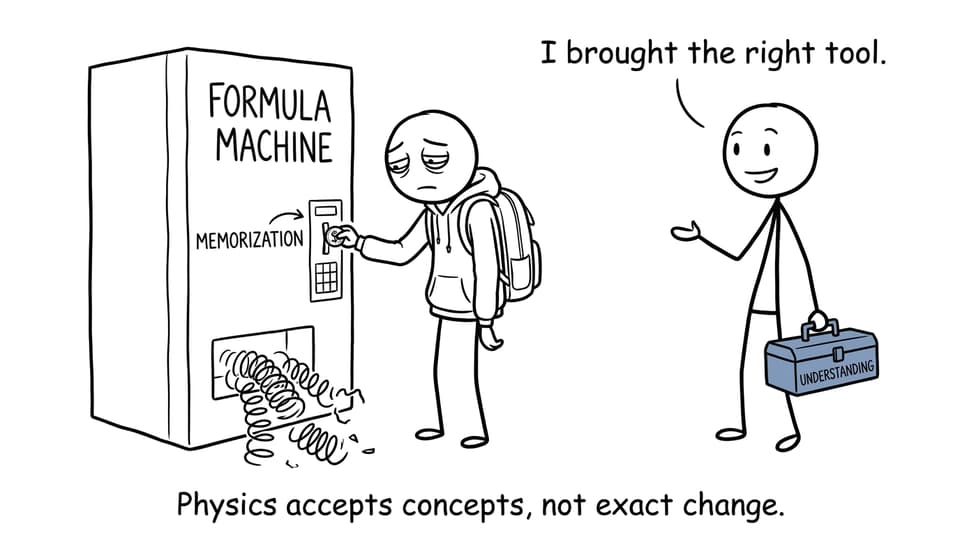
This is a theme where vocabulary can create false confidence. Recognizing words such as temperature, internal energy, pressure, or potential difference is not the same as understanding the model behind them. Flashcards can secure precise definitions, while the Questionbank reveals whether those definitions can survive a calculation or unfamiliar context.
Wave behaviour
Wave behaviour includes simple harmonic motion, the wave model, wave phenomena, standing waves and resonance, and the Doppler effect. RevisionDojo offers dedicated resources for areas such as C.5 Doppler effect, combining explanations with practice materials.
Both levels encounter the five wave topics, but HL students face additional depth within parts of the theme. Effective preparation should therefore focus on representations: equations, phase relationships, diagrams, graphs, and verbal explanations. A student who can move between those forms is usually better prepared than one who knows only a list of equations.
Fields
Fields bring together gravitational, electric, and magnetic interactions. Students study gravitational fields, electric and magnetic fields, and motion in electromagnetic fields. HL students additionally cover induction, including changing magnetic flux and the principles behind induced electromotive force.
Direction is often the quiet difficulty here. A numerical answer may be correct in magnitude but incomplete or physically wrong because the force, field, velocity, or induced effect points the other way. Revision should therefore include drawing field directions and identifying the object experiencing the force before selecting an equation.
RevisionDojo also provides focused resources for induction, alternating currents, and capacitance, allowing HL students to isolate a demanding area before returning to mixed problems.
Nuclear and quantum physics
Theme E covers atomic structure, radioactive decay, fission, fusion, and stars. Quantum physics is an explicit HL-only topic, while HL extensions may deepen reasoning elsewhere in the theme.
These areas combine models, probability, conservation laws, and experimental evidence. Good revision should distinguish between what a model predicts, what an experiment measures, and what the available data justify. Jojo AI Chat can help clarify a difficult explanation, but the next step should always be independent application through a fresh question.
How RevisionDojo supports the IB Physics exams
Under the current assessment model, both SL and HL students complete two external examinations. Paper 1 includes Paper 1A multiple-choice questions and Paper 1B data-based questions. Paper 2 contains short-answer and extended-response questions.
The external examinations contribute 80% of the final assessment: Paper 1 contributes 36%, while Paper 2 contributes 44%. The scientific investigation contributes the remaining 20%. SL external assessment lasts three hours in total, while HL external assessment lasts four hours and 30 minutes.
Students wanting a closer comparison can read the IB Physics SL versus HL revision guide.
Paper 1 preparation
Paper 1A rewards accurate conceptual judgment under time pressure. Distractors often resemble the correct answer, so students need to identify assumptions, signs, units, proportional relationships, and limiting cases quickly.
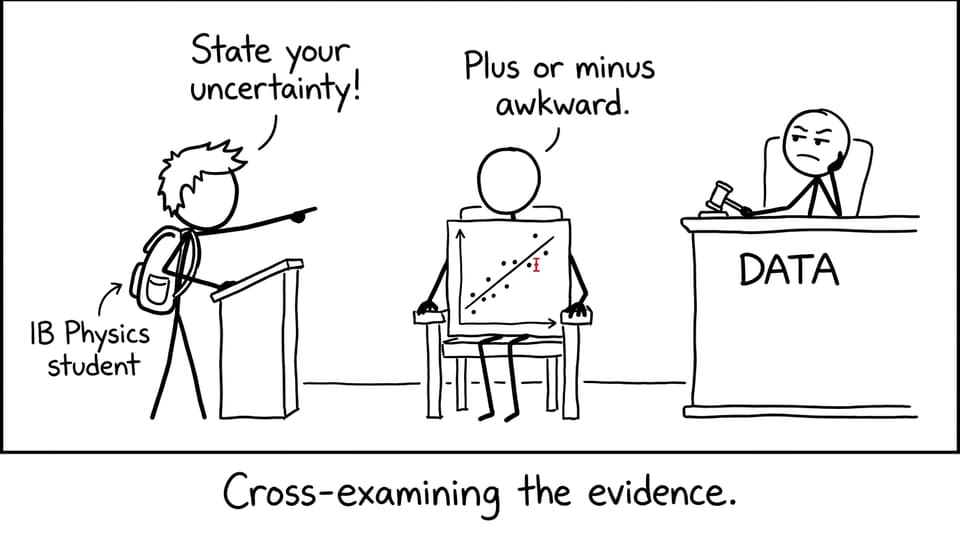
Paper 1B focuses on data handling, including graphs, units, uncertainties, and experimental interpretation. The most useful practice is not merely checking whether an answer was wrong. It is identifying whether the cause was conceptual misunderstanding, weak graph reading, uncertainty handling, algebra, or time pressure.
Paper 2 preparation
Paper 2 requires students to show a method and communicate physical reasoning. Longer responses may connect ideas from different themes, particularly at HL. That makes isolated memorization fragile.
RevisionDojo’s Questionbank can be used first for narrow practice and later for mixed sets. The guide on using IB Physics topic questions explains a productive cycle: attempt, diagnose, repair, and retest.
Predicted Papers and Mock Exams can then add timing and stamina. They should be treated as simulations, not forecasts of exact questions. Their value lies in forcing students to select methods without being told which chapter is being tested.
Does RevisionDojo provide Physics IA support?
Yes. The current Physics IA is officially called the scientific investigation. It is compulsory at SL and HL, carries 20% of the final assessment, is allocated 10 hours, and results in an individual written report with a maximum of 3,000 words.
The investigation is assessed using four equally weighted criteria, each worth six marks:
- Research design
- Data analysis
- Conclusion
- Evaluation
RevisionDojo’s Physics IA guidance explains how to develop a focused research question, justify a reproducible method, process uncertainty, connect conclusions to quantitative evidence, and propose realistic improvements.
Students can also consult the IB Physics Coursework Library to understand how investigations are organized. Exemplars should be used to study structure and reasoning, never as templates to copy. The IB Physics IA Grader can provide rubric-aware feedback on a draft, although students should still follow teacher guidance and preserve the authenticity of their own work.
A practical RevisionDojo study routine
Resources become valuable when they form a repeatable system. A productive 60-minute Physics block might look like this:
- 10 minutes: Review one narrow section of Study Notes
- 10 minutes: Recall definitions, assumptions, and formulas using Flashcards
- 25 minutes: Complete questions on the same skill without notes
- 10 minutes: Classify errors and study the feedback
- 5 minutes: Write one correction rule or ask Jojo AI Chat a precise question
Once a week, replace the topic set with a timed section from a Mock Exam or Predicted Paper. As examinations approach, increase the proportion of mixed and timed practice. If a problem remains resistant after several honest attempts, a Tutor can help identify whether the obstacle is mathematical, conceptual, or strategic.
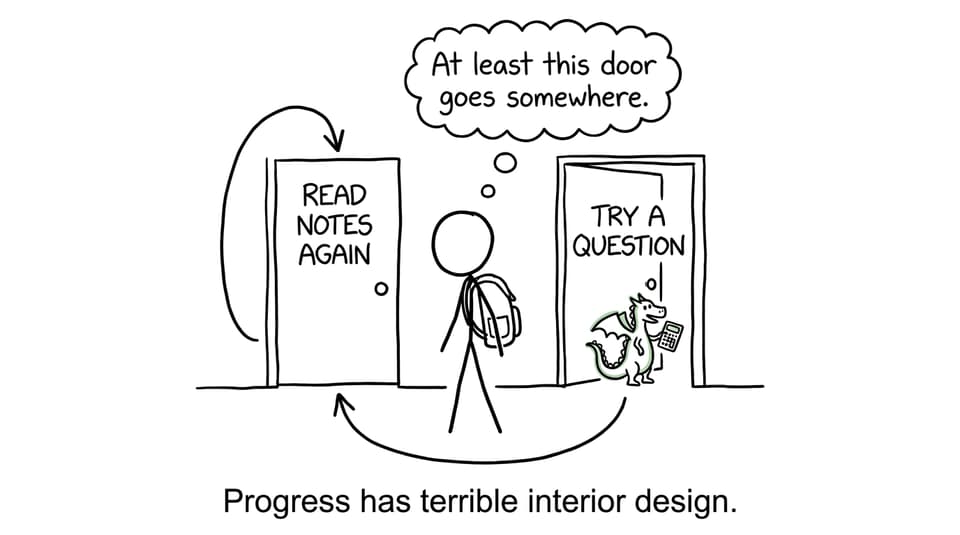
The important shift is simple: do not measure revision by pages read. Measure it by what you can retrieve, apply, explain, and correct.
Is RevisionDojo enough for IB Physics preparation?
RevisionDojo provides a comprehensive environment for learning the syllabus, practising questions, building recall, preparing for examination formats, and improving the scientific investigation. It is strongest when used alongside classroom teaching, the official course requirements provided by your school, teacher feedback, and genuine laboratory experience.
IB Physics rarely becomes manageable all at once. It becomes manageable one corrected misconception at a time. RevisionDojo brings those corrections into one connected place through its Questionbank, Study Notes, Flashcards, AI Chat, Grading tools, Predicted Papers, Mock Exams, Coursework Library, and Tutors.
Start with the RevisionDojo IB Physics hub, choose the topic currently costing you marks, and complete one full learning-and-practice cycle today. Clarity tends to arrive after action, not before it.