



There’s a moment every IB student recognizes: you’re doing a “Year 2” practice paper, you feel confident, and then a tiny detail from Grade 11 shows up like an old notification you never cleared. It’s not unfair. It’s the design.
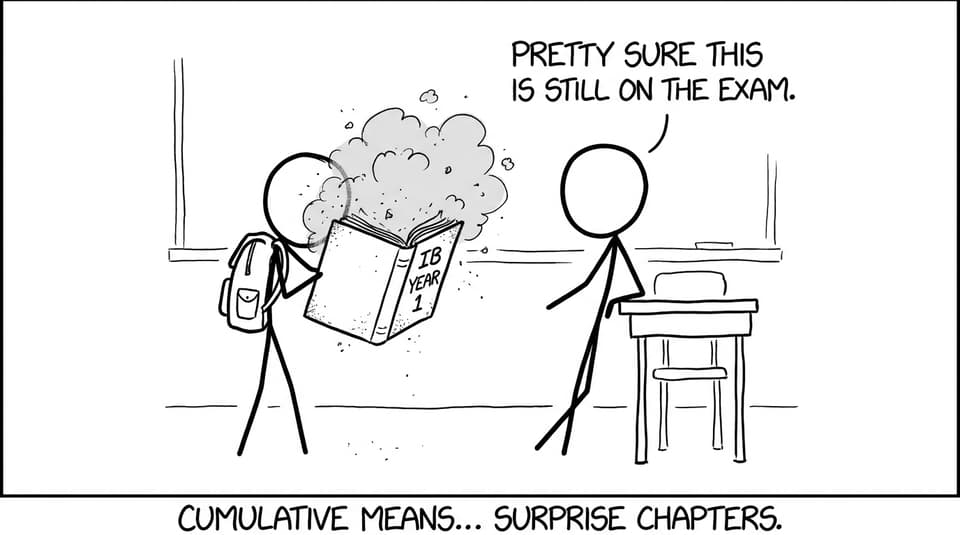
Yes, the IB final exam (in every subject) is cumulative across the full two-year Diploma Programme. That means Grade 11 content doesn’t “expire” when you become a Grade 12 student. It stays examinable, and the exam often assumes you can use it fluently.
Quick answer: is Grade 11 content on the IB final exam?
Yes. IB final assessments cover what you learned in both years. Even when a question looks like it’s testing a later unit, it may require earlier tools, definitions, methods, or case knowledge.
If you want one place to keep that two-year picture organized, start from the International Baccalaureate (IB) hub and build your revision around what’s actually examinable.
Why the IB is cumulative (and why it feels sneaky)
The IB isn’t built as “Year 1 course” followed by a separate “Year 2 course.” It’s one continuous arc: foundations first, then harder applications.
The exam writers can do this because it’s a university-style model: they’re not only checking what you remember, they’re checking what you can use. That’s why RevisionDojo’s Study Notes and Questionbank work best together: clarity first, then real exam-shaped practice.
How Grade 11 content actually appears in IB papers
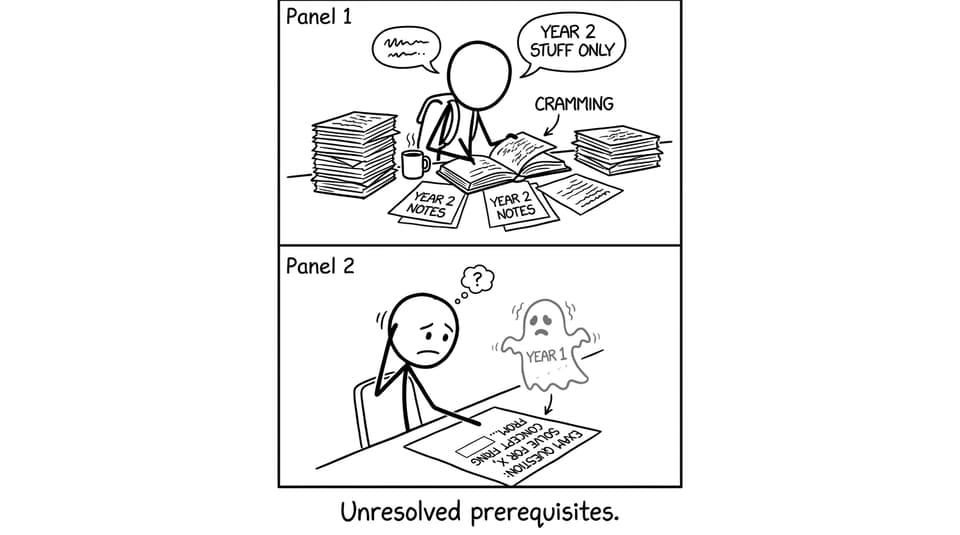
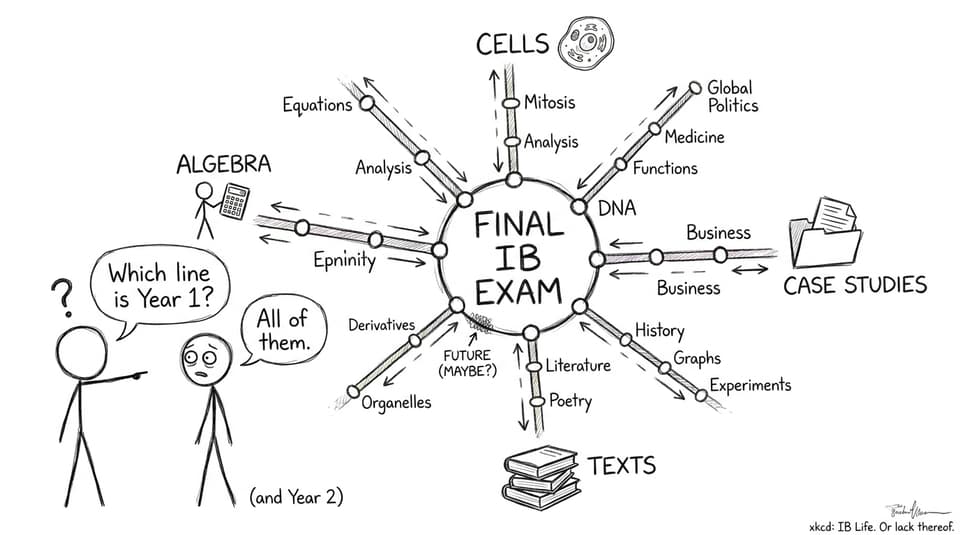
Grade 11 topics rarely show up as a clearly labeled “Unit 1 question.” Instead, they’re embedded.
-
In IB Math, Year 1 algebra and functions often sit underneath calculus and modelling.
-
In IB Biology, early ideas like enzymes, cells, genetics, and ecology resurface across question types.
-
In IB History, essays can lean on earlier case studies even when the prompt looks “later.”
-
In IB Language A, texts and skills from either year may be assessed depending on the paper.
For realistic rehearsal, add timed practice with IB Predicted Papers and combine it with targeted drills after.
A simple revision checklist that respects both years
Most IB stress comes from trying to “revise everything” instead of building a loop.
-
Patch Grade 11 gaps early with digital IB Study Notes.
-
Lock definitions, formulas, quotes, and processes using Flashcards.
-
Practice by topic in the Questionbank, then tag what you miss.
-
Run weekly stamina sessions using Predicted Papers or Mock Exams.
-
Use AI Chat and Grading tools to get fast feedback, and lean on the Coursework Library and Tutors when coursework pressure rises.
If you want a “system” instead of a mood-based plan, read RevisionDojo App: The Smarter Way to Prep for IB Exams.
The takeaway
The IB final exam is a two-year assessment. Grade 11 content is absolutely included, but usually as the hidden foundation inside bigger Grade 12 questions.
If you want to feel calm walking into the IB exams, build a cumulative system: notes for clarity, flashcards for recall, question practice for accuracy, and timed papers for stamina. RevisionDojo is built for that loop, with Study Notes, Flashcards, Questionbank, AI Chat, Grading tools, Predicted Papers, Mock Exams, a Coursework Library, and Tutors, so you can revise both years without carrying both years in your head.