

Introduction: the same diploma, a different day
The first time most students feel the IB pressure, it isn’t in an exam hall.
It’s in the quiet moment after a lesson ends (or a Zoom call closes) when you realize: this is on me now. The IB doesn’t reward wishful thinking. It rewards systems. And whether you’re in a traditional campus or an online classroom, your final results will mostly reflect the routines you built when nobody was watching.
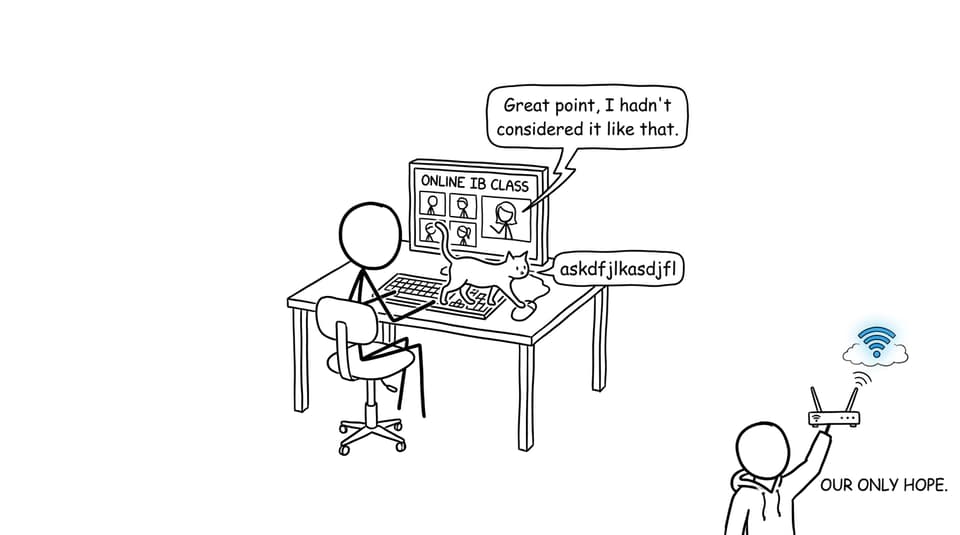
Since the Online Diploma Programme (DP) Pilot launched in 2022, students preparing for IB exams have had a real choice: complete the IB DP fully online, or go through the traditional IB World School experience. Both lead to the same qualification. Both demand the same academic rigor. But the texture of your two years, including the structure, support, and daily momentum, can feel very different.
This guide compares the IB Online DP vs. traditional IB schools, with a focus on one thing you care about most: what helps you prepare better for IB exams.
Quick checklist: choosing your IB path in 10 minutes
Use this as a fast self-audit before we go deeper:
-
Structure: Do you perform better with a fixed school day, or do you need flexible hours?
-
Self-management: Can you plan your own week without drifting?
-
Learning style: Do you learn best through live discussion, or through replaying lessons and practicing solo?
-
Support: Do you rely on in-person reminders and office drop-ins, or scheduled calls and digital tracking?
-
Community: Do you want a local cohort, or a more global peer group?
-
Exam readiness: Do you have a reliable system for timed practice, feedback, and mistake tracking?
If that last bullet made you pause, keep it simple: whatever your school format, you need a strong revision engine. That’s where RevisionDojo’s all-in-one Questionbank, Study Notes, Flashcards, AI Chat, Grading tools, Predicted Papers, Mock Exams, Coursework Library, and Tutors can make your IB preparation feel less fragile and more repeatable. Start with the workflow overview in RevisionDojo App: The Smarter Way to Prep for IB Exams.
Curriculum and standards: the IB is the IB
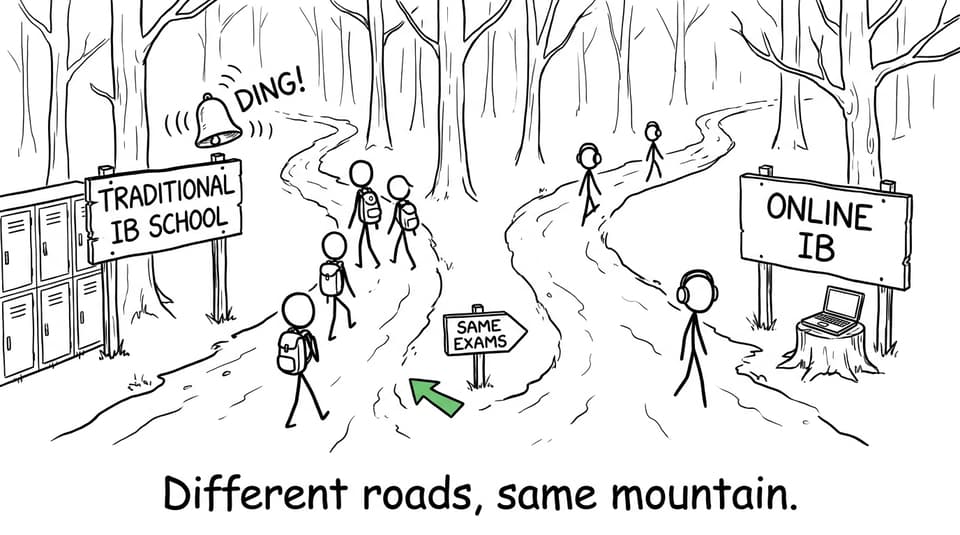
The most important truth is also the least exciting: the IB Online DP and traditional IB schools follow the same curriculum and assessment standards.
You still complete:
-
Six subject groups
-
The IB Core: TOK, EE, and CAS
-
Internal Assessments (IAs) under teacher guidance
-
External examinations set and graded through the same IB system
So if you’re hoping one route is “lighter,” it won’t be. The IB is consistent about expectations. Your learning outcomes, command terms, and grade boundaries don’t change because your classroom has walls or pixels.
What changes is how you get to those outcomes.
Teaching and learning: where discipline quietly matters most
Traditional IB schools give you a built-in rhythm: bells, rooms, classmates, eye contact. It’s harder to disappear. If you miss something, you can often catch it in the hallway or at lunch. That friction helps many students.
The IB Online DP replaces that rhythm with a different advantage: control. Lessons may be live (synchronous), recorded (asynchronous), or mixed. You can rewatch explanations. You can pause. You can learn at your pace.
But control has a cost: you must supply the discipline.
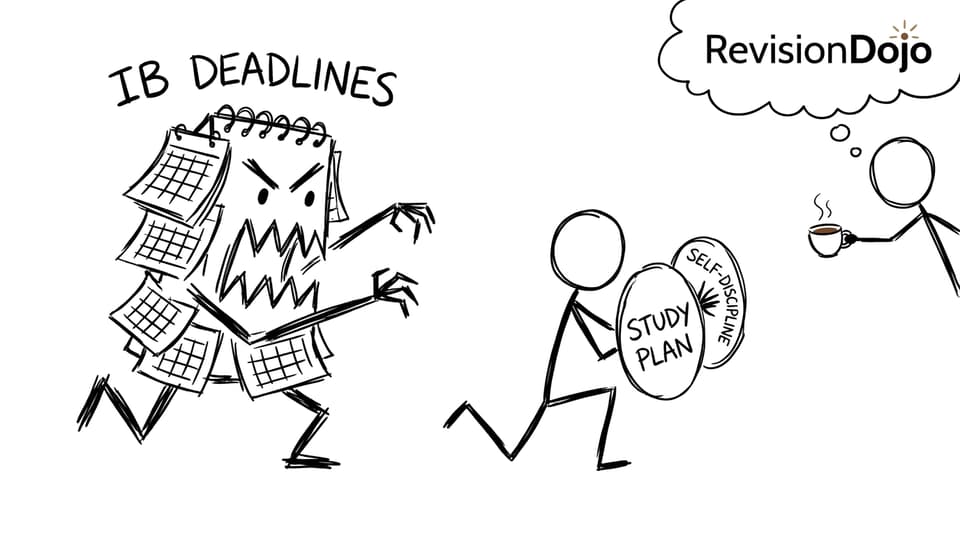
In exam years, students don’t fail because they didn’t “work hard.” They fail because they worked hard in the wrong shape. If you’re online, you need a weekly loop that forces IB skills: recall, application, timing, feedback.
A practical loop looks like this:
-
Study Notes to clarify one concept quickly
-
Questionbank to apply it immediately
-
Flashcards to keep it retrievable
-
AI Chat to fix one misconception without losing an hour
If you want a tighter method for when motivation is low, read IB: I Study All Day but Remember Nothing. It’s a useful mirror for both online and traditional IB students.
Flexibility and accessibility: the online IB advantage
If traditional IB schools are built around attendance, the IB Online DP is built around access.
Online IB is often a strong fit for:
-
Students who travel (sports, arts, family moves)
-
Students with health or mobility constraints
-
Families far from an IB World School
-
Learners who focus better in quieter environments
Traditional IB schools are often a better fit if you thrive with fixed schedules and frequent in-person cues.
Here’s the overlooked point: flexibility doesn’t automatically mean “more time.” It can mean “more decisions.” And decisions are exhausting when you’re also carrying the IB Core.
That’s why time management is not a personality trait in the IB. It’s a practiced skill. If you’re building that skill now, use Best Time Management Techniques for IB Students in 2025 and Time Management in IB: Tools and Techniques That Actually Work as practical frameworks.
Community and social life: local energy vs global reach
Traditional IB schools tend to create community through proximity: assemblies, sports, clubs, casual conversations, and shared suffering right before deadlines.
The IB Online DP builds community through intention: scheduled group work, discussion boards, virtual clubs, and structured meetups. It can feel less spontaneous, but often more global. You might discuss TOK with someone twelve time zones away. That changes your sense of what “international-mindedness” actually means.
If you’re preparing for IB exams, community matters less for nostalgia and more for momentum. When you have peers, you have a mirror. You see what “normal effort” looks like. You pick up strategies. You borrow confidence.
Online students can recreate that with two habits:
-
A weekly accountability check-in with peers (shared goals, shared timed practice)
-
A shared “mistake log culture” where errors are discussed without shame
RevisionDojo helps here because your practice doesn’t have to be solitary. Students often use the platform’s Mock Exams, Predicted Papers, and Questionbank sets as shared weekly challenges, then compare what went wrong and why.
Technology and tools: online makes it central, not optional
Traditional IB schools use technology as support. The Online DP uses it as infrastructure.
That sounds obvious, but it changes your daily workload:
-
Your organization must be explicit (folders, deadlines, reminders)
-
Your learning materials must be searchable and reusable
-
Your feedback loop must be fast enough to prevent drift
That last point is where many IB students lose marks: they practice, but don’t correct. Or they correct, but don’t repeat. The improvement loop breaks.
A connected toolset matters more for online students, but it benefits everyone. RevisionDojo is built around that connected loop: Study Notes to learn, Flashcards to retain, a Questionbank to apply, AI Chat to unblock confusion, and Grading tools to show exactly how marks are awarded. When you need realism, add Mock Exams and Predicted Papers to train timing and stamina.
If you want a straightforward warning list before it’s too late, read IB Exam Prep: Don’t Make These Mistakes Too Late.
Assessments and exams: same rules, different logistics
For exam-focused students, here’s the key: IB assessment is standardized across both pathways.
-
IAs are completed with teacher supervision and submitted digitally
-
External exams are assessed using the same global criteria
-
The diploma itself does not carry a special label that distinguishes online vs traditional
The main difference is logistics: Online DP students typically sit exams in person at a partner testing center connected to their online school, while traditional students sit at their home campus.
That means your exam preparation should assume the same standards either way: command terms, mark schemes, timing, and paper-specific strategies.
If you want to improve your exam performance, build habits around timed work and honest feedback. Two helpful reads for this phase are:
Support systems: in-person availability vs scheduled precision
Traditional IB schools often excel at “ambient support.” You see teachers. You can ask quick questions. You get reminded.
Online IB can excel at “structured support.” Office hours are scheduled. Check-ins are documented. Progress tracking is explicit. And sometimes class sizes are smaller, which can mean more individualized attention.
For IB students preparing for exams, the real question is not which support is nicer. It’s which support you will actually use when you’re behind.
If you tend to avoid asking for help until things are urgent, online can either fix that (because everything is scheduled) or worsen it (because you can hide). This is where tools like RevisionDojo’s Tutors and AI Chat matter: they lower the activation energy. You can ask a precise question at 11:30 pm, get clarity, then go right back to practice.
Which is better for IB exam preparation?
Choose the IB Online DP if you:
-
Need flexibility due to travel, health, or location
-
Work well independently and can create structure
-
Prefer replayable lessons and quiet focus
-
Are comfortable building community intentionally
Choose a traditional IB school if you:
-
Learn best through in-person discussion and classroom energy
-
Benefit from fixed schedules and real-time reminders
-
Want easier access to labs, clubs, and daily peer interaction
-
Prefer support that is immediate and face-to-face
But here’s the honest twist: most exam success comes down to the same internal ingredients in both formats.
You need a plan that turns knowledge into marks.
Conclusion: pick the format, then build the system
The IB Online DP and traditional IB schools both lead to the same destination. The difference is the road you walk each day: one offers structure by default, the other offers flexibility and demands you create your own structure.
If you’re an IB student preparing for exams, the best choice is the one that helps you run a repeatable routine: learn a concept, practice it, get feedback, and do it again under time pressure.
If you want one platform that supports that entire IB loop, RevisionDojo is built for it: Study Notes, Flashcards, Questionbank, AI Chat, Grading tools, Predicted Papers, Mock Exams, a Coursework Library, and Tutors when you need a human diagnosis. Start with RevisionDojo App: The Smarter Way to Prep for IB Exams and build a system you can trust when the calendar gets loud.