If you’ve ever walked out of an IB lesson feeling like you “got it”… and then blanked the moment a question changed slightly, you’ve met the difference between recognition and understanding. Recognition is fragile. Understanding travels.
Dialogue and debate are how understanding travels. Not because they’re loud or dramatic, but because they force your brain to do what the IB rewards most: connect ideas, defend reasoning, and adjust when a better argument appears.
The secret is that you don’t need more content first. You need better contact with the content. In the IB, conversation is one of the fastest ways to turn notes into concepts you can actually use under pressure.
A quick IB checklist for dialogue that actually helps in exams
Use this as your “before we start talking” filter. If you do these five things, your dialogue is doing IB-grade work:
-
Start with one open conceptual question (not a definition).
-
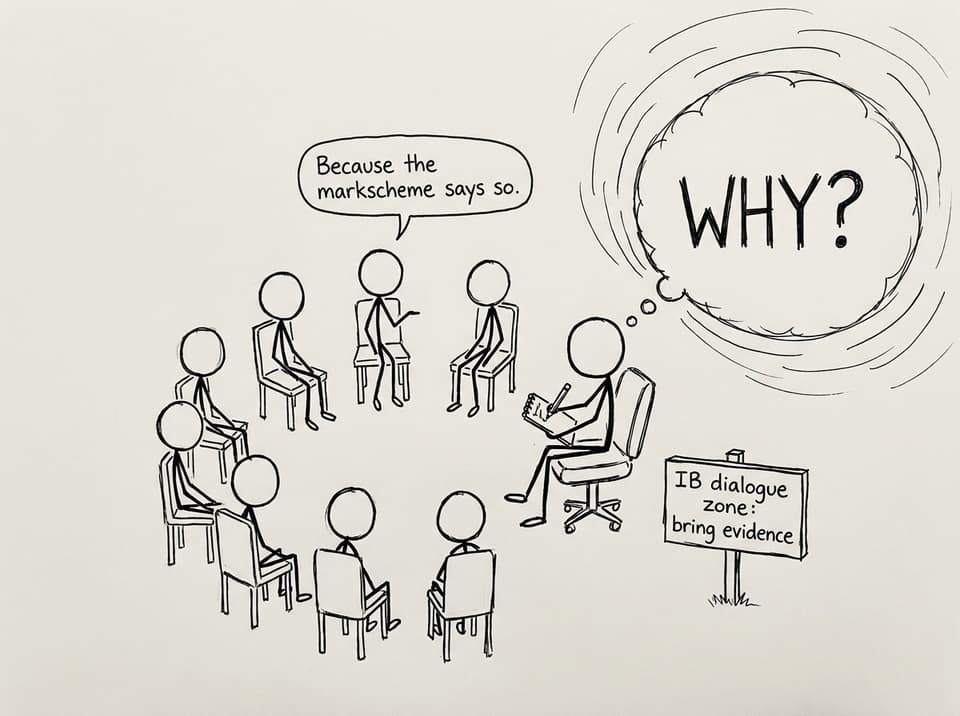
Require evidence (a quote, a process, a case, a data point).
-
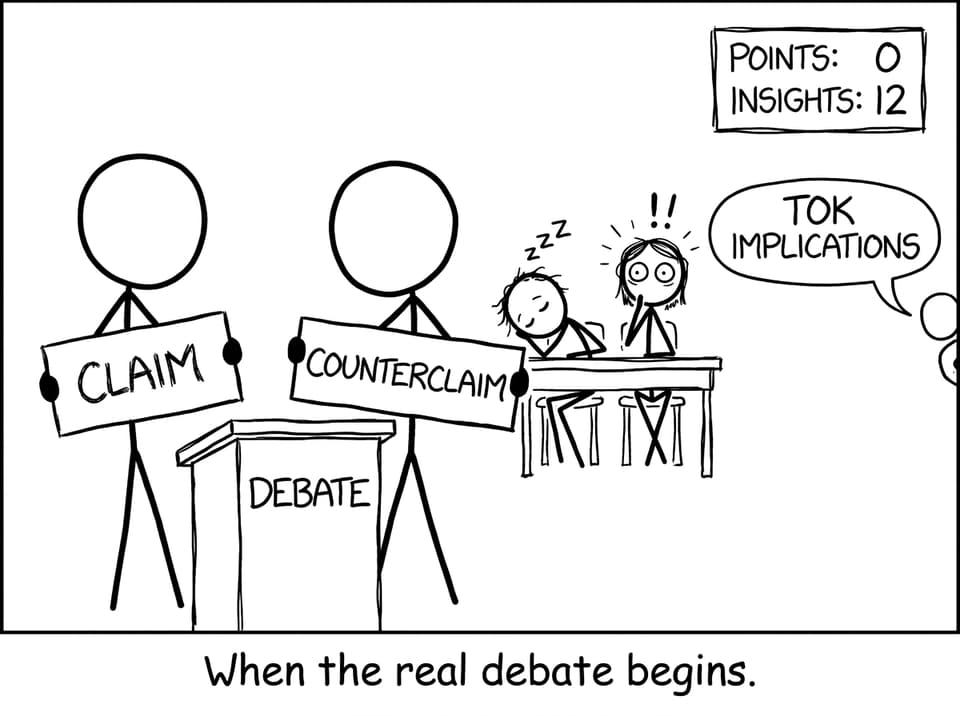
Add one counterclaim before you add more examples.
-
End with a 90-second reflection: “What changed in my thinking?”
-
Convert the best points into quick recall prompts (flashcards or mini questions).
If your discussion doesn’t change what you’d write in an exam response, it’s just socializing with vocab.
Why IB students should treat dialogue as a study tool
Most IB exam prep advice focuses on solo work: revise, practise, repeat. That’s still true. But dialogue adds something solo study often misses: the moment your reasoning meets resistance.
In an IB exam, the question is resistance. It pushes back. It changes the angle. It demands justification. Dialogue and debate rehearse that exact feeling, in a lower-stakes setting.
They also map cleanly onto the habits the IB expects:
-
Inquiry: you learn to ask better questions, not just answer them.
-
Reflection: you notice how you’re thinking, not just what you remember.
-
Communication: you practise clarity, structure, and precision.
-
Open-mindedness: you learn to separate “I disagree” from “you’re wrong.”
When you study with others, you’re not outsourcing thinking. You’re stress-testing it.
Dialogue starts working when your questions become conceptual
A surprising number of IB study sessions fail because the question is too small. “What is X?” is fine for a flashcard. It’s not fine for building a concept.
Swap recall questions for conceptual ones like:
-
What counts as “fairness” in different systems?
-
How do incentives shape human behaviour?
-
When does correlation become meaningful evidence?
-
Why do different narratives form around the same event?
Conceptual questions do something important: they create transfer. Transfer is what lets you handle unfamiliar prompts in exams.
To keep your concepts tight, build around one anchor resource, then test it. A clean loop is: understand with How to Study for IB Exams: Step-by-Step Guide, then immediately apply using the methods from The Ultimate Guide to Revision for IB Students.
Simple dialogue formats that fit real IB revision sessions
You don’t need a perfect seminar. You need structure that stops the conversation drifting.
The “Socratic ladder” (great for IB Sciences, Humanities, and TOK)
One person makes a claim. Everyone else can only respond with questions for two minutes. No statements.
This forces precision. If your idea survives good questions, it’s probably exam-ready.
Use it right after targeted practice: do a small set, then discuss the hardest two items. If you’re using RevisionDojo, you can pull those questions from the Questionbank, clarify confusion with AI Chat, and then rerun a few similar items to confirm the fix.
The “fishbowl” (best for quieter groups)
Two students discuss while the rest listen and take notes on:
-
strongest evidence used
-
missing counterclaim
-
unclear definitions
Then rotate. This format helps equity: everyone contributes without fighting for airtime.
The “steelman swap” (fast debate without the drama)
Each person argues the best version of the opposite view for one minute. Only then do you return to your position.
In IB terms, this trains evaluation. It also prevents lazy strawman arguments that collapse in Paper 2-style writing.
How debate turns IB knowledge into exam technique
Debate sounds like performance. But at its best, it’s exam technique in disguise.
A good IB response usually contains:
-
a clear claim
-
evidence
-
reasoning that links evidence to claim
-
a limitation or counterclaim
-
a brief judgement
That’s also a good debate.
To make debate directly useful, add one exam constraint: time. Run 4-minute mini debates, then write a 6-sentence “exam paragraph” from your side.
RevisionDojo helps here because you can prepare content quickly with Study Notes, drill precision with Flashcards, and then test your argument structure with timed Mock Exams and Predicted Papers inside one workflow. If you want the platform overview, start with RevisionDojo App: The Smarter Way to Prep for IB Exams.
Reflection is what makes dialogue stick (and what IB rewards)
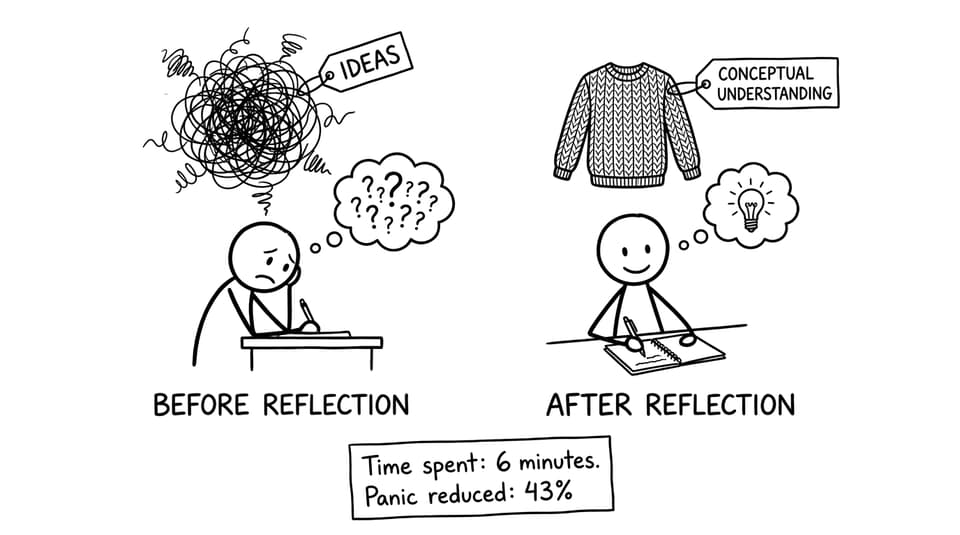
Without reflection, dialogue is entertainment. With reflection, it becomes learning.
Try these prompts after any discussion:
-
What did I believe at the start that I’m less sure about now?
-
Which piece of evidence changed my mind the most?
-
What would an examiner reward in the argument I just heard?
-
What definition do we need to agree on next time?
Then turn your reflection into action:
-
One flashcard: “Define the concept in one sentence.”
-
One question: “Apply the concept to a new example.”
-
One correction: “My common mistake and the fix.”
This fits perfectly with the data-driven approach in How 45-Point IB Students Prepare for Exams and the mindset shift in What 45/45 IB Students Do Differently.
Closing: make IB understanding social, then make it measurable
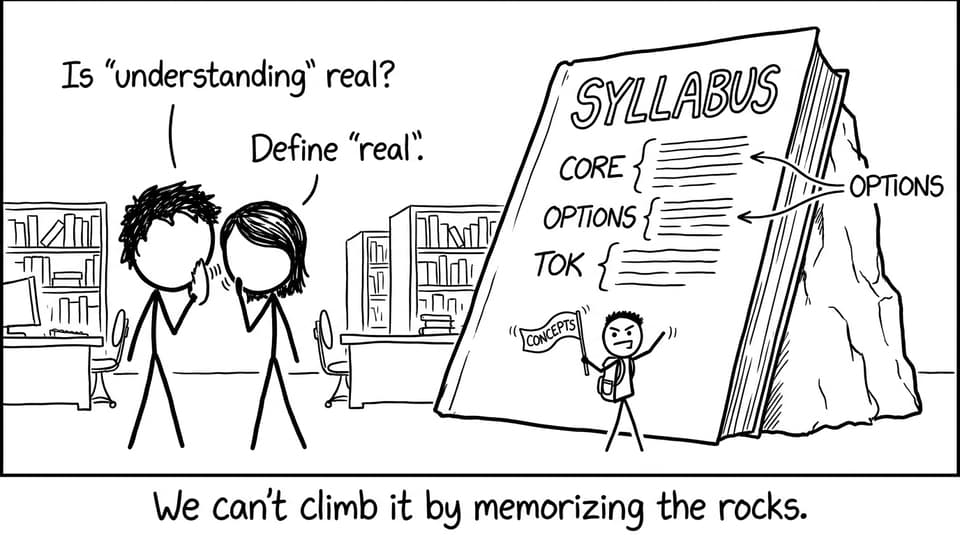
The IB can feel like a mountain of information. But the students who climb it fastest aren’t memorizing harder. They’re building concepts that hold under questioning.
Use dialogue to discover what you really think. Use debate to test whether it survives. Then lock in the improvement with RevisionDojo: practise in the Questionbank, patch gaps with Study Notes, retain with Flashcards, get unstuck with AI Chat, and build realism through Mock Exams and Predicted Papers. When you want a broader home base, visit RevisionDojo | IB & MYP Resources and explore support options like RevisionDojo for Schools.
Your next IB breakthrough might not come from another hour alone. It might come from one good question asked out loud.

