Feedback is only helpful when it points somewhere.
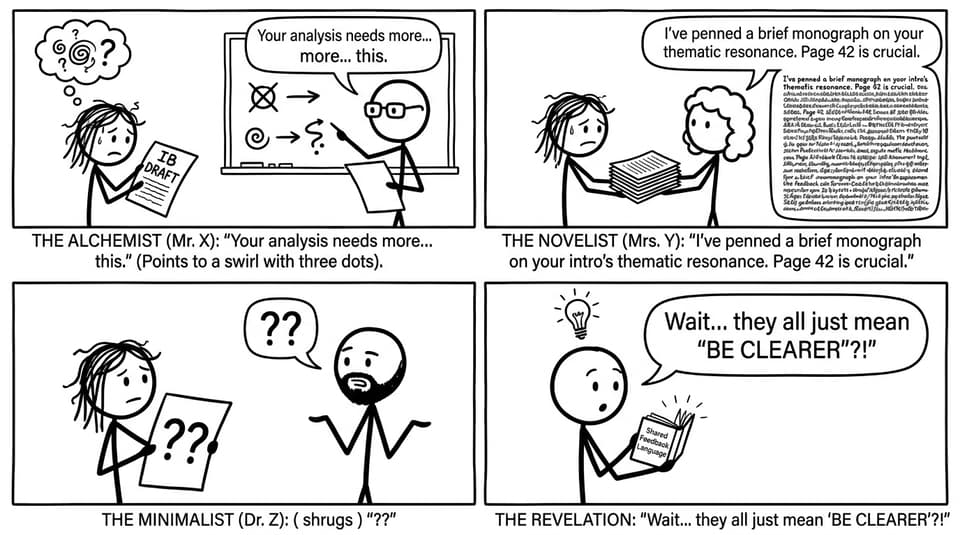
Most IB students know the feeling: you get one comment that says “develop analysis,” another that says “be more evaluative,” and a third that just circles a paragraph like it committed a crime. None of it is wrong. It’s just… untranslated.
A shared language for feedback fixes that. It turns vague advice into repeatable actions you can practice, mark, and improve. And because IB exams reward clarity under pressure, the student who can translate feedback fastest usually gains marks first.
The 60-second checklist for a shared feedback language (IB)
Use this mini system across subjects so feedback stops being “opinions” and starts being “instructions”:
-
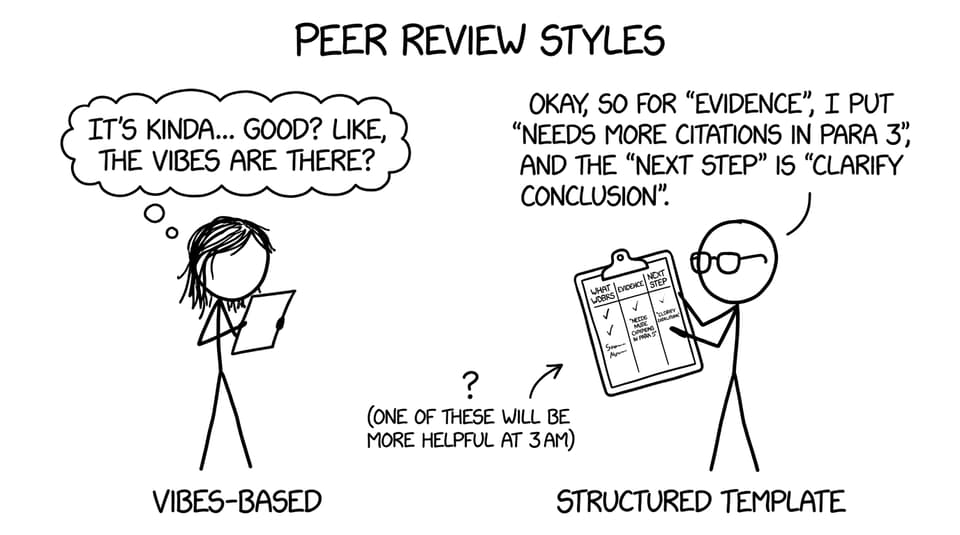
One common template: What works -> Evidence -> Next step.
-
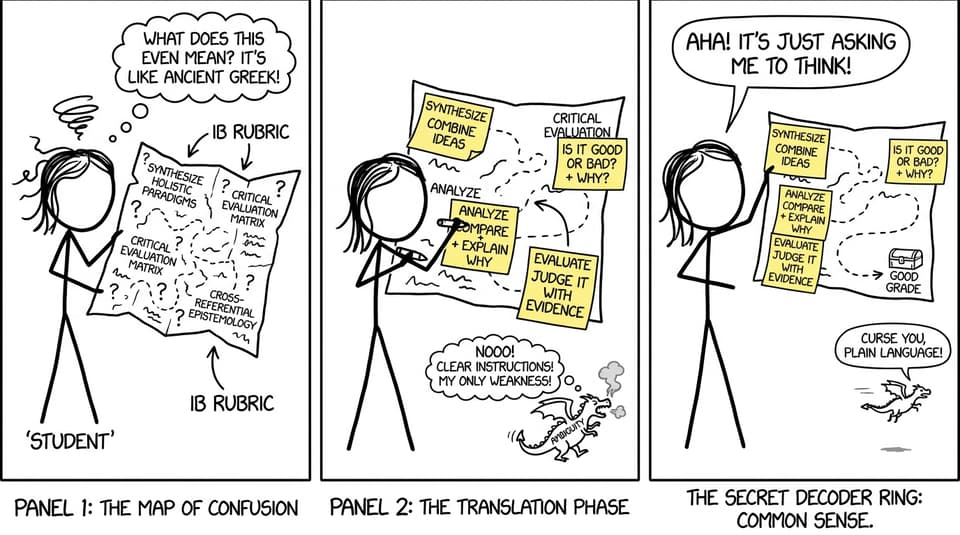
One shared vocabulary: IB command terms + criterion language.
-
One error log: Your top 3 recurring feedback themes.
-
One action rule: Every comment becomes a drill (question, paragraph rewrite, or timed set).
-
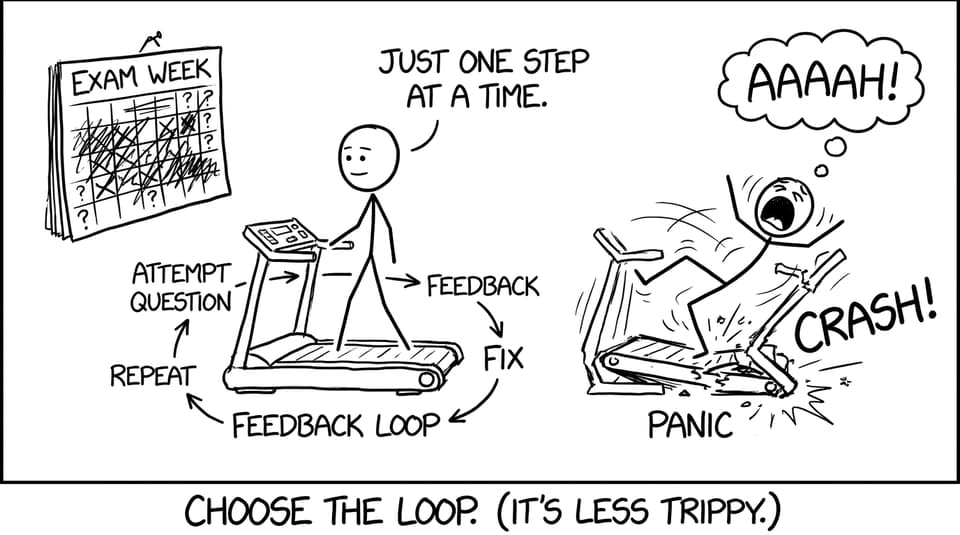
One weekly loop: attempt -> feedback -> fix -> retest.
This is the same rhythm you build with RevisionDojo tools: Study Notes to understand, IB Flashcards to remember, and the Questionbank to apply under exam logic.
Why shared feedback language matters in IB exam prep
In the IB, you don’t just “know content.” You show it in a specific format, under a timer, inside a rubric. That means feedback is only useful if it connects to:
-
What earns marks (criteria, markbands, method marks)
-
How questions are written (command terms, stimulus, context)
-
What you did (your evidence, structure, reasoning)
-
What to do next (a practice task you can repeat)
When feedback language is shared, you can compare comments across teachers and subjects and see the pattern. That’s when studying gets calmer. Not because the IB gets easier, but because your next move becomes obvious.
For a rubric-focused perspective, keep a tab open to What IB Examiners Actually Look For. It’s basically a translation guide for what “good” means.
Build your “feedback dictionary” (and use it across programs)
A shared language doesn’t need fancy documents. You need a small dictionary you actually use.
Translate common IB feedback into actions
-
“Be more analytical” -> make a claim, add evidence, explain how it proves the claim.
-
“Needs evaluation” -> give a limitation, counterargument, or condition where your point breaks.
-
“Not focused on the question” -> underline the command term, restate the question in your first line, cut anything that doesn’t answer it.
-
“More detail” -> add a specific example, data point, quote, or named case study.
If your feedback often feels generic, train with feedback that is calibrated to exam outcomes. This is why students like IB Mock Exam Feedback: Get Instant Results and Explanations: the point is not the score, it’s the precision of the next step.
Keep it consistent with one sentence stem
Use the same three stems in every subject:
-
Strength: “This earns marks because…”
-
Gap: “This loses marks when…”
-
Next step: “Next time, I will…”
That structure builds a shared language whether you’re coming from MYP writing to DP essays, or from lab reports to data questions. It’s also a shortcut to reflection, which is one of the most reliable ways to improve across the IB.
Turn feedback into a weekly IB routine (so it sticks)
Here’s the part most students skip: doing something measurable with the comment.
Try this simple weekly loop:
-
Day 1: do a short set in the Questionbank and mark it.
-
Day 2: pick one feedback theme (e.g., “explain reasoning”) and rewrite one response to top-band quality.
-
Day 3: retest the same weakness with a fresh set.
-
Day 4: make 5 flashcards from the mistakes (definitions, steps, command-term moves).
If you’re close to exams, the timing matters. See IB: The Last 2 Weeks Before Exams (What Matters) for a realistic schedule that still leaves room for sleep.
For the bigger picture of staying consistent, How to Study for IB Exams Without Burning Out pairs well with a feedback-driven approach.
Closing: make IB feedback feel like directions, not judgment
The IB is full of smart students who work hard and still feel unsure, mostly because the feedback they receive isn’t speaking one clear language. When you build a shared language for feedback, comments stop being noise and start becoming directions. That shift is quiet, but it changes everything: less guessing, more deliberate practice, and more marks that feel earned.
If you want one place to run that loop, use RevisionDojo as your home base: Questionbank for practice, Study Notes for clarity, Flashcards for recall, AI Chat and Grading tools for fast translation, plus Predicted Papers and Mock Exams when you need realism. Your job is simple: keep translating feedback into the next drill until the language of the IB becomes your own.

