


When your playlist becomes your argument
In IB Music, the Comparative Study can feel like a gift and a trap at the same time. A gift because you finally get to talk about music you genuinely care about. A trap because “music I care about” is usually enormous, messy, and impossible to compare in a way an examiner can actually reward.
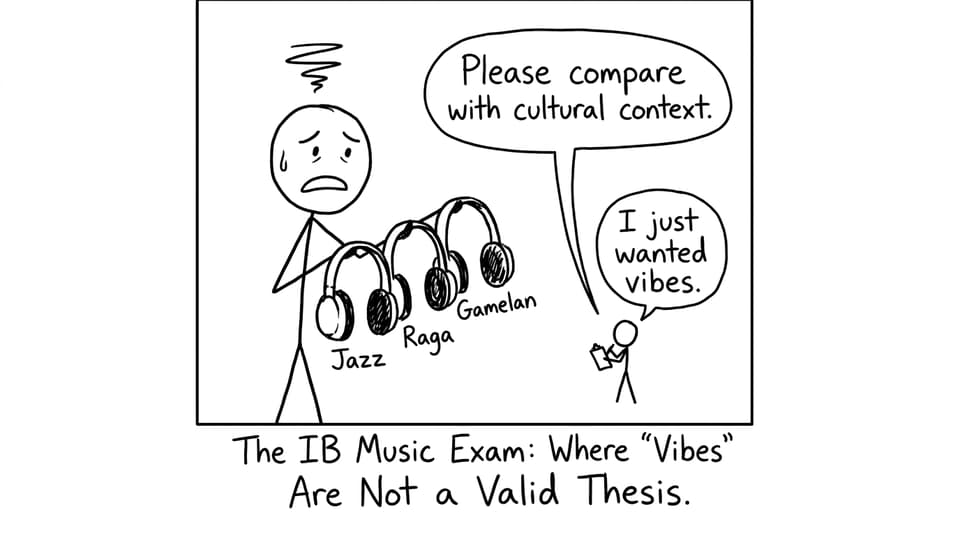
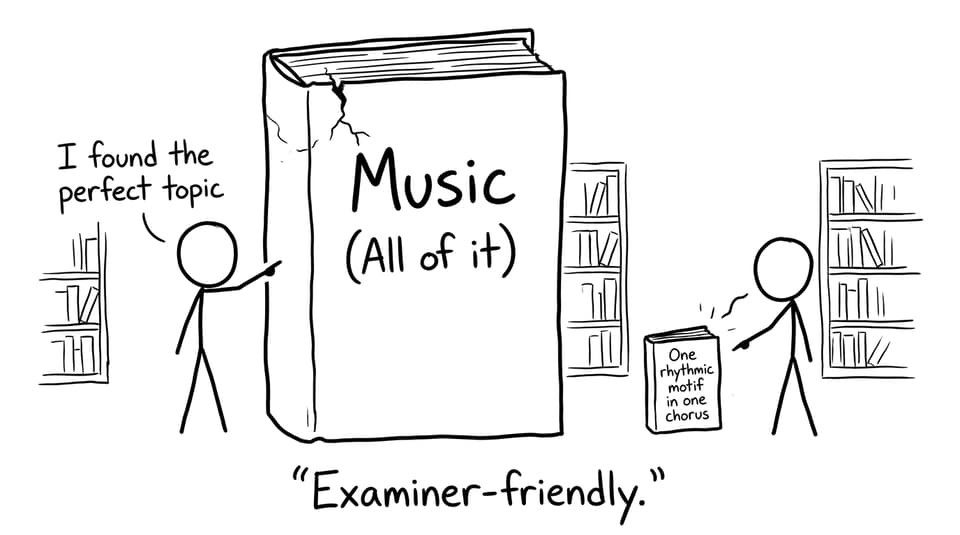
Most students don’t struggle with analysis. They struggle with scope. They choose something the size of a continent, then wonder why their writing turns into description. The best Comparative Study topics in IB Music are built like a good story: one clear tension, a few carefully chosen characters (your works), and enough contrast to reveal meaning.
If you want a solid overview of how the course pieces fit together, start with this IB Music syllabus breakdown.
Quick checklist for choosing an IB Music topic
Before you fall in love with an idea, run it through this filter:
-
Can you compare at least two works with meaningful similarities and differences?
-
Can you access recordings and reliable sources (scores, transcriptions, articles, liner notes)?
-
Does the topic invite musical detail (rhythm, melody, harmony, texture, timbre, form)?
-
Does it invite cultural meaning (function, identity, setting, history, audience)?
-
Can you narrow it into one sentence that sounds like a research question?
For a deeper process on selecting material, see how to choose pieces for IB Music comparative analysis.
Best topics for IB Music Comparative Studies
Improvisation across cultures
Improvisation is a high-scoring IB Music theme because it forces you to explain rules that create freedom.
Compare traditions like:
-
Jazz improvisation shaped by chord changes, swing feel, and personal voice
-
Hindustani raga improvisation guided by raga grammar and tala cycles
-
Baroque ornamentation where performers elaborate written lines in style
Your edge comes from precision: identify what parameters are fixed, what can vary, and how that reflects the tradition’s values. If you want a framework for comparing features cleanly, use best strategies for IB Music comparative analysis.
Music and identity (personal, political, national)
In IB Music, identity topics work because you can connect musical choices to real stakes.
Possible pairings:
-
Protest music (South Africa or U.S. Civil Rights) vs. nationalistic Romantic works (Chopin, Sibelius)
-
Hip-hop as a voice for marginalized communities vs. art music that frames “national style”
To avoid turning this into sociology, anchor every paragraph in sound: instrumentation, rhythm, vocal delivery, harmony, production choices, form. For help writing context respectfully and specifically, read how to connect musical analysis to cultural context.
Rhythm as a system (not just “fast” or “complex”)
Rhythm is one of the most exam-friendly topics in IB Music because you can be concrete: layers, cycles, groove, meter, accent.
Strong contrasts include:
-
West African polyrhythms with interlocking patterns and cyclical phrasing
-
Latin syncopation in salsa or samba with characteristic rhythmic cells
-
Minimalist phasing (e.g., Steve Reich) where tiny shifts create large structural change
Pro tip: make a mini glossary of your rhythmic vocabulary before you write. Then test it by doing timed listening practice using IB Music listening exam revision strategies.
Music for ritual and ceremony
Ritual topics score well in IB Music because function explains form. The “why” of the music shapes the “how.”
Examples:
-
Balinese gamelan in temple settings
-
Gregorian chant within medieval Catholic liturgy
-
Gagaku (Japanese court music) connected to formal ceremony
You can compare texture, timbre, pacing, repetition, and performance context, then reflect on what the music is for (community, devotion, continuity, authority).
Fusion and hybridity (globalization done carefully)
Fusion is a powerful IB Music topic, but only if you stay specific about musical evidence.
Options:
-
Afro-Cuban jazz combining rhythmic frameworks with jazz harmony and improvisation
-
“Worldbeat” pop that integrates non-Western instruments into Western song forms
-
Classical crossover influenced by folk or popular idioms
A strong angle is agency: who is borrowing, who is credited, and what changes musically when styles meet?
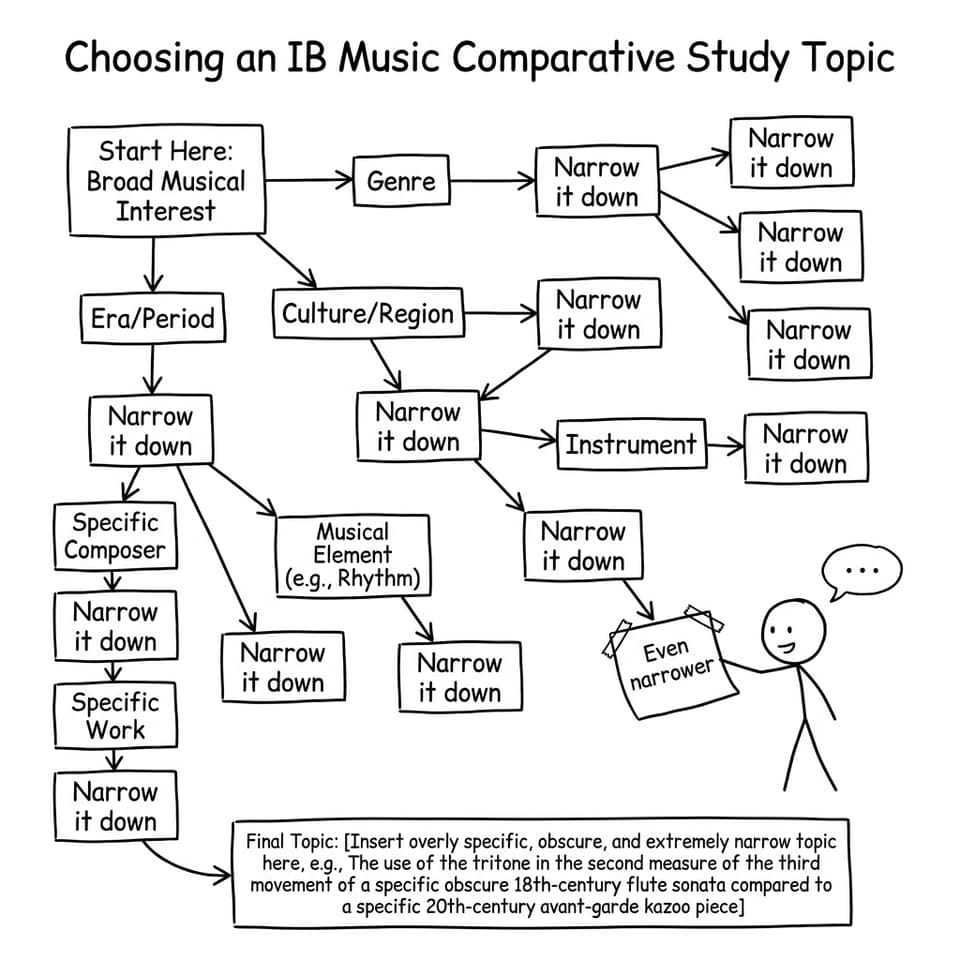
How to refine your topic (from theme to examiner-friendly question)
Start broad, then narrow twice.
-
Broad: “Jazz and Indian music”
-
Better: “Improvisation in modal jazz and Hindustani raga”
-
Best: “How do constraints (mode, cycle, harmony) shape improvisation in Miles Davis-style modal jazz vs. a Hindustani raga performance?”
Then build your workflow:
-
Gather sources using music research methods for IB assignments
-
Keep analysis structured (element-by-element or thematic) with the guide above
-
Practice articulation using RevisionDojo’s Questionbank and the RevisionDojo IB hub
Build your Comparative Study with RevisionDojo
The best Comparative Study topics in IB Music balance contrast with control: improvisation, identity, rhythm, ritual, or fusion, narrowed into a question that invites real musical evidence.
If you want that process to feel calmer, RevisionDojo is built for it: Study Notes for fast clarity, Flashcards for vocabulary that sticks, AI Chat for quick guidance, and Grading tools to align your writing with criteria. Add the Coursework Library, Predicted Papers, Mock Exams, and Tutors when you want extra structure and feedback loops.
Explore more IB Music guidance here: IB Music blog tag hub.