

Mental health isn’t fragile because you’re weak. It’s fragile because you’re trying to hold too many versions of yourself at once.
One version is the student who wants a 7, calmly, with time to think.
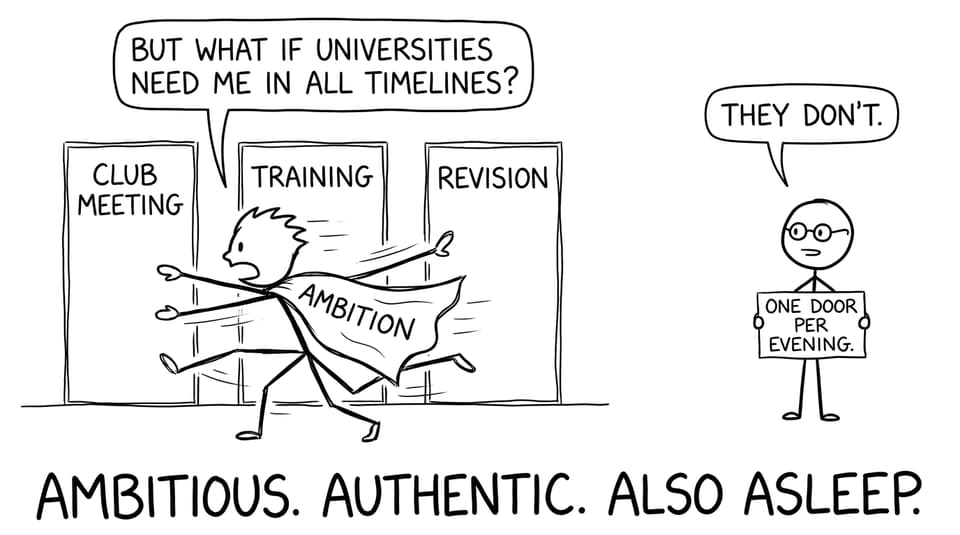
Another version is the applicant you imagine universities want: captain, founder, finalist, volunteer, musician, athlete, and somehow still smiling on three hours of sleep.
In IB exam season, extracurricular activities can either protect your mental health or quietly drain it. The difference is rarely the activity itself. It’s the reason you’re doing it, the way it fits into your week, and whether it still feels like you.
This guide is about being ambitious but authentic, and making extracurricular activities work with your IB goals, not against them.
A quick checklist: extracurriculars that support mental health
Use this as a fast filter when your calendar starts feeling like a dare.
-
Choose 1-3 extracurricular activities that you’d still do if nobody was watching.
-
Define an “enough rule” (hours per week, or a fixed number of evenings).
-
Protect sleep with a hard stop time most nights.
-
Make exam season a different season (reduced responsibility, not total disappearance).
-
Use a practice-first revision loop so studying stays efficient, not endless.
-
Schedule recovery like homework: one real rest block per week.
If your mental health improves when you follow the list, that’s not coincidence. That’s your system finally matching your reality.
Why extracurricular activities can quietly hurt mental health in IB
Extracurricular activities are supposed to be the part of school life that feels human.
But for many IB students, they become a second academic program with no syllabus, no cap, and no finish line. You join “just one more thing,” then you add responsibility, then you accept leadership, then you start measuring your self-worth by how indispensable you look.
The sneaky part is that this often looks like success from the outside.
Inside, mental health starts paying the bill: less sleep, more irritability, more anxiety, more feeling behind even when you’re constantly moving. And when exam season arrives, the same ambitious personality that helped you say “yes” to opportunities makes it hard to say “not right now.”
If you want a practical balance framework, keep this open: How Do You Balance IB and Extracurricular Activities?. It’s a useful reset when your week starts collapsing.
Mental health and the “CV version” of you
There’s a particular kind of exhaustion that comes from performing your life.
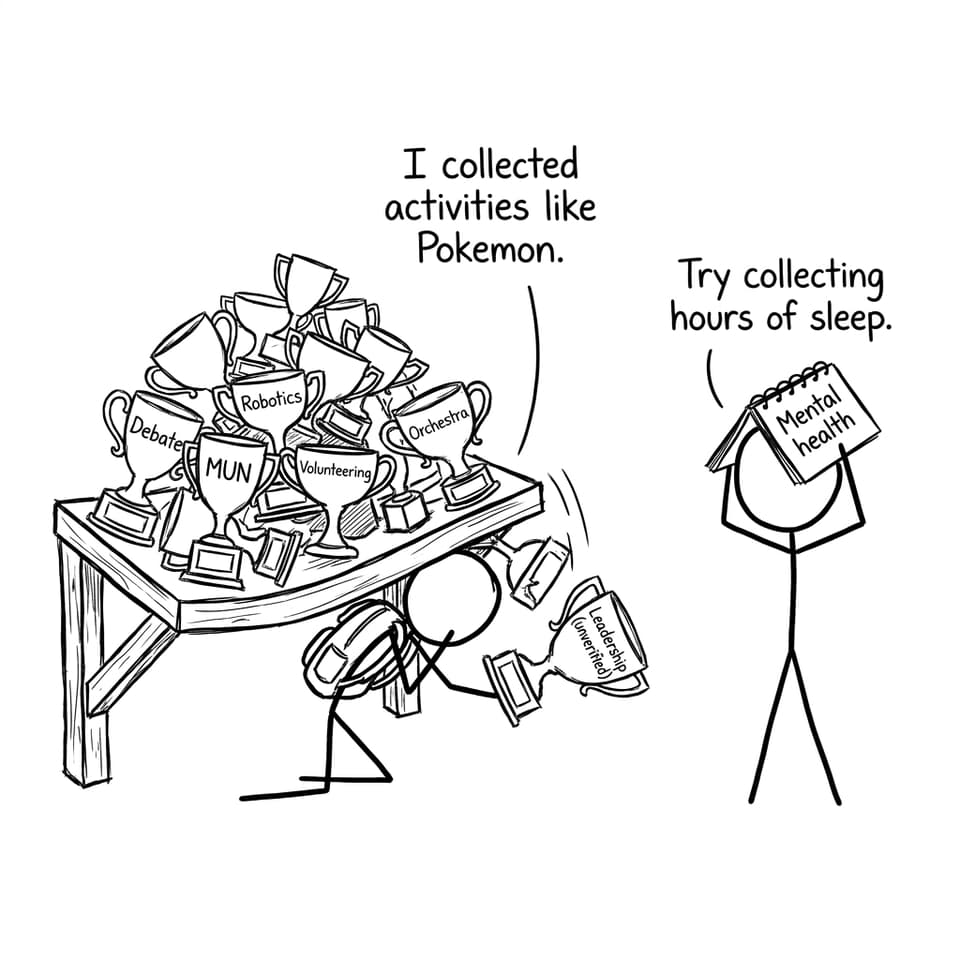
You stop asking, “Do I like this?” and start asking, “Does this look impressive?” You pick clubs because they sound prestigious. You accept roles because stepping down feels like failure. You stay late because leaving feels like laziness.
That’s the inauthentic loop:
-
You add extracurricular activities to feel secure.
-
The load increases, so your mental health dips.
-
Your focus drops, so results feel unstable.
-
To regain control, you add more proof that you’re “good enough.”
IB students preparing for exams don’t need more proof. They need more clarity.
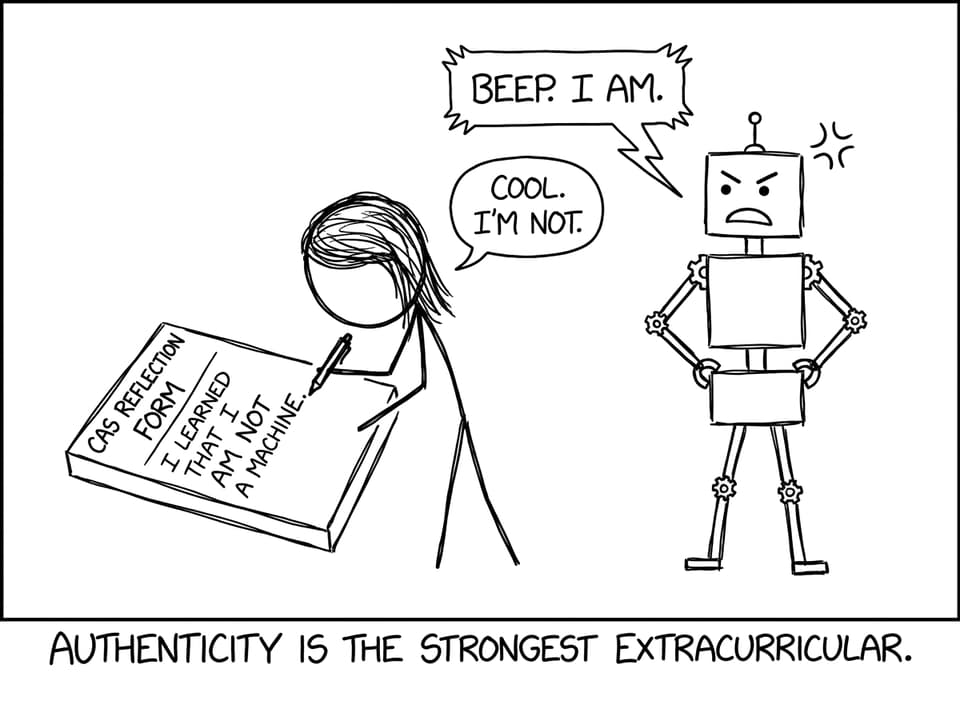
A good extracurricular activity doesn’t just fill a box. It gives you energy back. It creates identity outside grades. It reminds you that you’re a person with interests, not a machine designed for assessments.
How to choose extracurricular activities that are ambitious and authentic
Ambition isn’t the enemy. It’s fuel.
The problem is when your ambition becomes imitation: doing what worked for someone else, in a life that isn’t yours.
Here’s a simple three-part test.
The “Tuesday test”
If this activity only feels worthwhile on award nights, it won’t survive a normal Tuesday. Authentic extracurricular activities should feel at least slightly satisfying during the boring middle.
The “energy test”
After you do it, do you feel more like yourself, or less? Mental health often shows up as subtle signals: heavier chest, shorter temper, dread on the way there.
The “trade-off test”
Every yes is a no to something else: sleep, family, revision, friendships. If the trade-off is always sleep, your mental health will eventually rebel.
To keep your week grounded, combine this with a time system like: Best Time Management Techniques for IB Students in 2025.
A practical IB exam-season plan for extracurricular activities
Exam season needs a different contract with your calendar.
The goal isn’t to quit everything. The goal is to reduce friction so your mental health stays stable and your studying stays effective.
Set a “minimum viable week”
Write a version of your week that still works when you’re tired.
-
Extracurricular activities: 1-2 sessions max, or a strict hours cap
-
Revision: one timed block 3-5 days/week
-
Daily maintenance: 10 minutes of recall (Flashcards)
-
Sleep: a hard stop time most nights
If you need a model, this post maps the logic well: How to Balance IB and Extracurriculars Without Burning Out.
Make studying smaller, not longer
When extracurricular activities take time, the worst response is to turn revision into vague, endless reading.
Instead, use a tight loop:
-
Study Notes for fast clarity
-
Flashcards for active recall
-
Questionbank for exam-style practice
-
AI Chat when you’re stuck (then return to practice)
-
Grading tools to learn what earns marks
-
Mock Exams and Predicted Papers to build timing and stamina
RevisionDojo is built to run that loop in one place, which matters for mental health because it reduces decision fatigue. When your day is busy, you don’t want to spend 20 minutes deciding what to do.
If you want a structured routine, borrow pieces from: Ultimate Daily IB Study Schedule (Low Stress, High Marks).
Renegotiate, don’t disappear
Authenticity includes honesty with other people.
Tell your coach, club supervisor, or team leader what season you’re in. Ask for a smaller scope. Trade weekly leadership for one contained project. Quietly doing less is often more mature than dramatically quitting.
For more ideas on keeping life intact while still working hard, this perspective helps: Do IB Students Have a Social Life? The Truth About Balance.
How RevisionDojo supports mental health while you stay ambitious
A lot of mental health strain comes from uncertainty: you don’t know what to revise, you don’t know if it’s working, and you don’t know how far behind you really are.
Structure is calming.
RevisionDojo gives you that structure without turning you into a robot. You can revise with:
-
Questionbank to target weak topics instead of “studying everything”
-
Study Notes to close gaps quickly
-
Flashcards to keep daily recall alive
-
AI Chat to unblock confusion fast, especially on busy activity nights
-
Grading tools to understand what examiners reward
-
Predicted Papers and Mock Exams to practise under realistic pressure
-
Coursework Library to reduce panic around writing components
-
Tutors when you need a human strategy shift
This matters because ambition without feedback becomes anxiety. Ambition with feedback becomes progress.
If you want mental health support ideas beyond time management, these are worth reading:
Closing: ambition that lets you sleep
The version of you that universities respect is rarely the most exhausted one.
It’s the version that can choose, commit, and still stay human. The one who does extracurricular activities with a clear why, studies with a clear system, and protects mental health like it’s part of performance, because it is.
Pick the activities that sound like your own voice. Set an “enough” rule. Then build your exam routine around efficient practice using RevisionDojo’s Study Notes, Flashcards, Questionbank, AI Chat, Grading tools, Predicted Papers, and Mock Exams.
Be ambitious. Be authentic. And let your mental health be the foundation you build on, not the cost you pay.