


Inflation doesn’t always start in factories or ports. Sometimes it starts in a conversation.
A café owner hears that “prices will rise again,” and updates the menu today. A worker asks for a bigger pay rise “just to be safe.” A student buys a calculator early because next month it might cost more. In IB Economics, that chain reaction is the heart of inflation expectations, beliefs about future inflation that quietly shape today’s spending, wage demands, and pricing.
Inflation expectations in IB Economics: an exam checklist
Use this quick checklist before you write any policy paragraph in IB Economics:
-
Define inflation expectations as beliefs about future inflation.
-
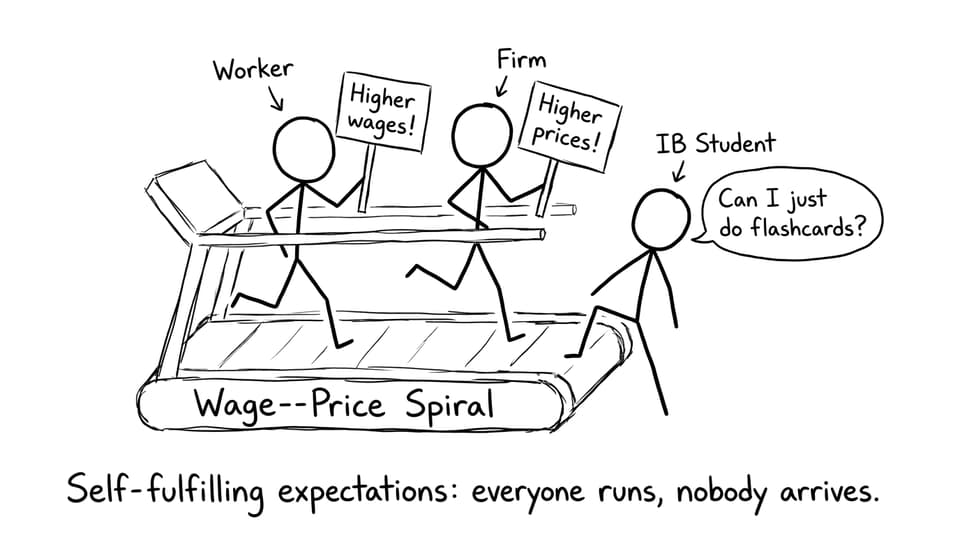
Explain the self-fulfilling mechanism (wages and prices move now).
-
Link to central bank credibility and inflation targeting.
-
Evaluate: anchored expectations = smaller policy moves; unanchored = bigger, riskier moves.
-
Add one macro impact: investment, borrowing, confidence, growth.
For the wider syllabus context, start with the IB Economics resources hub.
Why inflation expectations matter for policy in IB Economics
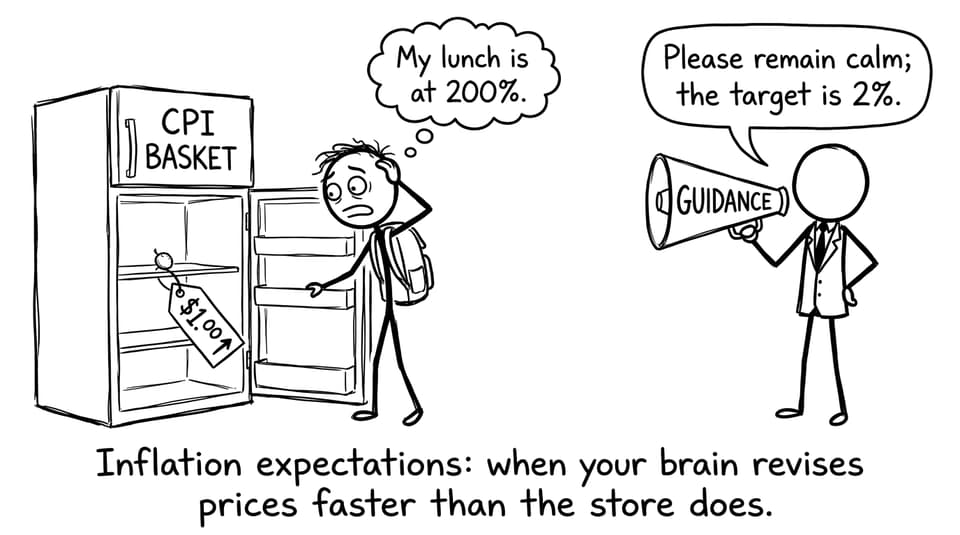
In IB Economics, policymakers care about expectations because expectations change behaviour before inflation shows up in official data.
If households expect higher prices, they may bring purchases forward (higher consumption today). If firms expect higher costs, they may raise prices pre-emptively. If workers expect the cost of living to rise, they negotiate higher wages. Put together, expectations can become a push that turns a small inflation shock into persistent inflation.
That’s why your monetary policy evaluation should mention that central banks watch expectations alongside measured inflation. If you need a measurement refresher for data response, use How Is Inflation Measured? (IB Economics).
Anchored expectations: the quiet superpower of monetary policy
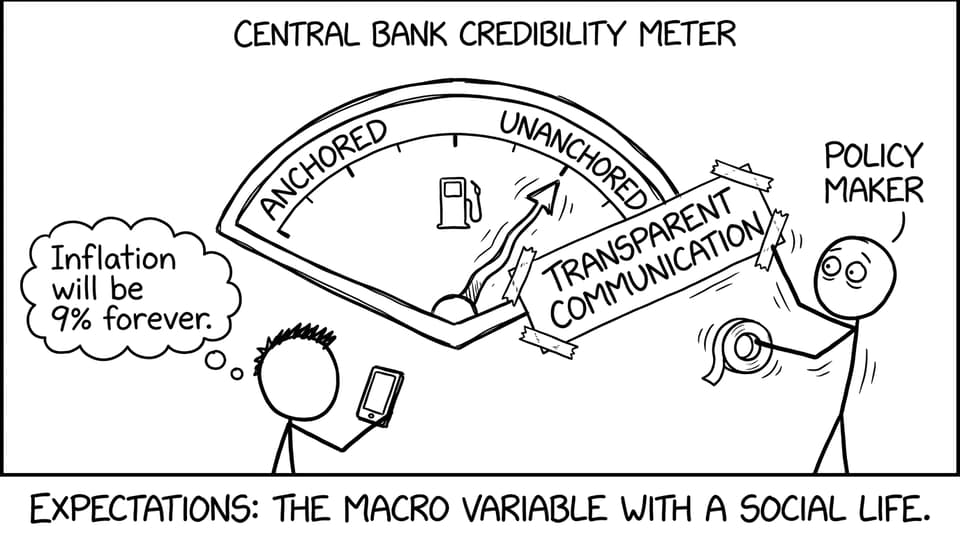
When inflation expectations are anchored, the public trusts inflation will return near the target. In IB Economics, this matters because it makes policy more effective.
Anchored expectations mean a central bank can respond gradually to shocks. Interest rate changes don’t need to be dramatic because households and firms don’t panic-adjust wages and prices. The opposite is also true: if expectations drift upward, the central bank may need contractionary policy that risks higher unemployment and slower growth.
Revision tip: link this to the transmission mechanism you revise in Monetary policy (topic page) and the supporting Monetary policy notes.
Expectations, investment, and long-term stability
Expectations are also about planning. If expected inflation is stable, real interest rates are easier to anticipate, and firms can invest with more confidence. In IB Economics, you can describe this as lower uncertainty and stronger conditions for long-run growth.
If expectations become volatile, borrowing and investment decisions get delayed. That slows AD, weakens growth, and can create policy dilemmas. In extreme cases, unanchored expectations can contribute to prolonged inflation or deflation, both of which carry serious macro costs.
To add evaluation depth, connect these trade-offs to macro objectives using Potential conflict between macroeconomic objectives (notes).
How to revise inflation expectations with RevisionDojo (fast)
For IB Economics exam prep, the trick is turning this concept into marks: clear chains, accurate terminology, and balanced evaluation.
-
Use Macroeconomics notes to lock the definitions.
-
Drill policy questions in the Monetary policy Questionbank and Macroeconomic objectives Questionbank.
-
Keep daily recall alive with the Macroeconomics flashcards.
-
When you get stuck, use RevisionDojo’s AI Chat for quick clarification, then return to timed practice.
-
For realism, add RevisionDojo’s Predicted Papers and Mock Exams, then use Grading tools to see exactly where evaluation marks are won.
Conclusion: the policy variable you can’t graph easily
In IB Economics, inflation expectations matter because they sit between policy and reality. They are the story people tell themselves about prices, and that story changes what they do today.
If you want to write sharper policy evaluation, revise the concept using RevisionDojo’s Study Notes, then pressure-test it with Questionbank practice, Predicted Papers, Mock Exams, and Grading tools. When you can explain why anchored inflation expectations make policy calmer (and why unanchored expectations make it messy), you’re not just revising IB Economics; you’re thinking like an examiner.