


You can feel it when subject selection season hits: your timetable stops being a schedule and becomes a statement.
For STEM-leaning IB students, the Group 6 decision is the weirdest one. It’s the only slot where the obvious “optimize for university prerequisites” instinct clashes with something quieter: you might actually want to make something. The question isn’t whether IB Group 6 Arts are “good” or “bad” for STEM. It’s whether IB Group 6 Arts are the right trade for your time, energy, and goals.
What counts as IB Group 6 Arts (and what you can do instead)
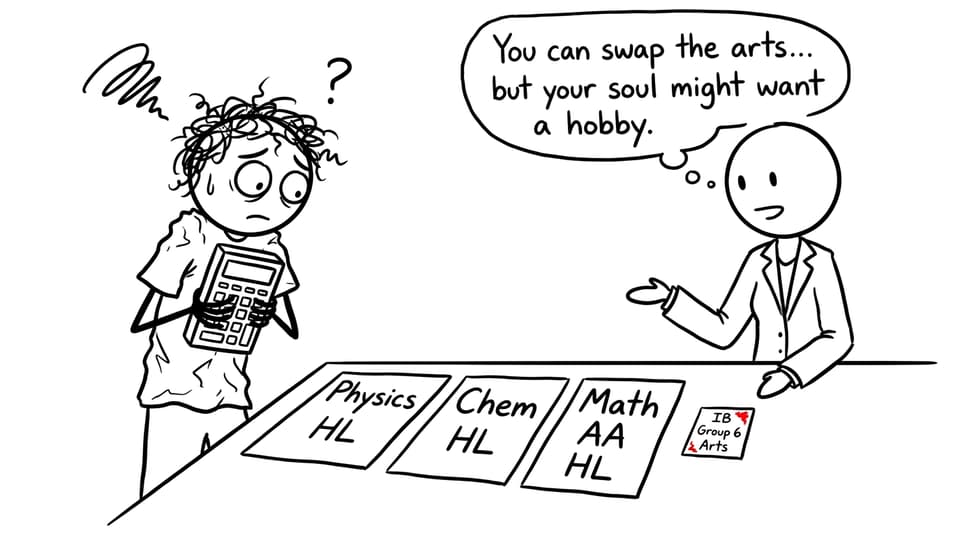
In the IB Diploma, IB Group 6 Arts includes creative subjects like Visual Arts, Music, Theatre, Dance, and Film. The important strategic detail is this: you’re usually not required to take IB Group 6 Arts.
Most schools allow you to replace the Group 6 slot with an additional subject from Groups 1-5 (commonly an extra science, math, or humanities). Before you decide, it helps to understand what Group 6 actually involves and how it’s assessed: What Is a Group 6 Class in IB?
If you’re still building your overall subject set, start here: What IB Subjects Should You Take?
Why many STEM students skip IB Group 6 Arts
STEM university pathways usually reward clarity. Engineering and physics often care most about math and physics at higher level. Medicine and many life science routes often prioritize chemistry and biology. In those cases, IB Group 6 Arts rarely increases admissions strength as much as an extra Group 4 or a stronger Group 5.
If you’re deciding between science options, this is worth reading: Which IB Science Subject Has the Best University Recognition?
And if you’re torn between two classic STEM-heavy sciences: IB Physics vs IB Chemistry: Which One Should You Take?
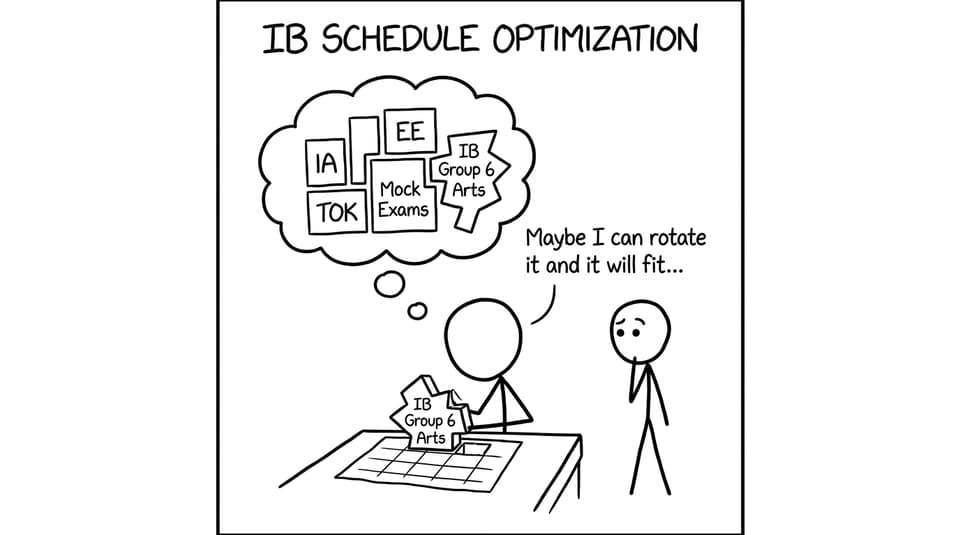
Put simply: many STEM students skip IB Group 6 Arts because the opportunity cost is real. A subject isn’t “just one class” in IB. It’s studio time, reflection, drafting, evidence gathering, and sustained weekly output.
To make that workload concrete, see: How Many Hours a Week Should You Study for IB Group 6?
When IB Group 6 Arts is actually a smart move for STEM
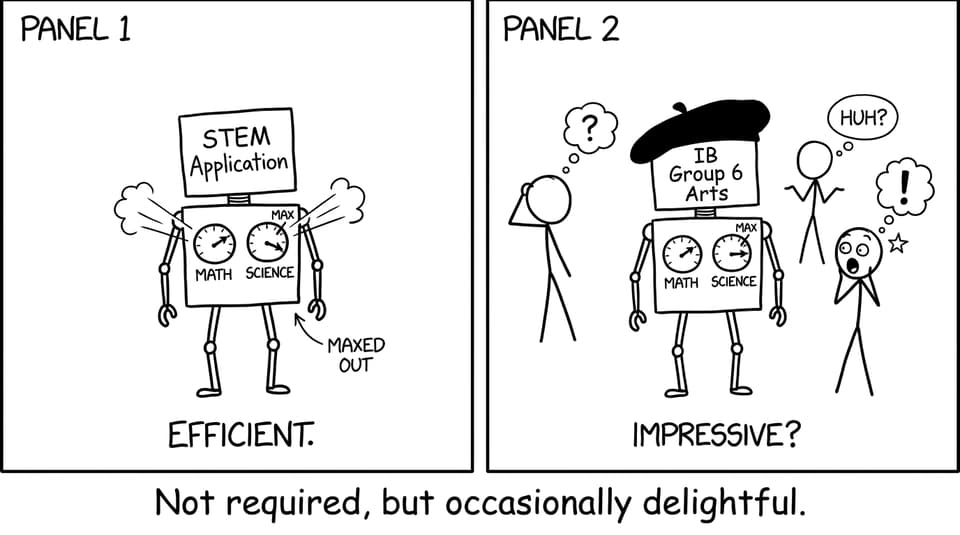
There are times when IB Group 6 Arts strengthens a STEM story instead of distracting from it. The key is alignment: the arts subject should support the kind of STEM you’re aiming for.
Visual Arts for architecture, design, and “build-meets-aesthetics” careers
If you’re considering architecture, product design, UX/UI, or anything where form matters as much as function, Visual Arts can be a strong complement. You learn to document process, justify choices, and iterate. That’s not fluff; it’s design thinking.
If Visual Arts is on your shortlist, use these guides to understand what earns marks:
Film or Theatre for technical communication and creative technology
Some STEM students end up in fields where storytelling is the job: data journalism, science communication, game development, interactive media, or creative coding. In those lanes, IB Group 6 Arts can sharpen collaboration, audience awareness, and the ability to explain complex ideas clearly.
Music for pattern discipline (if you already have the habit)
Music can support pattern recognition and structured practice. But the hidden requirement is consistency. If you already practice regularly, Music can fit. If you don’t, it can quietly consume time you assumed you’d spend on Math or Physics.
Quick checklist: choosing the right Group 6 move
Use this as a fast decision filter for IB Group 6 Arts:
-
If your intended degree has strict prerequisites (engineering, medicine, physics), prioritize those first.
-
If your STEM direction is design-adjacent (architecture, product design), Visual Arts is often the most transferable.
-
If you struggle with long projects and reflection, be careful with IB Group 6 Arts workloads.
-
If you want the creative outlet for sanity, keep it, but plan it like a real subject.
And if you want reassurance that your overall IB plan is sensible, compare your choices to common student regrets early: What I Wish I Knew Before Starting the IB Diploma
How RevisionDojo helps you succeed either way
Whether you choose IB Group 6 Arts or swap it out, the exam season doesn’t care about your intentions, it cares about your execution.
RevisionDojo is built for that execution. You can use the Study Notes and Flashcards to keep content light and repeatable, then pressure-test understanding in the Questionbank. When you get stuck, AI Chat helps you diagnose the exact misconception without losing an evening. For performance training, use Mock Exams and Predicted Papers to build timing and confidence. And when coursework starts to blur, the Coursework Library plus Grading tools bring clarity on what “good” looks like. If you need a human plan, Tutors help you turn ambition into a weekly routine.
Conclusion: the smartest choice is the one you can sustain
A STEM-strong diploma usually prioritizes math and science depth. But the best IB plan is not just “most rigorous on paper” but it’s the one you can execute calmly for two years.
If IB Group 6 Arts aligns with your future path or keeps you genuinely engaged, it can be a smart, even strategic, choice. If it’s only there out of obligation, swapping it for another subject may be cleaner.
Whichever route you take, build your plan with tools that reduce friction: RevisionDojo’s Questionbank, Study Notes, Flashcards, AI Chat, Grading tools, Mock Exams, Predicted Papers, Coursework Library, and Tutors are designed to keep your IB decisions turning into IB results.