


When the room goes quiet and the timer starts, your brain can do something strange. The same topic you explained perfectly yesterday suddenly feels like it was written in another language.
That moment is common in the IB. Not because you are unprepared, but because pressure changes how your mind retrieves information. The good news is that exam anxiety is not a character flaw. It is a pattern. And patterns can be trained.
This guide focuses on what effective classroom support looks like for IB students preparing for exams: practical routines teachers can run, plus strategies students can ask for (or quietly build for themselves). The goal is not to erase nerves. The goal is to turn nerves into a plan.
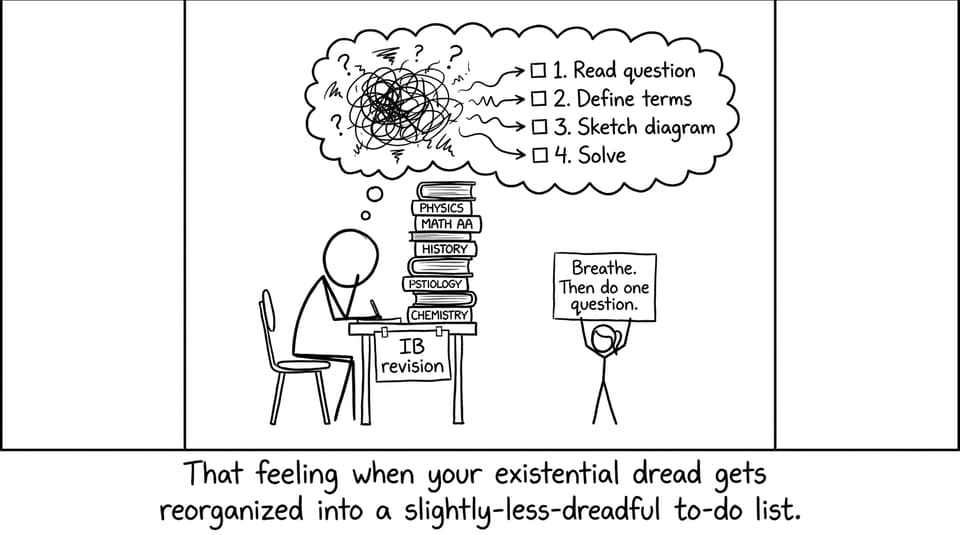
Quick classroom checklist for IB exam anxiety
If you are a teacher or student looking for fast traction, these are the most reliable supports for IB exam anxiety:
-
Keep stress talk normal and specific (no drama, no shame)
-
Build reflection into every timed practice (two minutes is enough)
-
Use low-stakes exam practice before high-stakes performance
-
Teach one reset routine (breathing + next step) and repeat it
-
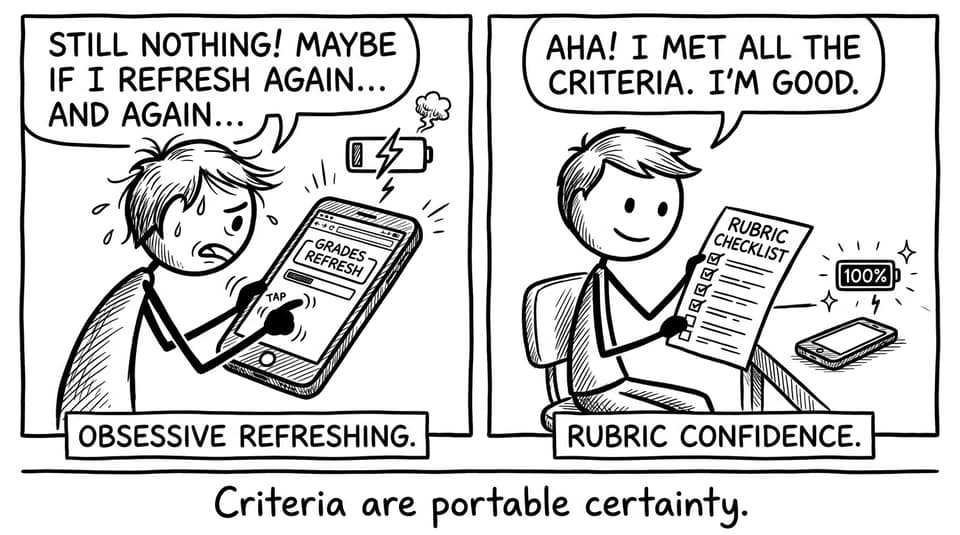
Give rubric-aligned feedback that shows exactly how to gain marks
If you want a structured system that connects these pieces, RevisionDojo can act as a home base: Study Notes for clarity, Flashcards for daily retrieval, Questionbank practice for repetition, AI Chat for quick diagnosis, and Grading tools for feedback that feels concrete.
Why IB exam anxiety feels so intense
IB stress is rarely caused by one thing. It is usually a stack:
-
Big consequences (university offers, diploma requirements, self-expectations)
-
Multiple deadlines at once (assessments, projects, coursework)
-
Uncertainty about what “good” answers look like
-
Perfectionism disguised as “high standards”
Anxiety tends to spike when you cannot predict outcomes. That is why the most effective classroom support does not start with motivation. It starts with certainty: criteria, routines, and repeated exposure to exam-style tasks.
A practical next step is to build a revision loop that produces proof. RevisionDojo is designed around that loop: start in the Questionbank, check understanding with RevisionDojo App for IB exam prep, then train timing with IB predicted papers when you are ready.
Build a classroom culture where mistakes are information
In anxious classrooms, mistakes feel like identity: “I got this wrong, therefore I am bad at this.” In calm classrooms, mistakes are data: “I got this wrong, therefore I know what to train next.”
Teachers can create that shift with small, consistent moves:
-
Talk about error patterns, not “smart vs not smart”
-
Praise good process (planning, checking command terms, showing steps)
-
Treat formative work as rehearsal, not judgment
-
Show students that improvement is expected and trackable
For students, it helps to see growth as something you can measure, not something you are supposed to “feel.” Articles like The IB anxiety loop (and how to break it before exams) can give language to what is happening in your head, which already lowers the heat.
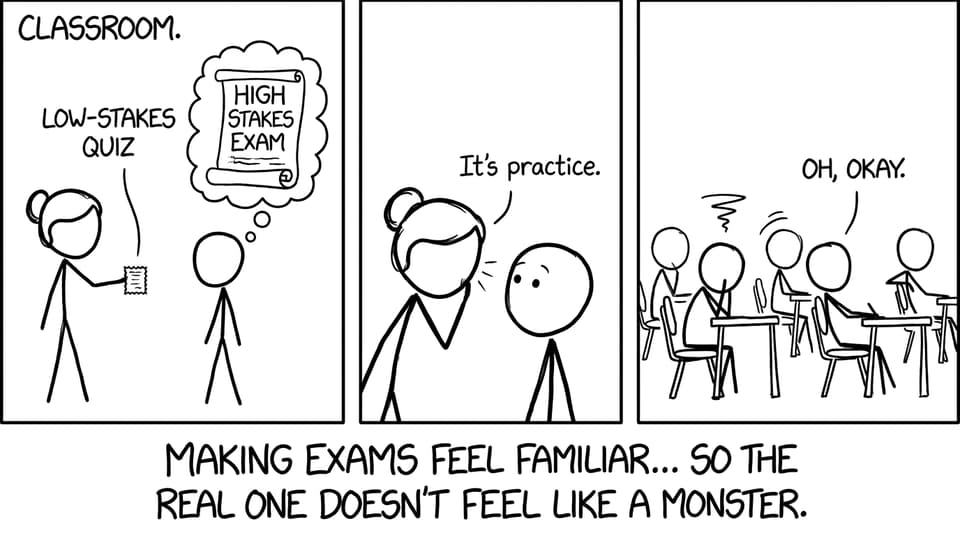
Use low-stakes exam practice to make the real thing feel familiar
Familiarity is underrated. A lot of IB exam anxiety is simply your nervous system reacting to novelty: unfamiliar timing, unfamiliar wording, unfamiliar pressure.
A strong classroom approach is “graduated exposure”:
-
Start with 10-15 minute timed blocks
-
Move to single-section timed work
-
Then build to full mock conditions
The key is emotional safety: the first timed sessions should be framed as training, not verdicts. When you practice under light pressure often, heavier pressure becomes less surprising.
If students need structure outside class, a useful companion is How to study for IB mocks (without burning out), which breaks practice into repeatable pieces. And for targeted drills, pairing Study Notes with the Questionbank keeps revision active rather than passive.
Feedback that reduces IB exam anxiety instead of increasing it
Vague feedback creates vague worry. Clear feedback creates direction.
The best anxiety-reducing feedback has three qualities:
-
It is tied to the rubric or criteria (so the target is stable)
-
It names one or two priorities (not ten)
-
It includes an action the student can do this week
Example:
“Your explanation is accurate, but you are missing evaluation language. Next time, add one limitation and one implication to move up.”
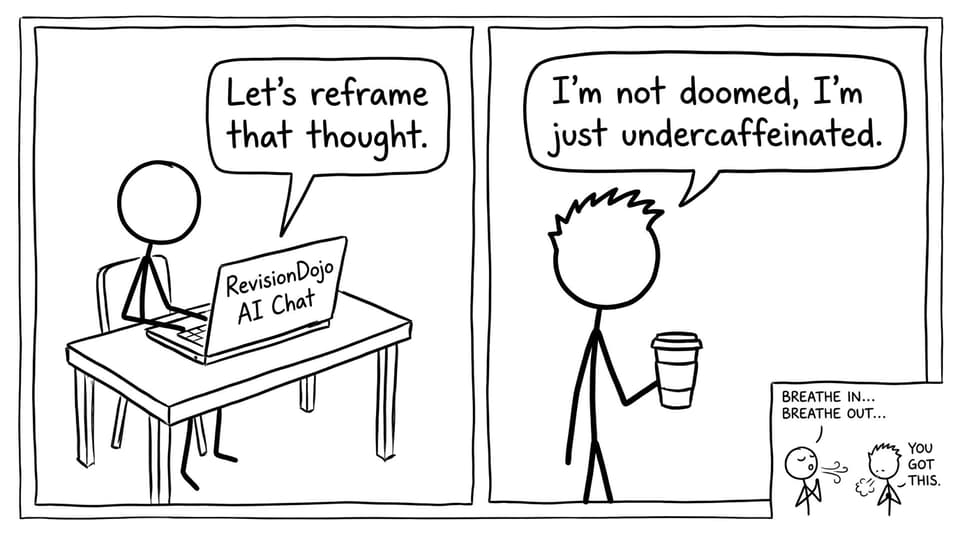
Students can reinforce this clarity by using a tool that grades like an examiner would. RevisionDojo’s Grading tools and AI Chat can help turn “I don’t know what they want” into “here is what earns the next mark,” which is often the fastest way to calm IB exam anxiety.
Teach one reset routine and practice it until it is automatic
Most students do not need twenty coping techniques. They need one reliable script they can run under stress.
A simple classroom reset protocol:
-
Exhale longer than you inhale (4 seconds in, 6 seconds out)
-
Name the task: “One question, one mark at a time”
-
Start with the easiest prompt on the page to rebuild momentum
This is not about “positive vibes.” It is about regaining working memory. If you want a deeper set of strategies, Meditation and breathing techniques for exam stress and The psychology of test anxiety and how to beat it are strong complements.
Turn reflection into a habit (not an essay)
Reflection works when it is short, specific, and repeated.
After any timed task, students can answer:
-
What did I do well that I should repeat?
-
Where did I lose the most marks?
-
What is one rule for next time?
Teachers can collect these reflections and use them to spot patterns across the class: time panic, command term confusion, overlong introductions, underdeveloped examples.
At home, students can do the same inside RevisionDojo: drill with Questionbank, log mistakes, turn repeated errors into Flashcards, and use AI Chat to diagnose the stubborn ones. That cycle builds confidence because it builds evidence.
Conclusion: the calmest IB classrooms build proof
The IB does not get easier because someone tells you to “relax.” It gets easier when your classroom builds a rhythm: practice, feedback, reflection, repeat. That rhythm turns uncertainty into familiarity, and familiarity is one of the strongest antidotes to exam anxiety.
If you want one place to run that whole system, RevisionDojo brings it together: Study Notes, Flashcards, Questionbank, AI Chat, Grading tools, Predicted Papers, Mock Exams, a Coursework Library, and Tutors when you need a human voice in the plan. Start small: one timed block, one review, one rule. Then let the compounding do what it always does in the IB: turn effort into confidence.