
When exam pressure hits, most IB English students don’t run out of ideas first. They run out of structure.
You can feel it happening in real time: you spot a technique, you grab a quote, and then your paragraph drifts into plot summary or vague praise. The examiner doesn’t need more “good use of imagery.” They need proof that you understand how a writer builds meaning and why those choices matter.
That’s why IB English analytical paragraphs live or die on a simple framework: PEEL. Not as a rigid formula, but as a calm set of rails that keeps your argument moving forward.
The PEEL method (and why IB English examiners love it)
PEEL is the most reliable paragraph structure for IB English A: Language & Literature because it forces you to do what the criteria reward: clear claims, precise evidence, and sustained analysis.
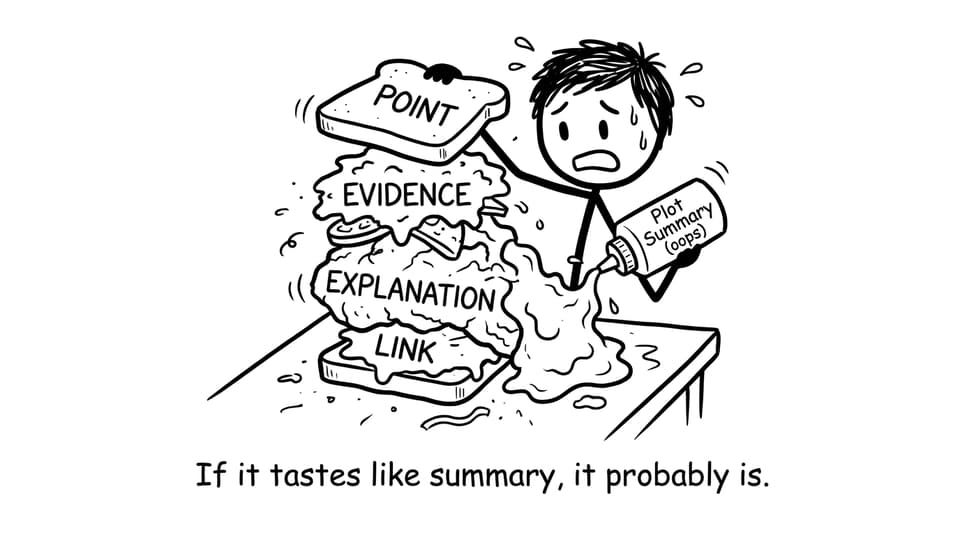
PEEL stands for:
-
Point: your paragraph’s single arguable claim
-
Evidence: a short quotation or specific detail
-
Explanation: analysis of choice, effect, meaning
-
Link: connection back to the thesis (or forward to the next idea)
If you want a bigger picture of how paragraph structure fits into top-band writing, pair this with The Importance of Structure in IB English Analytical Writing.
A quick checklist before you write any IB English PEEL paragraph
Use this 30-second checklist to keep IB English paragraphs examiner-friendly:
-
My Point answers the question, not just names a device.
-
My Evidence is short (2-5 words is often enough).
-
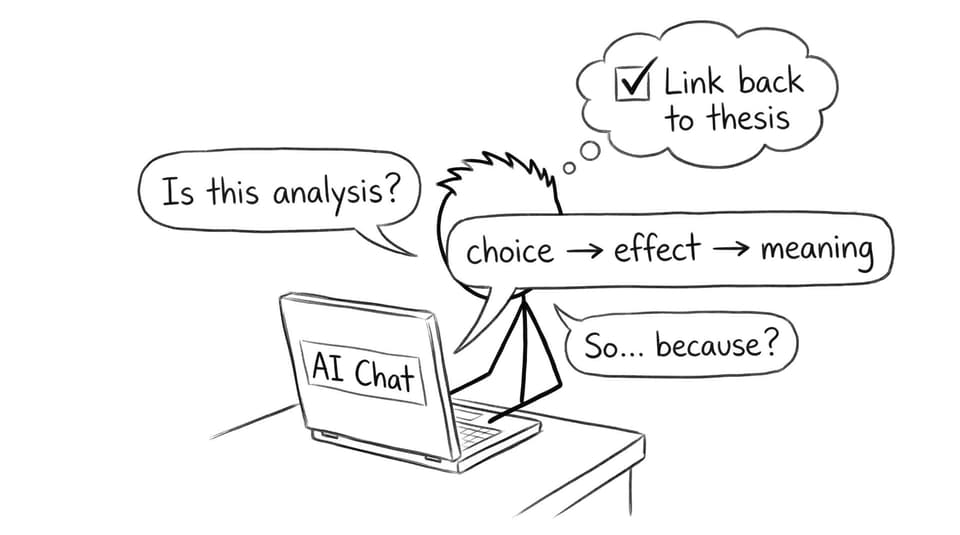
My Explanation uses “choice: effect, meaning.”
-
My Link repeats the thesis idea in new words.
-
I’m analyzing language/structure, not retelling content.
For a deeper skill boost, the Principles of Analysis notes are a solid companion.
Writing PEEL paragraphs step-by-step for IB English
Point: make one clear claim
In IB English, a Point is not “the author uses imagery.” That’s a label, not an argument.
A strong Point includes:
-
what the writer does
-
why it matters
-
how it supports your thesis
Upgrade move: make the Point comparative whenever needed (especially Paper 2): one sentence that speaks about both texts, not two separate mini-arguments.
If you’re working on tone as a line of argument, the guide IB English: How Tone and Mood Shape Your Analysis helps you find sharper vocabulary for Points.
Evidence: choose less, analyze more
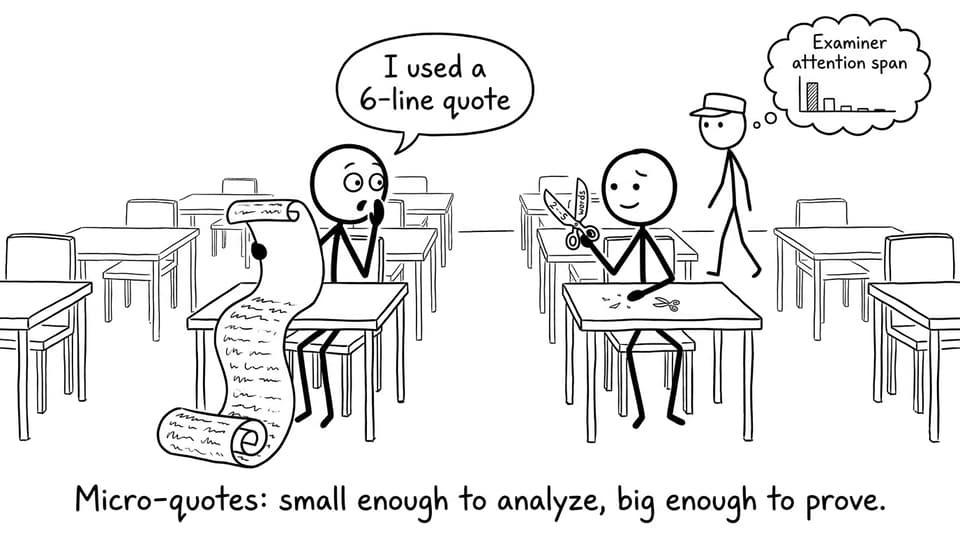
Evidence is the part students overdo when they’re nervous. In IB English, long quotations often act like a hiding place: they look impressive, but they reduce your room for analysis.
Aim for:
-
1-2 micro-quotes per paragraph
-
the most “loaded” words (connotations, irony, ambiguity, contrast)
-
smooth integration into your own sentence
To practice under exam conditions, use targeted sets from the IB English A Lang & Lit Paper 1 Questionbank. RevisionDojo’s Questionbank makes “quote selection” a repeatable skill, not a one-off moment of inspiration.
Explanation: the part that earns marks
Explanation is where IB English becomes analysis rather than commentary.
A useful sentence pattern is:
The writer’s choice of [method] creates [effect], which shapes [meaning] by [reason/purpose].
Then deepen it:
-
zoom in on a word
-
comment on tone
-
connect to audience positioning
-
note a structural shift
If you find yourself stuck, read IB English: Common Essay Mistakes to Avoid and check whether you’re describing instead of analyzing.
Link: make the paragraph feel inevitable
The Link is the quiet power move in IB English. It signals control.
A strong Link does not just repeat the Point. It answers:
-
So what does this paragraph prove about the thesis?
-
How does it set up the next idea?
If you’re building full essays, connect this habit with Writing Effective Introductions and Conclusions in IB English Essays so your argument feels cohesive from start to finish.
A PEEL paragraph example (exam-ready, not robotic)
Thesis idea: The writer presents conflict as psychologically claustrophobic, using structure and imagery to trap the reader inside the speaker’s mind.
-
Point: In this moment, the writer uses fragmented syntax to mirror a mind that cannot settle, suggesting that conflict has become internal rather than external.
-
Evidence: The sentence breaks into “short, cut-off clauses” and a repeated “and.”
-
Explanation: Fragmentation forces the reader to stop and restart, recreating mental interruption as an experience. The repeated conjunction creates a breathless accumulation, implying that thoughts arrive faster than they can be processed. This positions the audience to feel tension as rhythm, not just theme, which is exactly what top-band IB English analysis does: it explains how form produces meaning.
-
Link: By turning structure into a felt experience, the writer supports the thesis that conflict is shown as confinement inside consciousness.
If Paper 1 is your focus, build this alongside Mastering IB English Paper 1: A Complete Guide or the more tactical Step-by-Step Guide to Revising IB English Paper 1.
Common PEEL mistakes (and quick fixes)
-
Technique shopping: listing devices without explaining effect. Fix: add “because” after every claim.
-
Quote dumping: dropping long evidence with no integration. Fix: shrink to micro-quotes.
-
Plot summary: retelling what happens instead of how it’s written. Fix: name the authorial choice first.
-
No link: ending abruptly. Fix: one sentence that echoes the thesis concept.
How to adapt PEEL across IB English assessments
-
Paper 1: One PEEL paragraph per main pattern (tone shift, imagery cluster, structural turn). Build speed with the IB English Paper 1 prep guide.
-
Paper 2: Use a comparative Point, then evidence from both texts inside the same paragraph. For models, see How to Structure a Comparative Essay in IB Literature.
-
HL Essay and IO scripts: PEEL becomes longer, not different: more evidence points, deeper Explanation, clearer Links back to your line of inquiry.
Closing: build IB English confidence one paragraph at a time
The real advantage of PEEL in IB English isn’t that it makes writing easy. It makes writing repeatable. And repeatable is how you improve under time pressure.
If you want to turn PEEL into a habit, RevisionDojo gives you the full ecosystem: timed practice in the Questionbank, targeted Study Notes, mistake-catching Grading tools, memory support via Flashcards, feedback loops with AI Chat, plus Mock Exams and Predicted Papers to rehearse the real exam feel. When you’re ready for personalised help, RevisionDojo Tutors can also diagnose exactly which part of your PEEL (Point, Evidence, Explanation, or Link) is costing you marks.
Write one clean IB English PEEL paragraph today. Then improve one sentence in the Explanation. That’s how top-band essays are built: quietly, deliberately, and on purpose.