



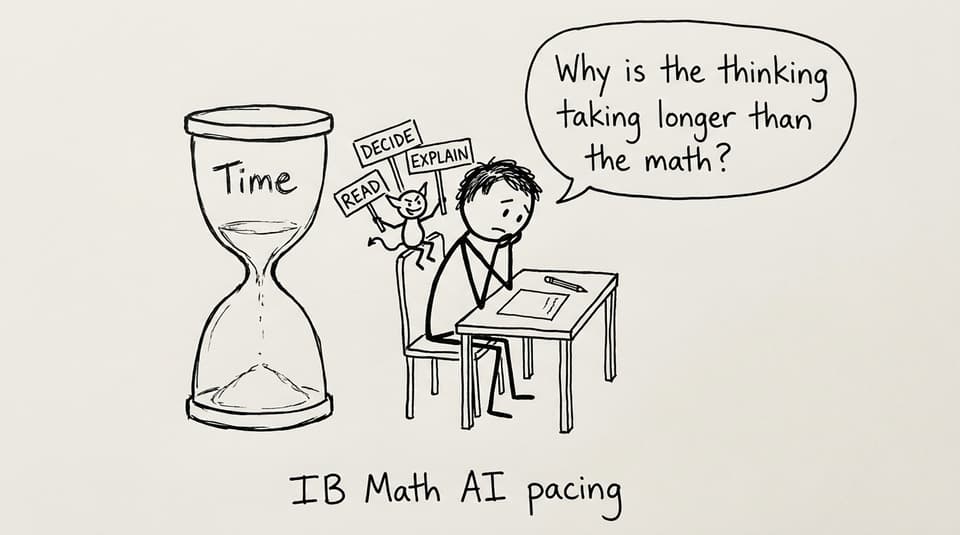
If you’ve ever walked out of an IB Math AI exam thinking, “I knew it… so why did I run out of time?” you’re not alone. The frustrating part is that the paper often doesn’t look “long.” But IB Math AI isn’t a race through calculations. It’s a test of how quickly you can think in layers: interpret a context, choose an approach, compute, and then explain what it means like a mini analyst under pressure.
That’s why time management in IB Math AI exams feels harder than you expect: the clock isn’t stolen by arithmetic. It’s stolen by decision-making, reading, and writing.
A quick checklist for IB Math AI pacing
Before your next timed practice, keep this IB Math checklist on your desk:
-
Read the full prompt first (don’t “start calculating to feel productive”).
-
Spot the command term: calculate, interpret, justify, comment, evaluate.
-
Choose the method fast, then commit.
-
Write short explanations early, not as an afterthought.
-
Spend time in proportion to marks, not anxiety.
For a fuller pacing framework, use How to Master Time Management in IB Math Exams.
Why IB Math AI questions take longer than they look
In many subjects, difficulty shows up as “more steps.” In IB Math AI, difficulty often shows up as “more thinking.” A question that looks like one page can secretly contain four tasks:
-
decode the context,
-
select an appropriate model or tool,
-
do the calculation accurately enough,
-
interpret the result and acknowledge limitations.
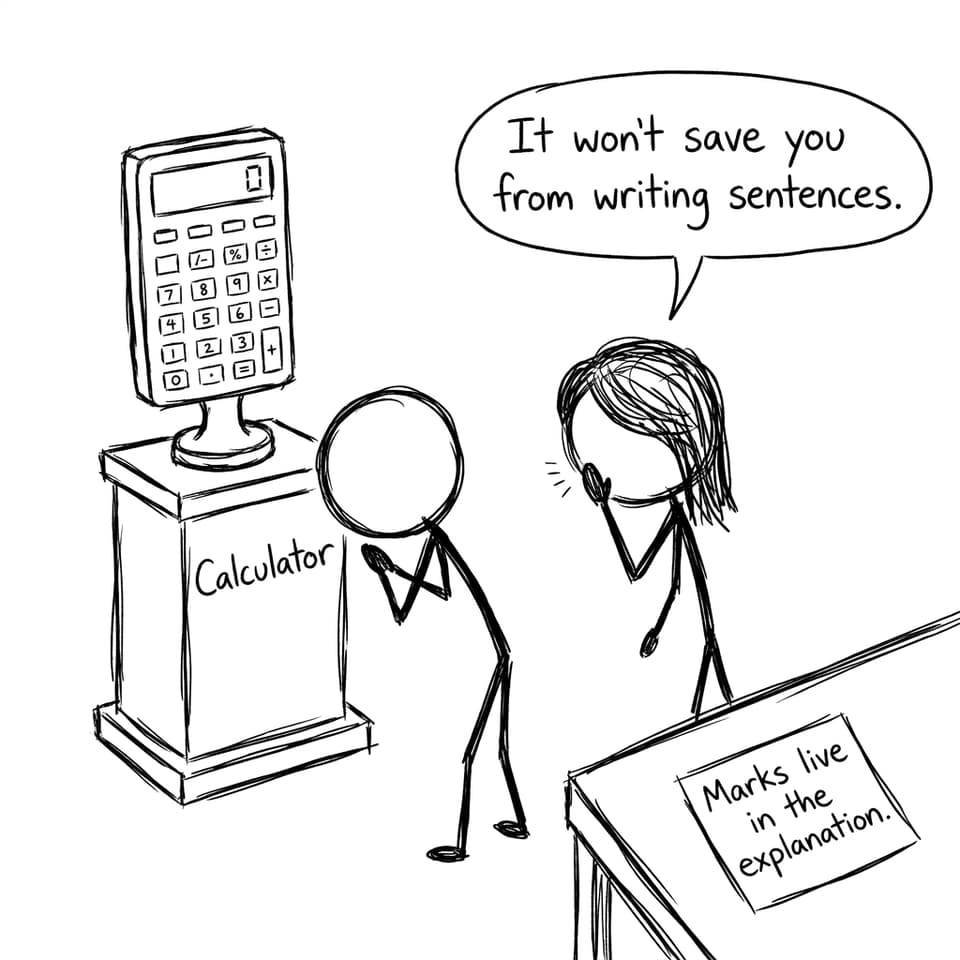
That final bullet is the silent time-sink. Because explanation marks are real marks, and they take real minutes.
If you want targeted drills that mirror this structure, RevisionDojo’s Math AI Questionbank is built for exam-style pacing practice.
Decision time: the hidden tax in IB Math
A classic IB Math AI slowdown is not the math itself, but the pause right before it:
-
“Is this regression or a probability distribution?”
-
“Do I need a normal approximation here?”
-
“Do they want a calculation or a conclusion in context?”
Those micro-decisions don’t feel like work, but they consume time and mental energy. Under exam stress, your brain also gets more cautious, which makes decisions slower.
A practical fix is to practice under realistic conditions. Use RevisionDojo’s timed workflows via How to Use the Questionbank for Targeted Math Revision and pair it with quick concept refreshers from How to Revise IB Math AA and AI Effectively.
Reading and writing are part of the IB Math workload
Many IB Math AI prompts are word-heavy. If you skim, you often pay twice: once when you misread, and again when you redo.
Then comes the writing. Explanations take longer than numbers because they require structure: a claim, a reference to your value, and a context sentence. Students who haven’t practiced concise “exam writing” either overwrite (burning time) or freeze (burning marks).
If you’re balancing revision across all subjects, Best Time Management Techniques for IB Students in 2025 helps you build a routine that makes timed practice sustainable.
Perfectionism: spending minutes to earn fractions
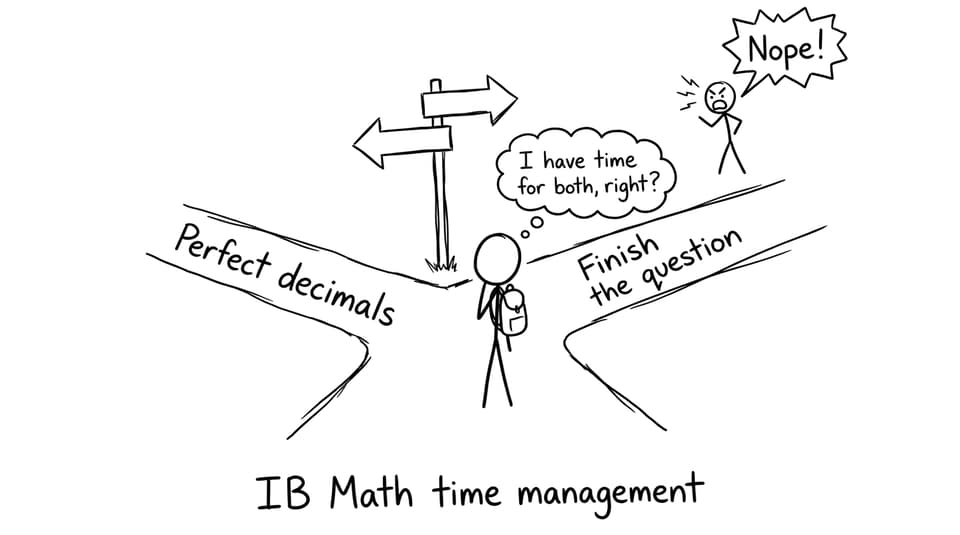
One of the most expensive habits in IB Math is chasing perfect decimals as if the examiner is a rounding machine. In AI, tiny numerical refinements rarely outperform clear interpretation.
A good rule: calculate efficiently, then move to the sentence that earns meaning-based marks.
This is where RevisionDojo’s ecosystem helps you train smart, not just hard: Study Notes to clarify methods, Flashcards to lock in definitions and command terms, AI Chat to untangle confusing setups quickly, Grading tools to learn what examiners reward, and Mock Exams and Predicted Papers to rehearse full pacing.
To plan your weekly buildup, see Best Study Schedule For IB Math Exams. And when you’re ready for full-paper rehearsal, use Mathematics Applications & Interpretation (Math AI) Papers.
Conclusion: IB Math AI exams aren’t short on time: they’re strict about it
The real challenge in IB Math AI is that the paper asks you to be a reader, a decision-maker, a calculator user, and a communicator at the same time. Once you accept that, your strategy changes: you stop worshipping perfect calculations and start protecting the marks hidden in interpretation.
If you understand the content but keep finishing late, build your pacing with RevisionDojo: drill decision-heavy questions in the Questionbank, refine explanations with Study Notes and AI Chat, and rehearse under pressure using Mock Exams and Predicted Papers. That’s how IB Math stops feeling like a sprint and starts feeling like something you can control.