The trap: “My calculator got the answer, so I’m done”
In IB Math, there’s a moment that repeats itself every exam season. A student finishes a long calculator sequence, gets a clean decimal, and feels a small rush of certainty. It looks like progress. It feels like closure.
Then the markscheme asks for something quieter and harder: meaning.
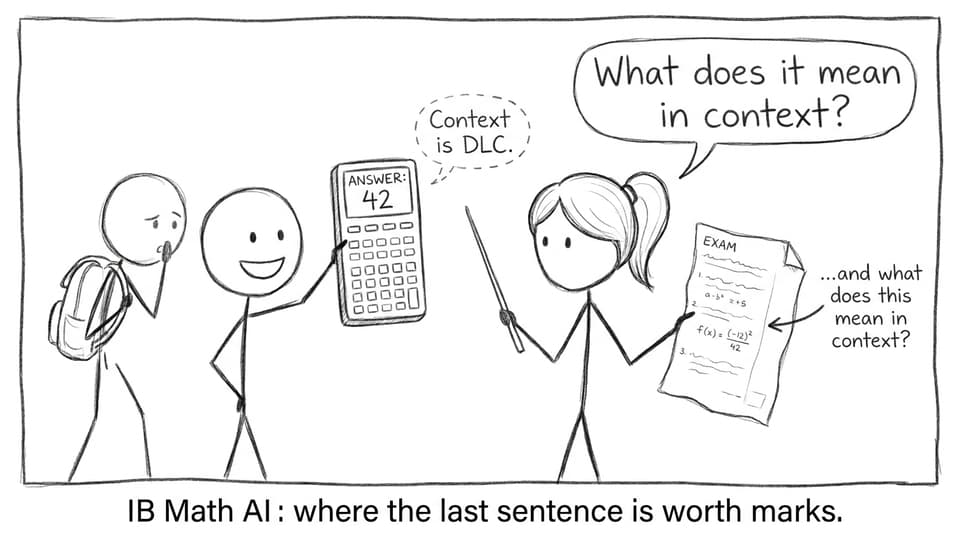
That’s why so many students underestimate the interpretation demands of AI Maths. They assume the course is mainly about executing technology correctly. But in IB Math AI, the highest leverage skill is often explaining what the technology’s output implies in the real-world scenario, clearly, cautiously, and with the right assumptions.
Quick checklist: what “interpretation” really means in IB Math
Use this as your fast mental scan before you move on from any question in IB Math AI:
-
Did I link the numerical result back to the context (units, variables, what it represents)?
-
Did I state any assumptions (model choice, independence, normality, constant rate, etc.)?
-
Did I comment on reasonableness or limitations (sample size, outliers, domain restrictions)?
-
Did I use cautious language ("suggests", "within this range", "may not") when appropriate?
-
Did I conclude in a full sentence that answers the actual question?
If you want a solid overview of how AI is assessed, start with IB Math AI Explained.
Why students underestimate interpretation in IB Math AI
Your previous maths training rewarded procedures
Most students arrive in IB Math with a habit: method leads, explanation follows (if there’s time). Earlier courses often reward getting the number more than narrating the logic.
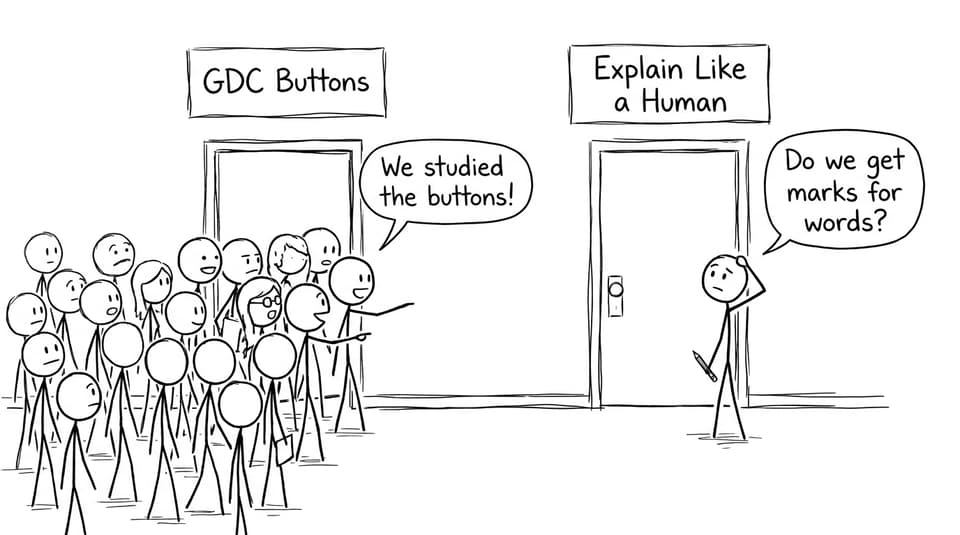
AI Maths flips that. It still cares about method, but it regularly places more value on what you do with the output: interpreting regression parameters, evaluating a model, describing what a probability means in context, or justifying whether a result is reliable.
RevisionDojo’s IB Math AI hub makes this shift obvious because the practice is structured the same way the exams are: calculation plus interpretation, not calculation instead of interpretation.
Interpretation feels “subjective” (but it isn’t)
A number feels safe. Words feel risky.
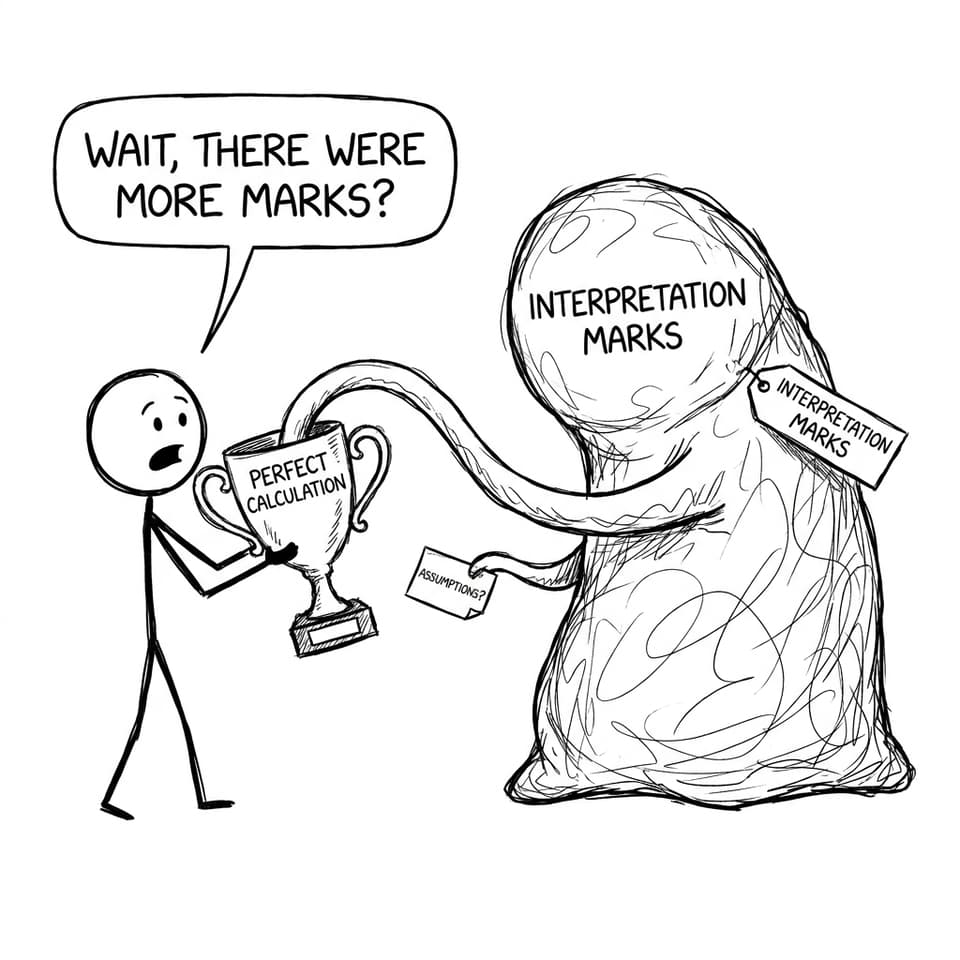
But in IB Math, interpretation is not a vibe. It’s a repeatable checklist of mark-winning moves: connect to context, state assumptions, discuss limitations, and conclude responsibly. When students lose interpretation marks, it’s usually because they stop at labels like “reliable” or “accurate” without giving reasons.
For targeted drilling, use topic practice like Correlation Questionbank and practice writing one strong conclusion sentence for every question.
Interpretation appears everywhere, not only on “comment” questions
In IB Math AI, interpretation isn’t confined to obvious command terms. It’s embedded in:
-
Regression predictions and parameter meaning
-
Model validity and domain restrictions
-
Sampling and bias discussions
-
Probability conclusions in plain language
-
Hypothesis testing decisions and what they imply
If data interpretation is a weak spot, How to Interpret Data in IB Math AI Using Technology shows the exam-style thinking the course expects.
Time pressure makes you sacrifice the easiest marks
A painful truth: interpretation marks are often faster to earn than perfect calculator precision.
Under pressure, many students spend extra minutes chasing a cleaner value, then write a rushed one-liner at the end. In IB Math, that trade is rarely worth it.
To train timing and communication together, build sets around exam conditions using Ace IB Math AI Paper 2 and reinforce the habits with How to Study Effectively for IB Math AI Exams.
How to train interpretation like a skill (not a personality trait)
In IB Math, interpretation improves fastest when you make it mechanical.
-
Add a “final sentence” rule: every multi-step question ends with one contextual conclusion.
-
Keep an “assumptions bank”: a small list you reuse (linearity, independence, normality, constant rate, representative sample).
-
Use examiner-style language: cautious, conditional, specific.
-
Practice with feedback loops: RevisionDojo’s Questionbank, Study Notes, and AI Chat help you check whether your explanation matches what marks reward.
For structured theory support alongside practice, pair question drills with RevisionDojo Notes for Math AI and topic pages like Functions Notes.
Conclusion: in IB Math, the answer isn’t the number
The most common misunderstanding in IB Math AI is thinking the calculator output is the finish line. It’s not. The finish line is your explanation: what the result means, what it assumes, and how confident you should be.
If you want to turn interpretation into a reliable scoring habit, build your routine inside RevisionDojo, using the Questionbank for exam-style drills, Study Notes for clarity, Flashcards for language patterns, AI Chat for instant feedback, and Mock Exams plus Predicted Papers to test under pressure. In IB Math, interpretation is where marks quietly accumulate. Make it your default.