


In the last five minutes of an exam, everyone becomes a sprinter.
Pens move faster. Calculators click louder. And in IB Math, that urgency creates a very specific kind of mistake: you answer the question you expected to see, not the one the examiner actually wrote.
That’s the quiet truth most students only learn after a painful mock. In IB Math, speed is useful only after comprehension. The students who score consistently aren’t necessarily the fastest; they’re the ones who read carefully enough to aim.
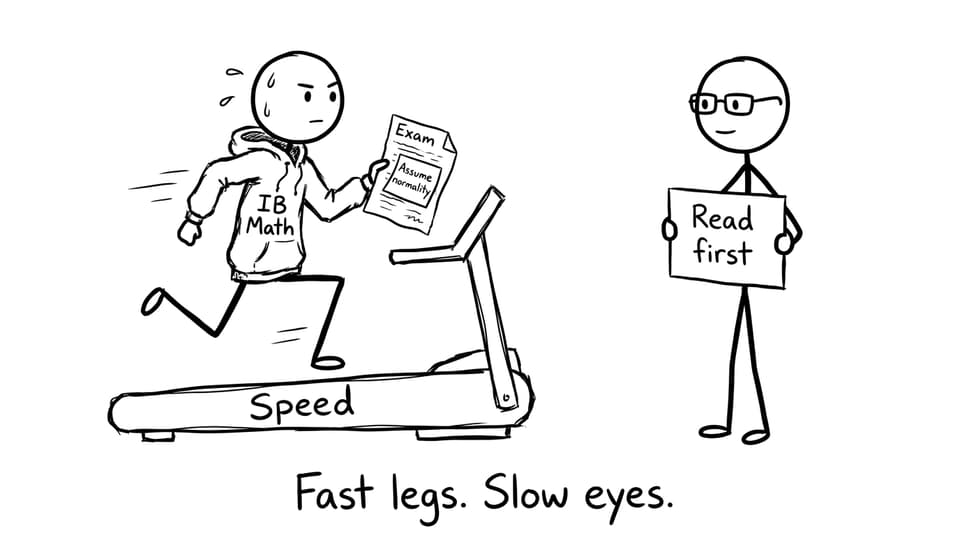
Why careful reading matters more than speed in IB Math
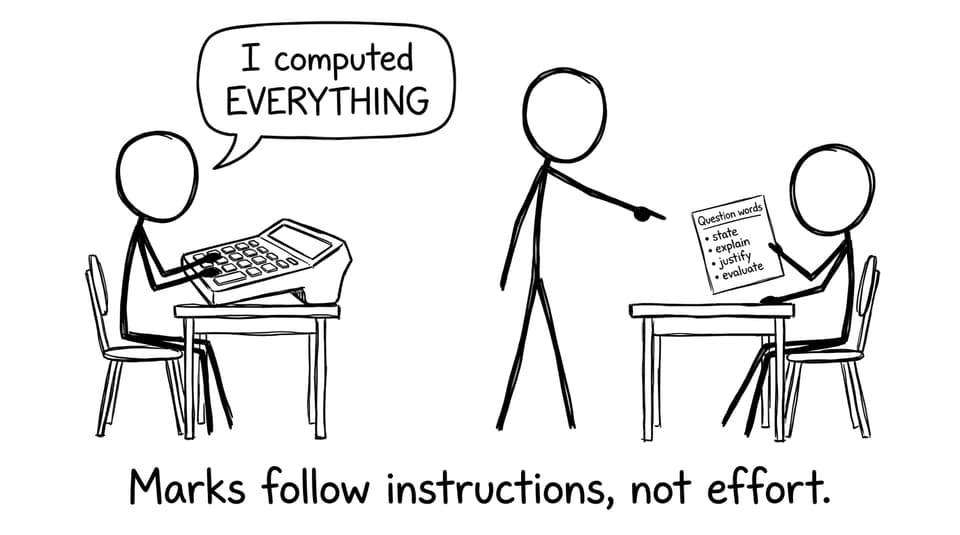
A lot of IB Math marks live in the wording. Especially in context-heavy prompts, the “real question” is often tucked into small phrases:
-
“Using the model…”
-
“Comment on reliability…”
-
“Assume normality…”
-
“Estimate…”
Miss one of those, and you might still do impressive calculations while drifting away from the marking points. That’s why reading carefully isn’t a soft skill; it’s an accuracy tool.
If you want to train this intentionally, start with How to Read Math Questions Carefully (and Avoid Traps) and then build practice around the same habit.
A 15-second IB Math “Read First” checklist
Before you write a single line of working in IB Math, do this quick scan:
-
Circle the command term (what the examiner wants you to do)
-
Underline constraints (assumptions, models, domains, rounding, units)
-
Identify the deliverable (number? equation? explanation? judgement?)
-
Match your plan to the mark allocation (how many distinct points?)
This isn’t extra time. It’s time you’re borrowing from future-you who would otherwise redo the question.
To get better at command terms, keep How to Decode IB Math Command Terms open while you practise.
The hidden trap: familiar topic, unfamiliar task
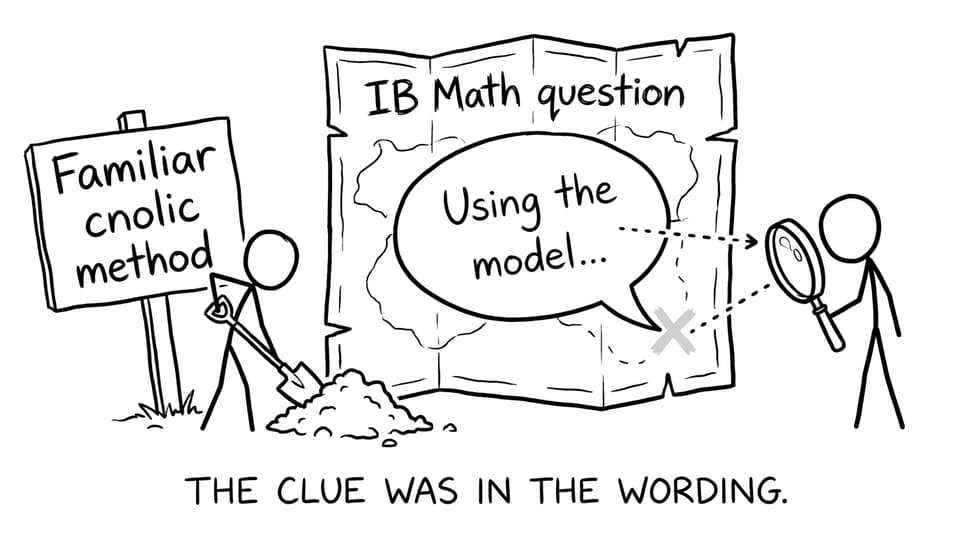
One reason misreads happen in IB Math is pattern recognition. You see “regression” or “probability” and your brain autopilots into a rehearsed method.
But exam writers know this. They often add one twist: interpret, justify, evaluate, or use a specific model. That small twist changes what earns marks.
If probability wording trips you up, Why Students Mix Up “And” vs “Or” in Probability is a great example of how a single word can flip a whole solution.
Careful reading is also a time-management strategy
Rushing feels like saving time, but in IB Math it often creates the slowest workflow:
-
Start fast
-
Misread one condition
-
Finish a beautiful wrong solution
-
Realise it late
-
Rewrite under panic
Careful readers usually finish more comfortably because they choose the right method early and don’t spend minutes repairing avoidable mistakes.
To practise this under realistic pressure, use RevisionDojo’s timed resources like IB Math Mock Exams and the IB Predicted Papers, then review where interpretation marks were lost.
How RevisionDojo helps you read IB Math questions like an examiner
The hard part isn’t knowing you should read carefully. It’s making it automatic when stress rises.
RevisionDojo is built for that:
-
Use the IB Mathematics Applications & Interpretation Resources hub to organise practice by topic.
-
Drill interpretation patterns in the Questionbank, then confirm what the markscheme rewards.
-
Lock common command terms into memory with Flashcards.
-
Use AI Chat to ask, “What is this question really asking me to do?” before you solve.
-
Run timed sets using Mock Exams and Predicted Papers to make careful reading hold up under pressure.
-
When you want feedback on structure and lost marks, lean on Grading tools.
-
If a misunderstanding keeps repeating, the Tutors option helps you fix it at the root.
For more exam-technique patterns, Common Mistakes in IB Math HL exams is worth a read even if you’re not HL, the logic transfers.
The takeaway: in IB Math, aim first, then move fast
Treat IB Math like archery, not a race. The extra 10-15 seconds you spend reading carefully is often the difference between a solution that’s impressive and a solution that’s mark-winning.
If you want this to become automatic, practise it where it counts: build sets in RevisionDojo’s Questionbank, reinforce language with Flashcards, clarify tricky wording with AI Chat, and rehearse pressure using Mock Exams and Predicted Papers. In IB Math, careful reading isn’t caution; it’s strategy.