


Probability has a way of making confident students second-guess themselves. You can do everything “right” and still feel like the universe didn’t get the memo. In IB Math, that emotional wobble is normal: probability is the first topic where the maths stays precise, but the world it describes stays messy.
The quick checklist: why probability feels less certain
-
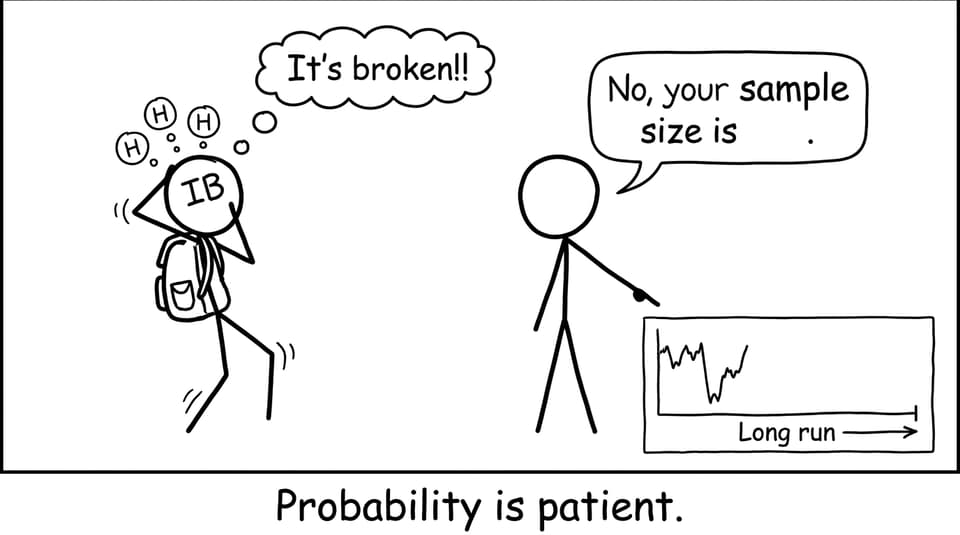
It talks about long-run behavior, but exams show you small, awkward samples.
-
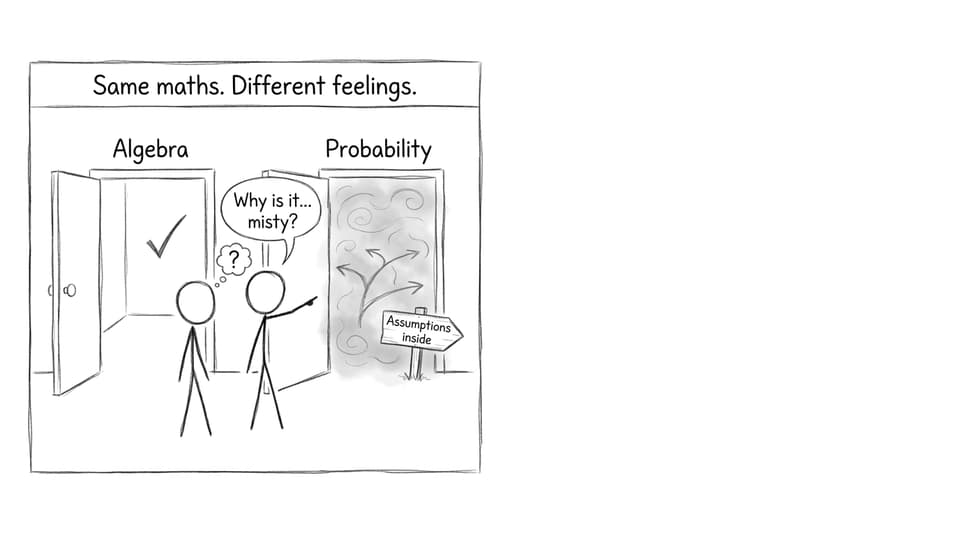
Assumptions hide under the surface (independence, fairness, randomness).
-
Language becomes cautious: “expected,” “likely,” “in the long run.”
-
Your intuition fights randomness, especially in short sequences.
-
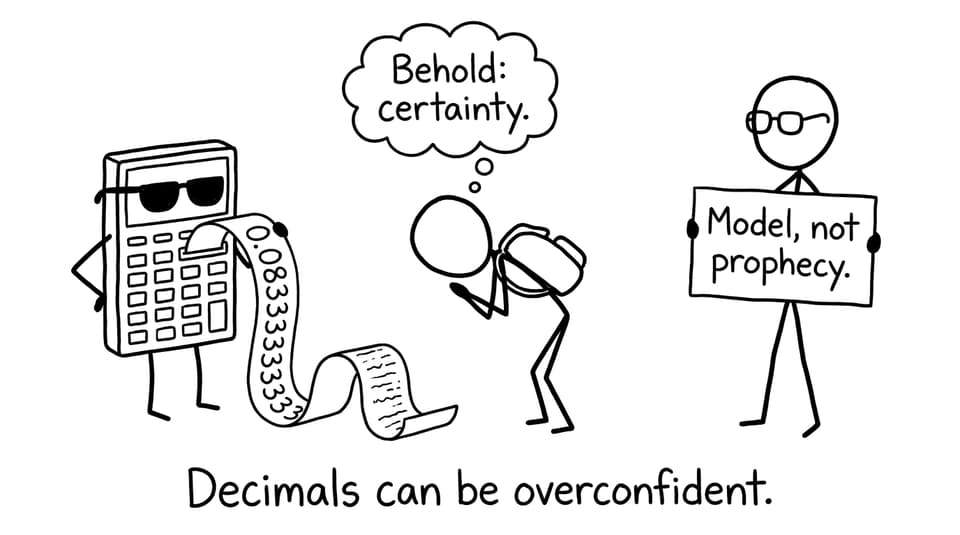
Technology outputs sharp decimals, which feel more certain than they really are.
If you’re revising IB Math, this checklist is the mindset shift: probability is not unreliable maths. It’s honest maths.
In IB Math, correct reasoning can still look “wrong”
In algebra, the payoff is immediate. Factor correctly, solve the equation, and you land on a single outcome. Probability refuses that kind of closure. You can calculate that an event has probability 0.1, then watch it happen twice in a row.
That’s not a contradiction. It’s the point: probability measures risk, not fate. When you revise with Statistics & Probability resources on RevisionDojo, you start to see how exam questions reward your reasoning process, not your emotional need for certainty.
Assumptions are the silent source of uncertainty
Most probability questions in IB Math are built on a model. The model might assume:
-
events are independent,
-
outcomes are equally likely,
-
sampling is random,
-
conditions don’t change over time.
Real life rarely behaves that cleanly, and your brain knows it. That’s why probability feels slippery.
A practical fix: when you practise, write the assumptions explicitly before you compute. RevisionDojo’s Probability step-by-step guide reinforces this habit, and the Trial and outcome notes help you phrase it in examiner-friendly language.
Words like “expected” sound vague, but they earn marks
Probability forces you to write like a scientist. Not “this will happen,” but “this is expected,” or “this is more likely.” In IB Math AI, especially, interpretation matters.
If you’ve ever lost marks for a conclusion that sounded too absolute, you’re not alone. A helpful read is Why students misinterpret probability as long-term guarantees. It explains the exact misunderstanding examiners often catch.
Your intuition is bad at randomness (and that’s examinable)
Humans look for patterns because patterns kept our ancestors alive. But probability sequences often look “clumpy” in the short term. Three heads in a row feels suspicious. In IB Math, that discomfort is a signal that your intuition is driving, not the rules.
To retrain it, use visual tools: trees, Venn diagrams, and sample spaces. RevisionDojo’s Combined and conditional probability diagrams notes and the blog on probability trees in IB Math AI make randomness feel structured again.
How to revise probability without feeling lost
A simple loop works best:
-
Learn the concept quickly with Notes for Statistics & Probability.
-
Drill targeted questions in the Statistics & Probability Questionbank.
-
Use mistakes as data: ask why your assumption, diagram, or interpretation failed.
RevisionDojo makes this loop smoother with Study Notes, Flashcards, AI Chat for “why did this step work?”, and Grading tools that push you toward markscheme language. When you’re close to exams, Predicted Papers and Mock Exams add timing pressure without chaos, and the Coursework Library plus Tutors cover the bigger picture if probability is tied to your IA.
Closing: turn uncertainty into a skill
Probability feels less certain because it is built to handle uncertainty honestly. Once you stop expecting probability to behave like algebra, IB Math becomes calmer: you focus on models, assumptions, and clear interpretation.
If you want that calm in your revision, use RevisionDojo’s Notes, Flashcards, and Questionbank to build method, then pressure-test it with Mock Exams and Predicted Papers. Uncertainty doesn’t go away, but with the right practice, it stops feeling like a threat and starts feeling like control.


