


When you first meet percentiles in IB Math, they feel like a polite side-note. Something you can calculate, underline, and move on from. Then the exam arrives and percentiles suddenly act like the main character, not because the arithmetic is brutal, but because the question is really asking: Do you understand what this number is saying about the data?
The percentile idea that quietly runs IB Math statistics
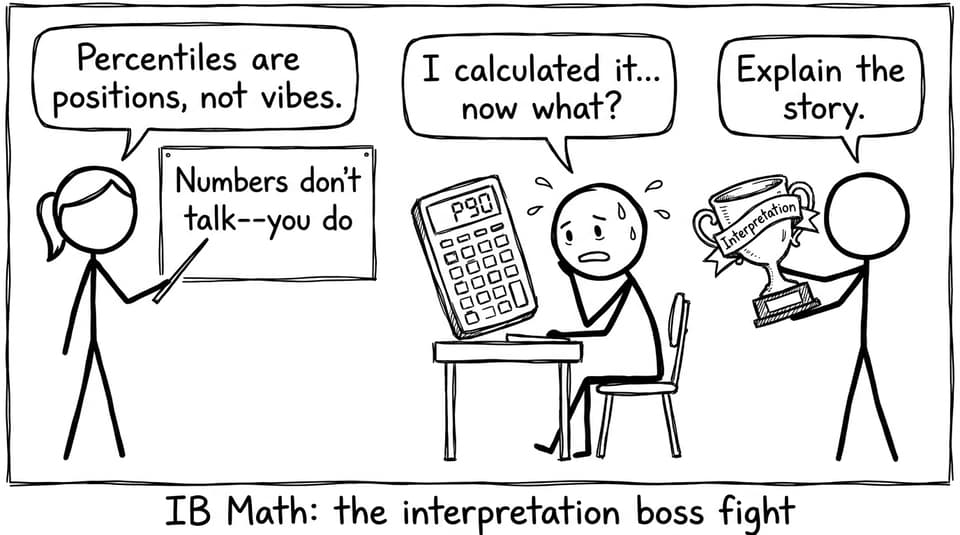
A percentile is a statement about relative position. In IB Math, that matters because statistics is less about producing a number and more about translating a number into meaning.
The clean exam-safe wording is:
- “The 90th percentile is x” means 90% of the data are at or below x (and 10% are above).
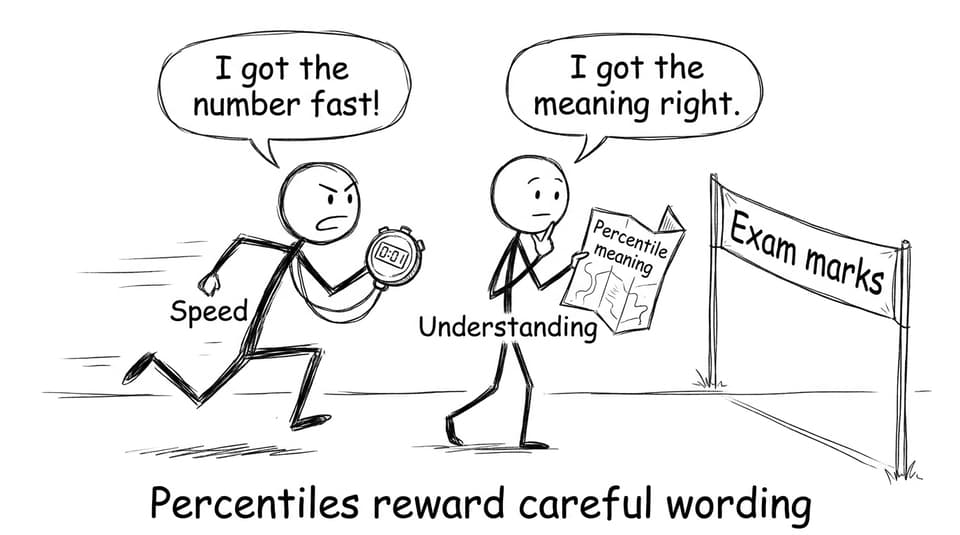
That single sentence is where marks are won and lost. If your interpretation is vague, you often drop method marks even when your calculation is fine.
For extra practice where interpretation is built into the markscheme logic, use RevisionDojo’s Questionbank and focus on data presentation tasks like cumulative frequency and summary statistics: AI SL 4.2 Presentation of Data Questionbank.
Quick checklist: what examiners really want from percentiles
Before you write anything, run this quick IB Math checklist:
-
Did I say “below (or at) this value” rather than “higher than”?
-
Did I state a percentage of the data, not a feeling (“that’s high”)?
-
Did I avoid treating a percentile like an average?
-
If it came from a graph, did I show reasonable estimation and clear reading lines?
If cumulative frequency graphs are the setting, these two reads save a lot of pain: Why Cumulative Frequency Graphs Feel Hard to Read and Why Medians Are Easier Than Means on Cumulative Frequency Graphs.
Why IB Math uses percentiles across so many question types
Percentiles show up everywhere because they connect topics that students often treat as separate:
Percentiles in cumulative frequency graphs
Here, the skill is a two-step dance: estimate, then interpret. You read from the y-axis position (like 0.9*n for the 90th percentile), move to the curve, and then down to the x-value. The examiner is watching whether you can be careful with position.
To drill the exact question style, RevisionDojo’s bootcamp practice is direct: Constructing Cumulative Frequency Graphs (Bootcamp).
Percentiles in boxplots and comparison tasks
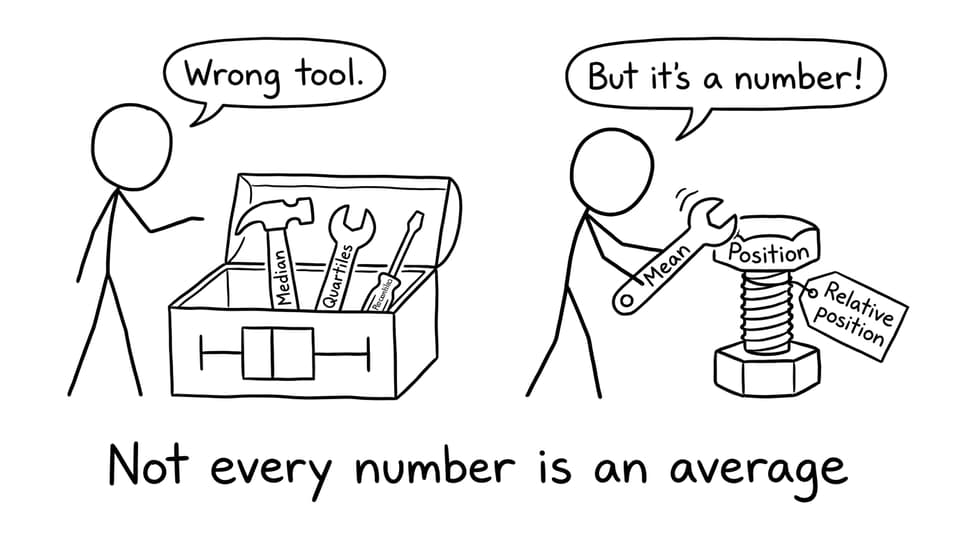
In IB Math, percentiles help you compare groups without pretending there’s one “typical” value. A percentile tells you where someone sits, not what the group “is.” This is why students who over-rely on the mean get trapped.
If boxplots are where your interpretation slips, pair your practice with: Why Students Misread Quartiles on Cumulative Frequency Curves.
Percentiles in normal distribution questions
Normal distribution questions often disguise percentiles as “find the value such that 90% are below it.” In other words: inverse normal. RevisionDojo’s notes make this link explicit: Normal Distribution and Calculations Notes and Z Values and Inverse Normal Notes.
The most common IB Math percentile mistake (and the fix)
Mistake: writing something like “the 90th percentile is high” or flipping the interpretation.
Fix: use a template sentence every time:
- “A score of x is at the 90th percentile, meaning it is greater than or equal to 90% of the scores in the data set.”
That phrasing is not fancy. It’s precise. And precision is what IB Math rewards.
A final takeaway for IB Math students
Percentiles are small, but they’re powerful because they test the one skill that separates decent work from top-band work in IB Math: interpretation. If you treat percentiles as “just another calculation,” you’ll keep losing marks in cumulative frequency, boxplots, and normal distribution questions.
RevisionDojo is built for exactly this problem. Use the Study Notes to clarify the concept, the Questionbank to train exam-style interpretation, Grading tools to see what earns marks, and Mock Exams and Predicted Papers to practice under pressure. When percentiles stop being an afterthought, your statistics answers start sounding like an examiner wrote them, and that’s when your score moves.