



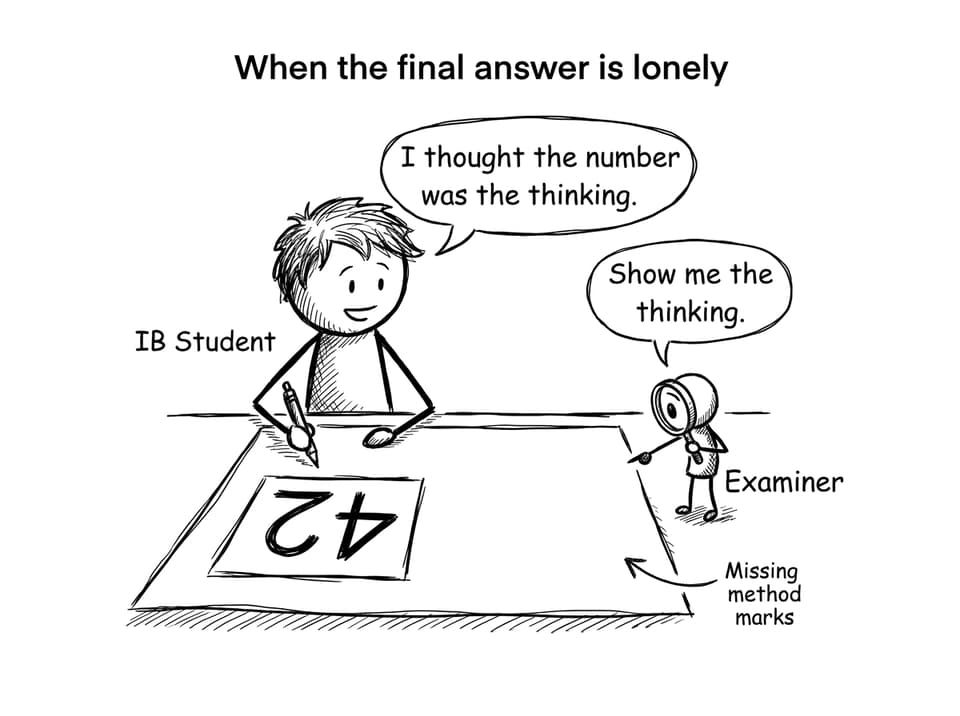
In IB Math, there’s a moment almost every student experiences: you land the right number, box it neatly, and still lose marks. It feels unfair until you realise the exam isn’t a treasure hunt for the final answer. It’s a test of understanding, judgement, and communication. In other words, IB Math doesn’t just want to know what you got, it wants to know why it makes sense.
Why IB Math marks your thinking, not your calculator
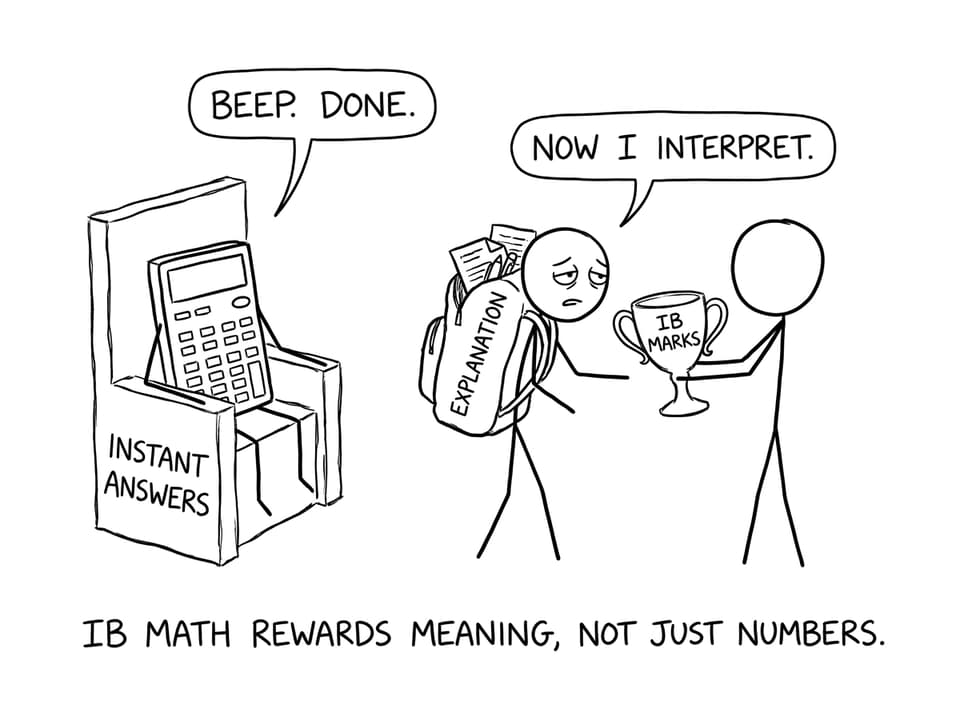
A calculator can produce a value in seconds. But IB Math is assessing whether you can build a logical chain from the problem to a defensible conclusion. Explanations show:
-
Method: which steps you chose and whether they’re valid
-
Reasoning: why your approach fits the question
-
Interpretation: what the result means in context
-
Reliability: rounding, units, assumptions, limitations
If you want to see how this shows up in real mark allocations, study how markschemes are structured in How to Analyze Markschemes for IB Math AA and AI.
A quick checklist for explanation that earns IB Math marks
Before you move on from any final line in IB Math, run this micro-check:
-
Did I name the method (equation, model, distribution, theorem)?
-
Did I show enough working to earn method marks?
-
Did I interpret the value (units, context, reasonableness)?
-
Did I mention assumptions/limitations when modelling or using data?
-
Did I round appropriately and present the answer clearly (not raw calculator output)?
For common presentation pitfalls, read Why Does Calculator Notation Lose Marks in IB Maths Exams?.
Explanation protects you when something goes wrong
One quiet advantage of explanation in IB Math is “mark protection.” If you make a small arithmetic slip but your method is correct, you can still earn most of the marks. If you only write the final answer, one error can collapse the entire response.
That’s why learning to write solutions like an argument is such a high-return habit. A strong guide to this style is How to Explain Calculations Clearly Without Losing Depth.
IB Math is built for real data, so answers can vary
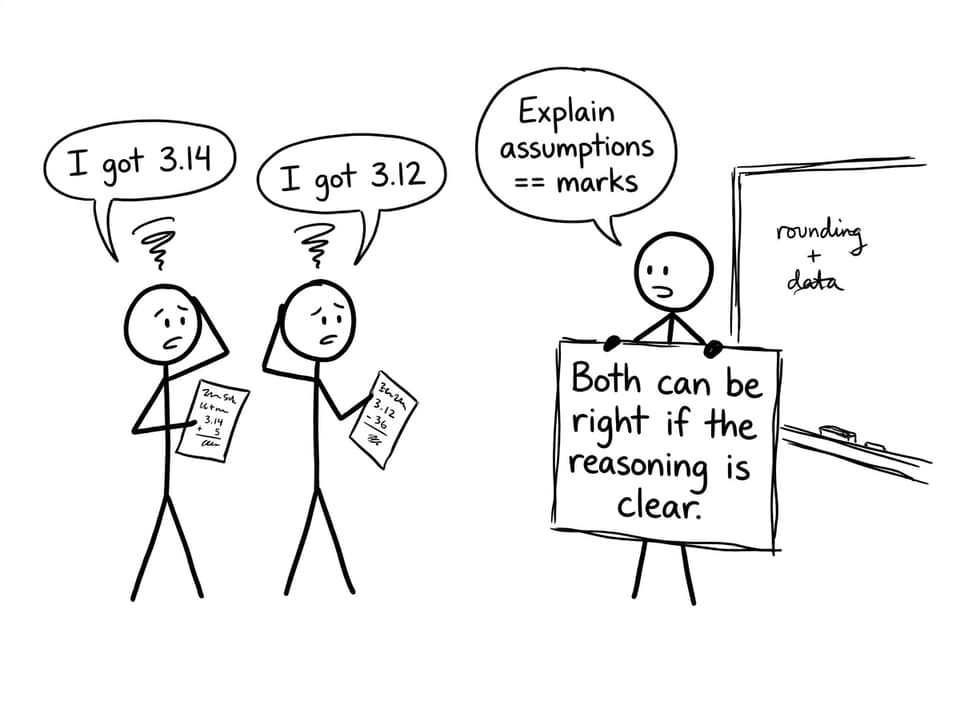
In Applications and Interpretation especially, many IB Math questions involve models, estimates, and messy context. Two students can reach slightly different values and still be correct if both justify assumptions and interpret results sensibly.
If you’ve ever wondered why interpretation sometimes matters more than perfect precision, this explains the logic: Why Does IB Care About Interpretation More Than Precision in Maths.
How RevisionDojo helps you train explanation for IB Math
This is where practice needs to look like the exam. RevisionDojo builds explanation into the workflow: the Questionbank trains step-by-step solutions, AI Chat helps you turn messy thinking into clean justification, and Grading tools show where method and interpretation marks were gained or lost. When you’re ready to simulate pressure, Mock Exams and Predicted Papers help you practise finishing with meaning, not just numbers.
Start with the course hub for your strand: IB Mathematics Applications & Interpretation Resources. Then build a routine using How to Use the Questionbank for Targeted Math Revision.
Conclusion: in IB Math, the number starts the story
In IB Math, the final answer is evidence. The explanation is the conclusion. When you show method, interpret results, and acknowledge limitations, you make it easy for an examiner to award marks even if your arithmetic isn’t perfect.
If you want that skill to become automatic, use RevisionDojo’s Study Notes, Flashcards, Questionbank, AI Chat, Grading tools, Mock Exams, Predicted Papers, Coursework Library, and Tutors to practise writing solutions that sound like understanding, because that’s what IB Math rewards.