


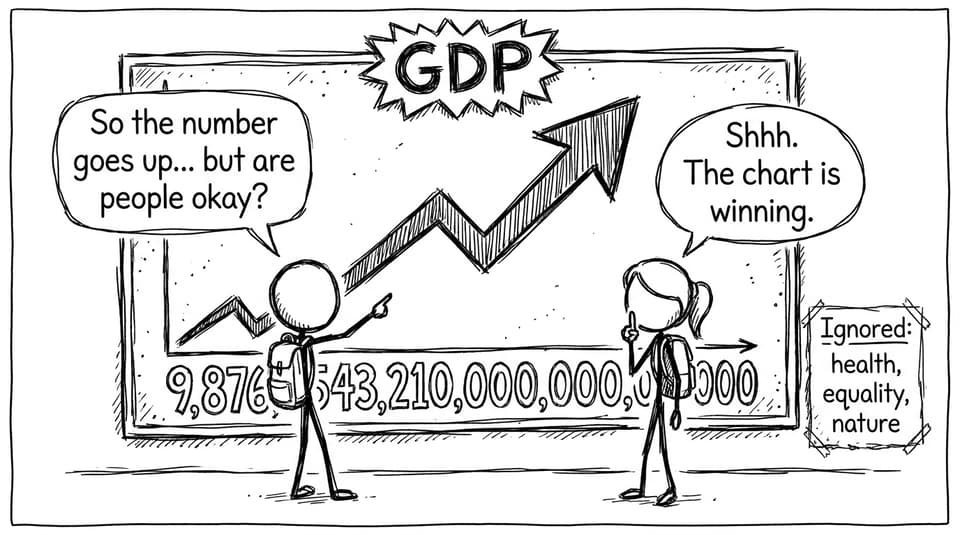
If you have ever watched a country’s GDP climb like a clean, confident line on a graph, you know the feeling: progress looks simple. One number. One direction. One story.
But in IB Global Politics, development is rarely that tidy. GDP can rise while hospitals stay understaffed, while forests disappear, or while a small elite collects the gains. GDP is useful, yes. It is also incomplete. And examiners love students who can explain that tension clearly.
What GDP measures (and what it quietly leaves out)
GDP is the total value of goods and services produced inside a country over a period of time. In IB Global Politics, that definition matters, because it sets up your evaluation: GDP measures output, not lived experience.
Quick checklist for an exam paragraph:
-
Define GDP accurately
-
State why it is used (comparability, simplicity)
-
Explain at least three limitations
-
Add a brief counterclaim (why GDP still matters)
-
Conclude with a stronger indicator mix (HDI, inequality measures, sustainability)
For a broader measurement framework, connect this debate to How development is measured in global politics.
IB Global Politics: GDP vs quality of life
A high GDP can coexist with low life expectancy, weak education outcomes, and unsafe housing. That is the key distinction: GDP can tell you the economy is busy, but not whether people are well.
This is why IB Global Politics treats “development” as contested. Development is about expanding real choices: health, education, dignity, and opportunity. GDP does not directly capture any of those.
If you want a cleaner comparison for essays, pair GDP with people-centered indicators like the Human Development Index (HDI).
GDP ignores inequality (and politics lives in distribution)
GDP totals everything, then stops. It does not show who benefits.
A country can grow rapidly while wages stagnate for most households. The political consequences matter: resentment, polarization, legitimacy crises, and protest. In IB Global Politics, inequality is not a side issue; it changes how power is experienced.
To deepen this argument, link inequality to development debates using Inequality notes for IB Global Politics.
GDP misses unpaid work and informal economies
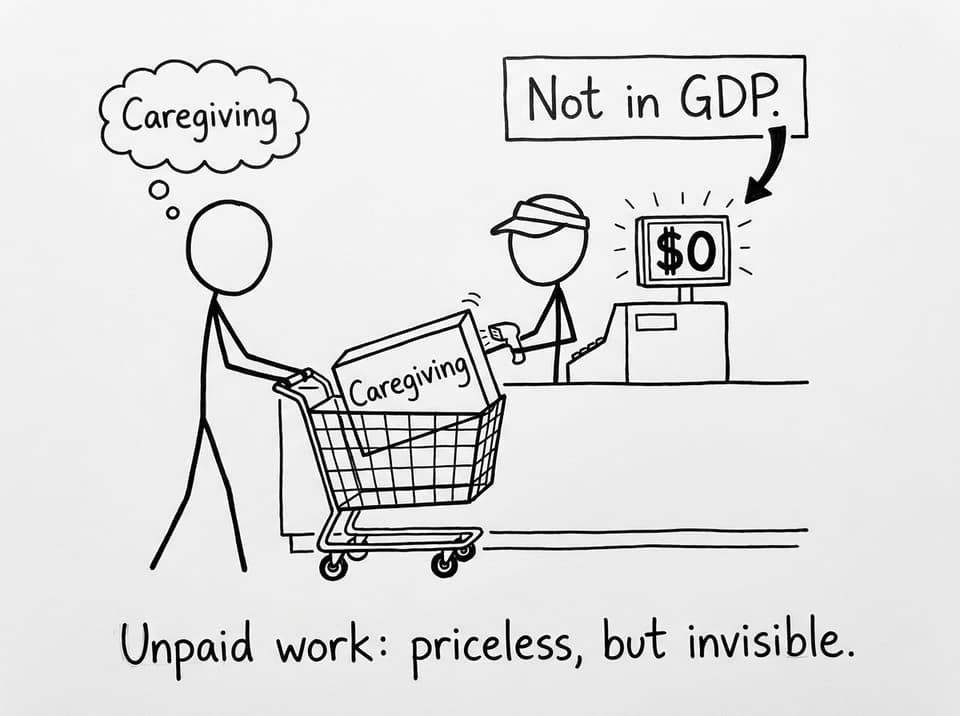
Some of the most development-shaping labor never gets a price tag: caregiving, household work, community support, volunteering. GDP struggles with informal economies too, especially where large parts of trade happen outside official reporting.
That blind spot is not neutral. It can systematically undervalue work that holds societies together and can distort comparisons between states.
GDP and sustainability: growth today, costs tomorrow
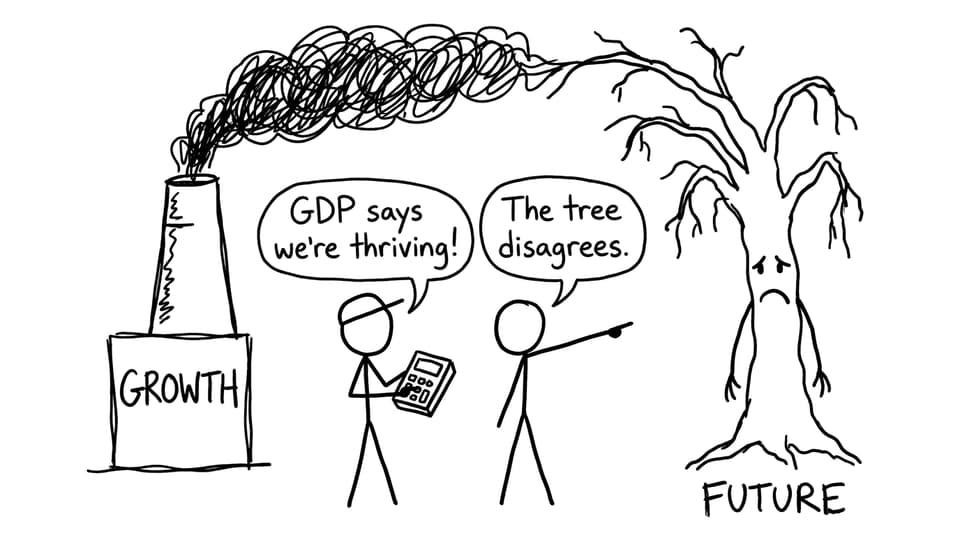
GDP can increase when forests are cut down, when fossil fuels are burned, or when pollution-intensive industries expand. The problem is that environmental damage is rarely deducted from the headline number.
So GDP can signal “success” even when the long-term foundations of development are being weakened. This links directly to IB Global Politics debates about trade-offs and intergenerational justice.
To build evaluation, connect to Is sustainable development achievable? and syllabus-linked material in Development and Sustainability.
How to use this in IB Global Politics exam answers
In Paper 2, the strongest responses treat GDP as a tool, not a truth. You can:
-
Use GDP as a starting point for economic capacity
-
Then evaluate its gaps: inequality, well-being, unpaid work, sustainability, governance
-
Conclude that development measurement reflects values and power
To practise these evaluation moves, RevisionDojo’s IB Global Politics resources let you move between Study Notes, Flashcards, AI Chat, and the Questionbank. When you want timed realism, build Mock Exams, use Predicted Papers for targeted practice, and check your structure with Grading tools. If you are stuck, Tutors can help you turn weak claims into balanced evaluation.
For topic-aligned writing support, keep the Paper 2 Guide open while you plan.
Conclusion: the number is not the story
GDP is a powerful headline, but in IB Global Politics it should never be your final sentence. Treat it as one lens, then widen the view: who benefits, what is ignored, and what costs are pushed into the future.
If you want to turn this into marks, practise with RevisionDojo’s Questionbank and Study Notes, test yourself with Mock Exams, and use AI Chat to tighten your evaluation. GDP is a number. Your job is the judgment behind it.