


Probability distributions are like packing a suitcase. In IB Math, most students can fold the clothes (list outcomes, assign probabilities, make sure they sum to 1). But then the airport asks a different question: What are you actually bringing, and why does it matter? That is interpretation. And it’s why interpreting probability distributions often feels harder than creating them.
Why IB Math makes interpretation the real test
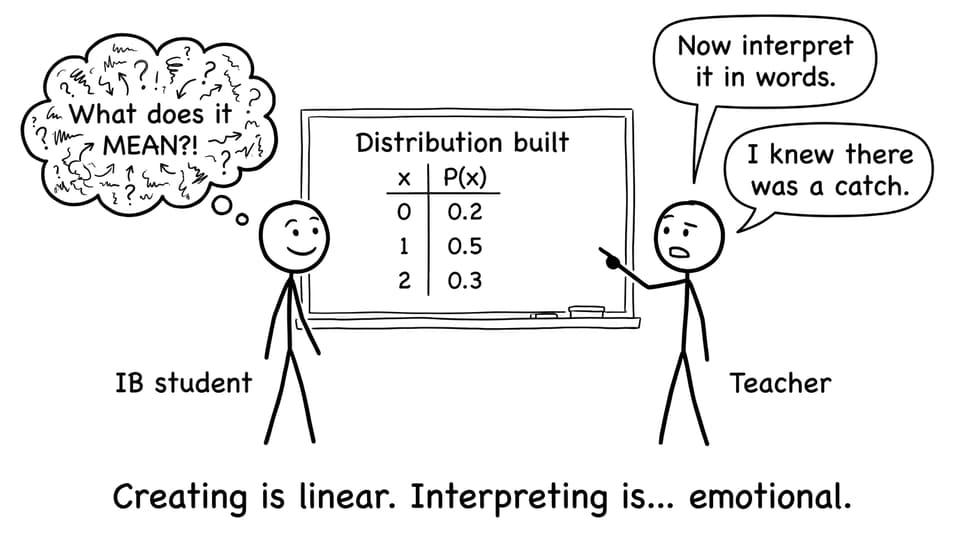
Creating a probability distribution is procedural. You can learn the routine, repeat it under time pressure, and still get something that looks correct.
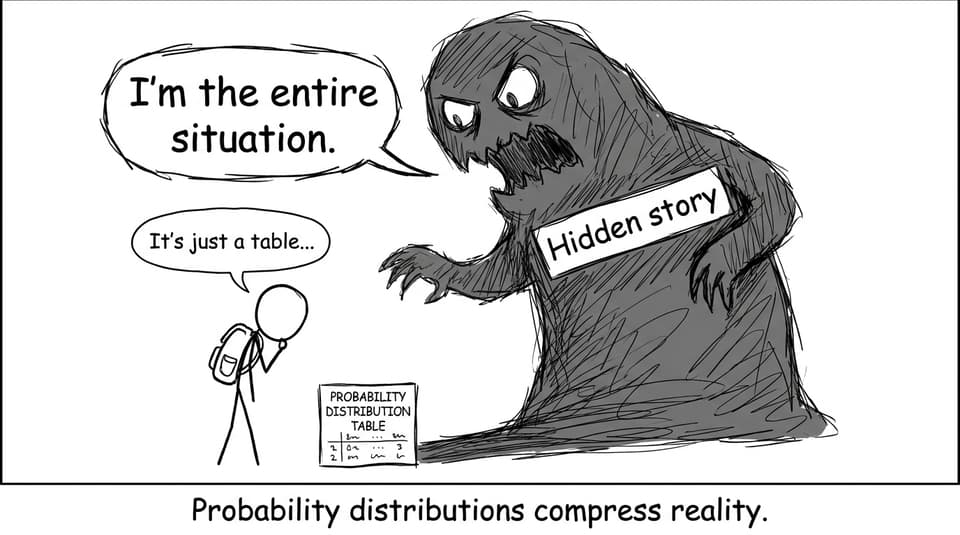
Interpreting a distribution is different. IB Math asks you to translate a compressed mathematical object into a judgment about the situation: what is likely, what is rare, what is risky, and what you can’t conclude. That translation step is where marks often disappear.
If you’re revising Topic 4 content, it helps to keep the syllabus map open while you practise. RevisionDojo’s hubs for Math AI Statistics and Probability and Math AA Statistics and Probability make it easy to focus on the exact subskills examiners repeat.
A quick checklist for interpreting distributions in IB Math
Before you write a single sentence, scan the distribution and ask:
-
Where is most of the probability mass concentrated?
-
What outcomes are possible but unlikely?
-
How spread out is the distribution (tight vs wide)?
-
What does the context make “large” or “small”?
-
Are you being asked about long-run behaviour or one-off outcomes?
That checklist is simple, but it forces you into the examiner’s mindset: meaning first, computation second.
Creating is structured; interpreting is open-ended
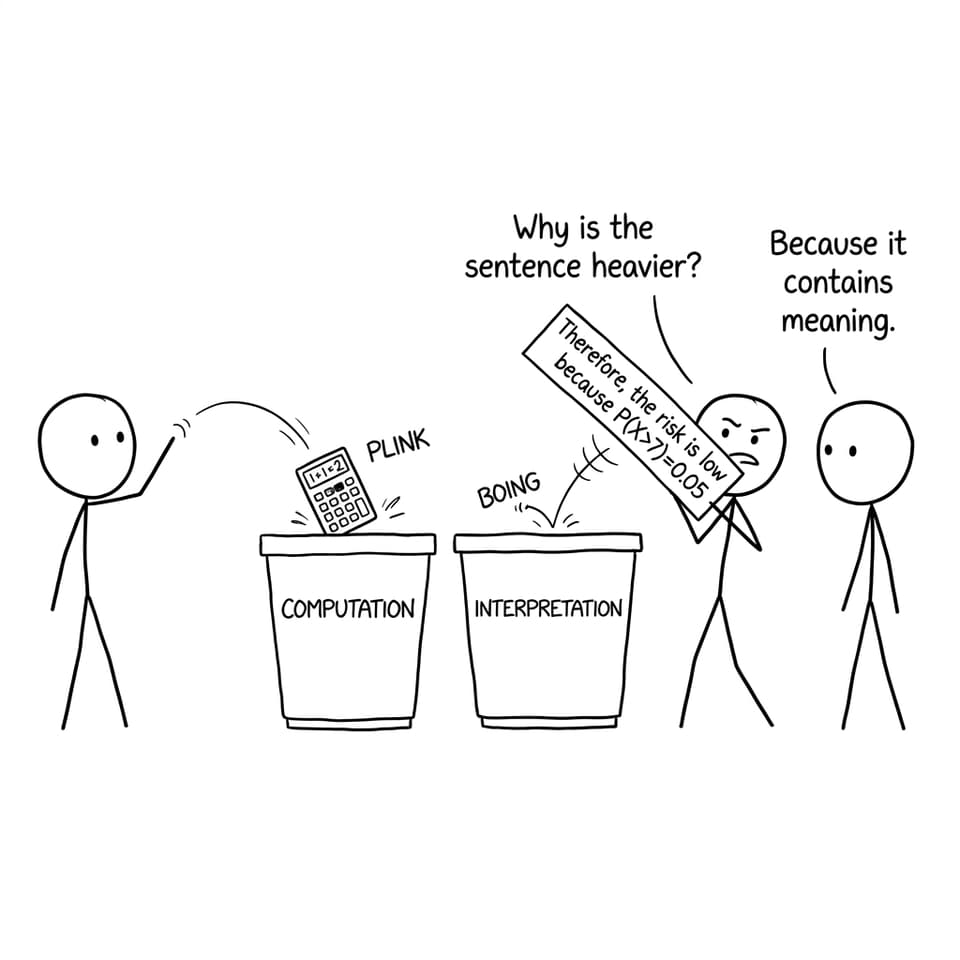
When you create a distribution, the question usually tells you what to do. You are building a table or function that meets rules.
Interpretation removes the scaffolding. In IB Math, you might be asked to “comment,” “justify,” or “interpret,” and suddenly you must decide what matters. Two students can compute the same expected value, but only one can explain whether it is a useful summary in context.
To train this, use targeted practice rather than random drilling. The Statistics and Probability Questionbank gives exam-style prompts that force interpretation, not just answers.
Why expected value is a classic trap in IB Math
Expected value feels friendly because it is a formula. But the interpretation is subtle.
In plain terms, expected value is a long-run average across many repetitions of the same process. It does not promise what happens next, and it can be misleading when outcomes are skewed or extreme.
This connects to a broader pattern: students often treat probability like certainty in disguise. RevisionDojo breaks that misconception down in Why Students Misinterpret Probability as Long-Term Guarantees, a usefula useful read before mocks.
The language problem: vague words lose marks
A big reason interpretation feels harder is that it is assessed through writing.
“More likely” and “better” are not wrong, but they are not precise enough for IB Math. Examiners want conclusions tethered to the distribution:
-
“Outcome 8 is rare because (P(X=8)=0.02).”
-
“Most outcomes lie between 3 and 5 since the total probability in that range is 0.71.”
-
“There is a small chance of a high loss, so the mean may understate risk.”
If you want a broader plan for Topic 4, pair this with How to Master Probability and Statistics in IB Math.
How RevisionDojo helps you turn interpretation into marks
Interpretation improves fastest when you practise feedback-rich questions.
On RevisionDojo, you can:
-
Drill interpretation-heavy prompts in the Questionbank (with worked solutions and exam-style phrasing).
-
Use Study Notes to refresh definitions and meaning, not just formulas (see Trial and Outcome notes).
-
Build retention with Flashcards for key language (expected value, variance, “in the long run”).
-
Ask AI Chat to rewrite your explanation in clearer IB phrasing.
-
Use Grading tools on written responses so your interpretations become sharper, not longer.
-
Practise under pressure with Predicted Papers and Mock Exams (for example, Math AI Predicted Papers).
-
Strengthen real-world reasoning with the Coursework Library and support from Tutors when a topic keeps slipping.
Closing: build the table, then tell the story
In IB Math, creating a probability distribution is the entry ticket. Interpreting it is the performance. The good news is that interpretation is trainable: learn to spot where probability mass sits, treat expected value as a long-run summary (not a promise), and write conclusions anchored to numbers.
If you want those interpretation marks to feel predictable, practise with RevisionDojo’s Study Notes, Questionbank, Flashcards, and AI Chat, then pressure-test your explanations with Predicted Papers and Mock Exams. That is how “I calculated it” becomes “I understand it”, andand that is where scores rise.


