



If you’ve ever stared at an “ugly” decimal in IB Math and felt your stomach drop, you’re not alone. A lot of strong students walk into exams with a hidden belief: a good solution must look clean. Then IB Math does something quietly radical: it pays you for judgement.
Not for being sloppy. Not for guessing. But for being reasonable, for showing that you understand what a number means, not just how to produce it.
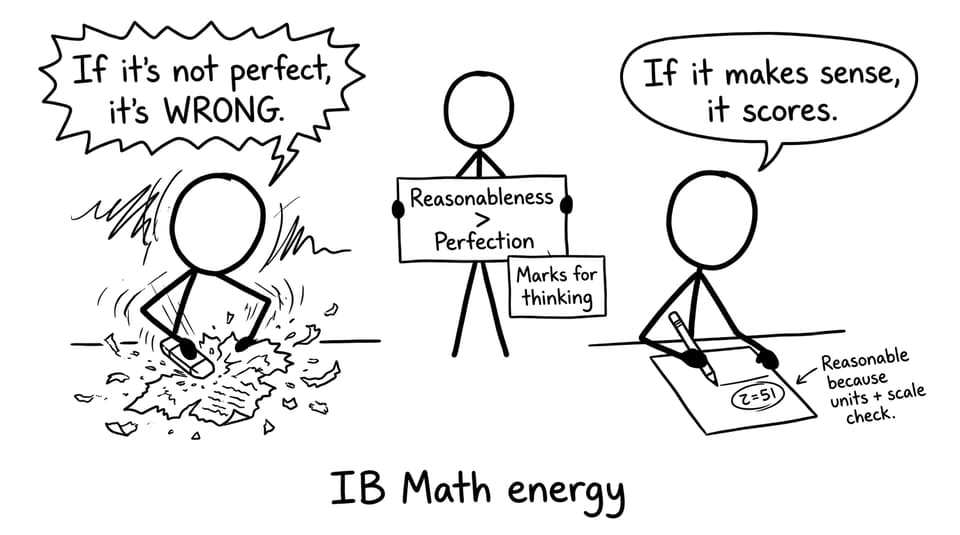
The IB Math mindset shift: sense-making wins marks
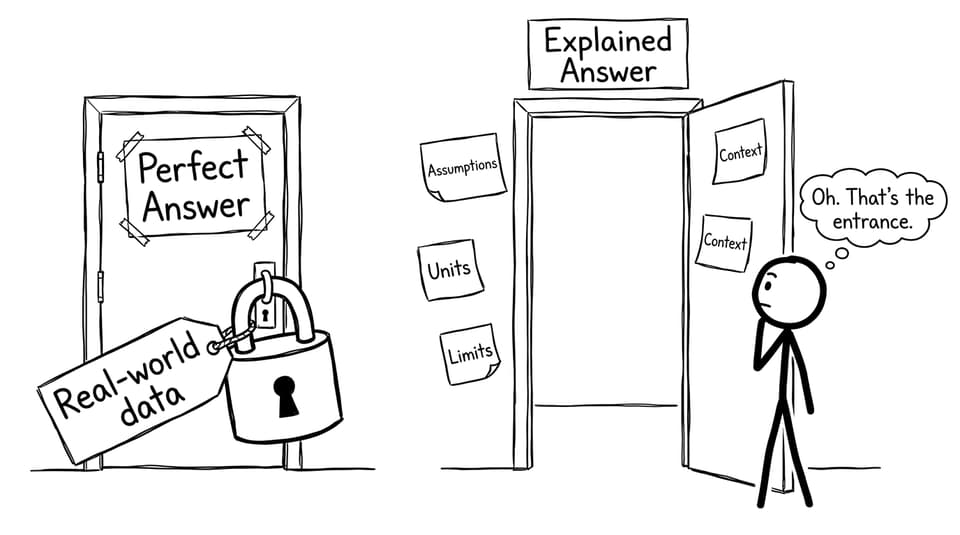
In real problems (the kind IB Math loves), exact values are often imaginary. Data is sampled, measurements are rounded, and models are simplified because reality is messy. When you treat a model as perfect, you can end up sounding confident about something that was never certain.
That’s why IB Math rewards answers that make sense in context: correct units, sensible magnitude, realistic interpretation, and clear assumptions. In Applications & Interpretation especially, you’re often being assessed on whether you can think like someone using mathematics, not like someone polishing algebra.
If you’re revising AI, it helps to keep a “home base” open with the course layout and resources: IB Mathematics Applications & Interpretation Resources.
A quick reasonableness checklist (use in IB Math exams)
Before you change an answer just because it looks odd, run this fast check:
-
Scale: Is the size of the answer plausible? (A probability above 1 is a red flag.)
-
Units: Do your units match what the question asked for?
-
Direction: Should it increase/decrease? Positive/negative?
-
Context sentence: Can you write one line explaining what the number means?
-
Rounding: Did you round to a sensible degree for the situation?
This is also exactly why targeted practice matters more than endless re-doing. Use How to Use the Questionbank for Targeted Math Revision to train this loop: attempt, check, reflect, repeat.
Why IB Math prefers reasonableness (and how it protects your marks)
Realistic modelling is never perfectly precise
A regression line, a financial projection, a probability model; they all depend on assumptions. IB Math wants you to notice that and communicate it. If the question is under-specified, that’s often intentional: you’re meant to make a reasonable choice and justify it.
To understand that design choice, read: Why Do IB Modelling Questions Feel So Under-Specified?.
Different correct methods can lead to slightly different numbers
In IB Math, two students can use two valid approaches and land on answers that differ by a small amount because of rounding, technology paths, or modelling decisions. Examiners account for this. What they reward is logical consistency and clear reasoning.
If you’re training for exam stamina and process, How to Use RevisionDojo to Prepare for IB Math Mock Exams pairs well with timed practice and review.
Overcorrecting is a common high-achiever trap
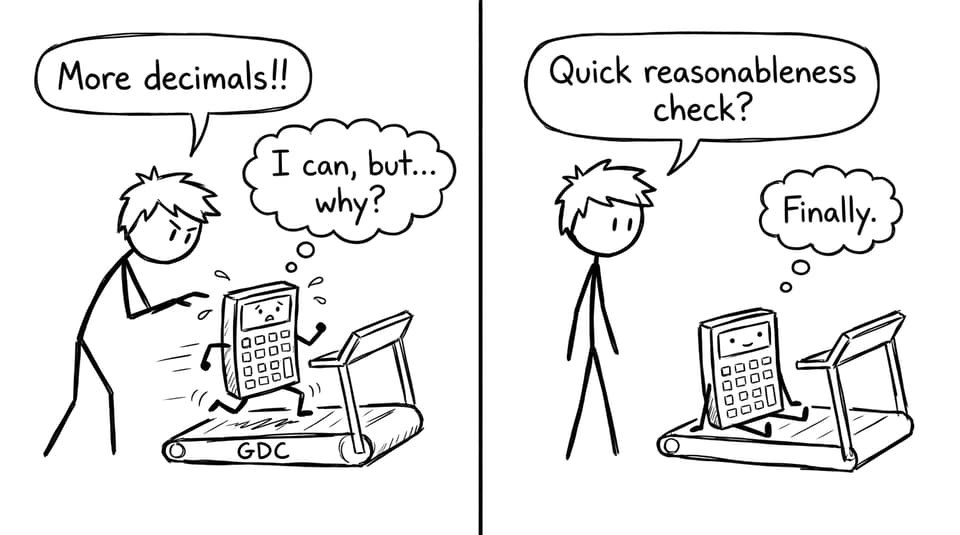
Students often lose marks not because the first answer was wrong, but because they “fix” it into something worse. In IB Math, awkward decimals can be perfectly acceptable if they match your method and you interpret them cleanly.
For a deeper example of where approximation is deliberately allowed, see: Why Do IB Exam Questions Allow Approximation in Sequences.
How RevisionDojo helps you score with reasonableness in IB Math
Reasonableness is a skill, and skills can be trained.
On RevisionDojo, students build this instinct through:
-
Questionbank practice that forces you to explain steps (not just output answers)
-
Study Notes that highlight common “looks wrong but is right” outcomes
-
Flashcards for units, key interpretations, and command-term language
-
AI Chat for quick “Does this assumption make sense?” checks when revising
-
Grading tools that emphasize method marks and communication
-
Predicted Papers and Mock Exams for realistic, timed rehearsal
-
Coursework Library for modelling thinking that carries into exams
-
Tutors for fast feedback when your judgement is the missing piece
If you’re studying AI Paper 2 specifically, this guide makes the marking priorities feel much clearer: Ace IB Math Applications and Interpretation Paper 2.
Conclusion: IB Math isn’t softer: it’s more honest
The best students in IB Math aren’t the ones who chase perfection until the page looks pretty. They’re the ones who can pause and ask: Does this answer make sense?
If you want to train that instinct quickly, build a weekly loop: revise one concept in Notes, drill it in the Questionbank, then test it under time pressure with Mock Exams or Predicted Papers. That’s what RevisionDojo is built for, helping helping you score in IB Math by practising the exact kind of reasonableness examiners reward.