


When you first meet discrete random variables (DRVs), it feels like a deal: you do the maths, you get the mark. Then IB Math does what it always does when you get comfortable, it changes the game.
In many DRV questions, the arithmetic is almost polite. The harder part is the sentence after the number: What does this mean, here, for this situation? That is not IB being unfair. It is IB being realistic. And once you see why, your DRV marks tend to jump.
The big idea in IB Math DRVs
A DRV is not a trick. It is a model: a simplified picture of a messy world. IB Math uses DRVs to test whether you can move between three layers:
-
Context (the story problem)
-
Representation (a table, pmf, or distribution)
-
Interpretation (a decision, a judgement, a limitation)
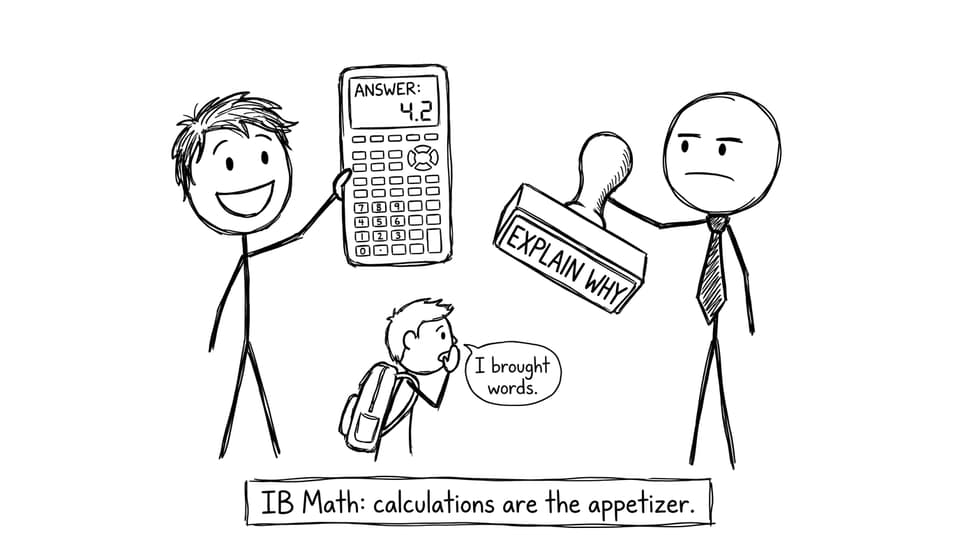
That last layer is where examiners hide the marks.
If you want targeted practice on the exact skills DRVs demand, start with the Math AI discrete random variables Questionbank or the Math AA discrete random variables notes on RevisionDojo.
Why interpretation is rewarded more than calculation
Calculation is teachable; interpretation is transferable
Most DRV computations follow a stable recipe: build the distribution, then find things like expected value or variance. IB knows you can learn that process quickly.
What separates strong IB Math answers is whether you can translate results into plain meaning. For example, an expected value is a weighted average, not a promise, and not necessarily a value the variable can even take. If that line is missing, you often miss the point of the question.
For extra clarity on expected value thinking, pair DRVs with this short read: Why expected value is harder with continuous variables.
DRVs are built for decisions, not just numbers
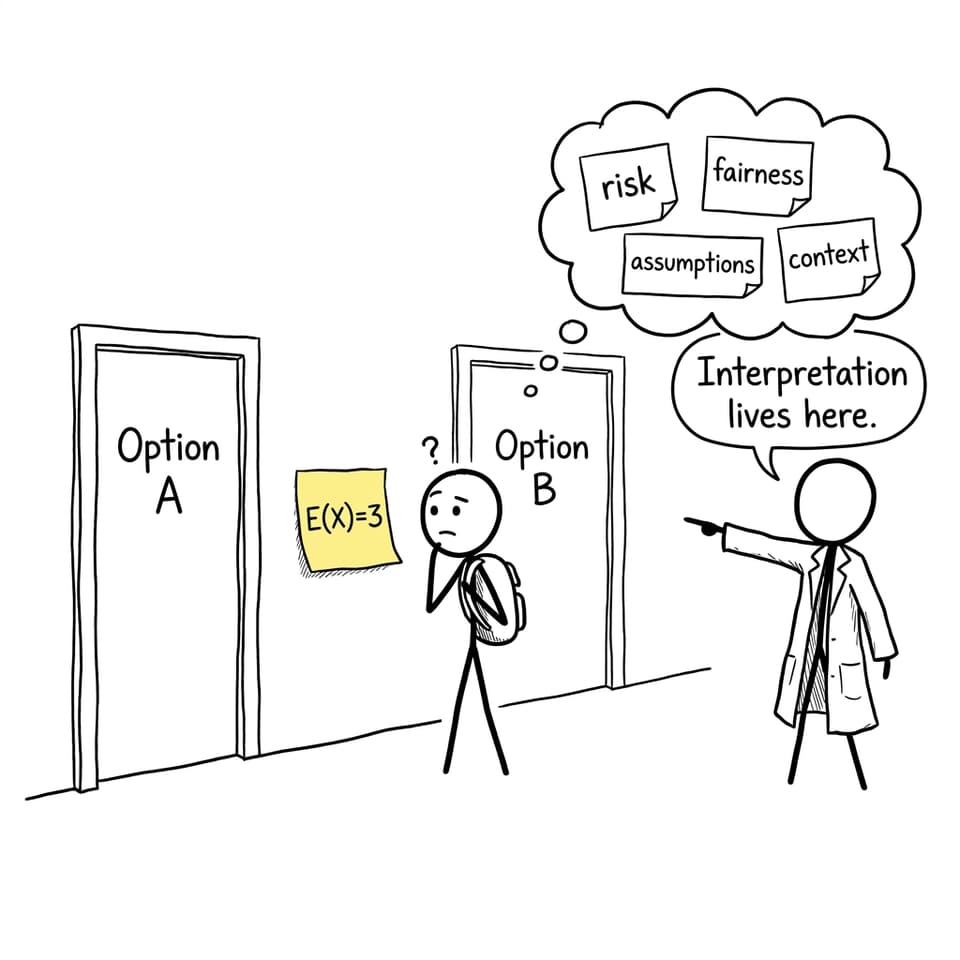
Many DRV prompts quietly ask you to judge: which option is better, whether a game is fair, or which risk is acceptable. A single computed value rarely answers that on its own.
The examiner wants to see reasoning like:
-
Which outcomes carry the most probability mass?
-
What is the chance of a “bad” outcome?
-
Are the assumptions sensible?
That is why interpretation marks can match (or exceed) calculation marks in IB Math.
Communication is part of the assessment
In Applications & Interpretation, the name is the syllabus. Writing matters.
A common mark-losing pattern is: “Expected value is 3.2 so option A is best.” It is short, but it is not justified. A stronger finish anchors the number to the scenario, mentions probability-based risk, and flags limitations.
To train this, RevisionDojo’s IB Math tag hub and its stepwise solutions in the Questionbank help you see what examiner-ready explanation looks like.
A quick checklist for full-mark DRV conclusions (IB Math)
-
Restate what the DRV represents in the context.
-
Use the calculated value, but explain it in words.
-
Compare options using probability, not vibes.
-
Mention at least one model limitation (assumptions, sample size, independence, realism).
-
Write 2-4 sentences, not one.
If your distributions sometimes feel unstable, this mistake is worth fixing fast: Why students forget probabilities must sum to one.
Conclusion: treat DRVs like a story you must finish
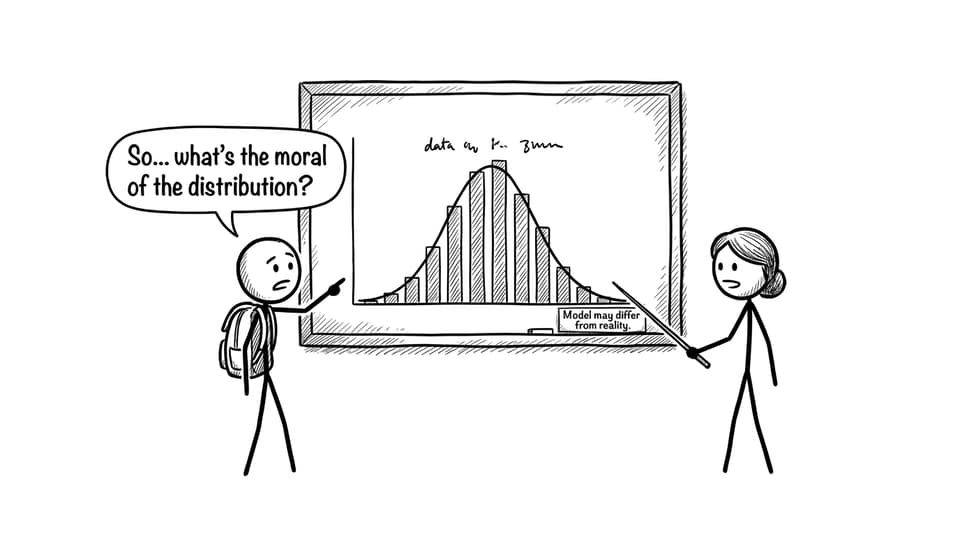
In IB Math, DRV questions are rarely about whether you can multiply and add. They are about whether you can take a tidy probability model and speak honestly about what it suggests, and what it cannot guarantee.
If you want that skill to become automatic, build your routine on RevisionDojo: practise with the Questionbank, refine explanations with Study Notes and AI Chat, and pressure-test your readiness with Mock Exams, Predicted Papers, and support from Tutors when you need a human second set of eyes. The calculation gets you into the room. The interpretation is what earns the mark.