

A weird thing happens the first time you feel confident in IB Math statistics.
You press the buttons. You get the z-score. You even box it.
And then the markscheme quietly asks: So what?
That moment is not the IB being unfair. It’s the IB being honest. In IB Math, especially Applications and Interpretation, the calculation is often just the door handle. The examiner is grading whether you actually walked through the door.
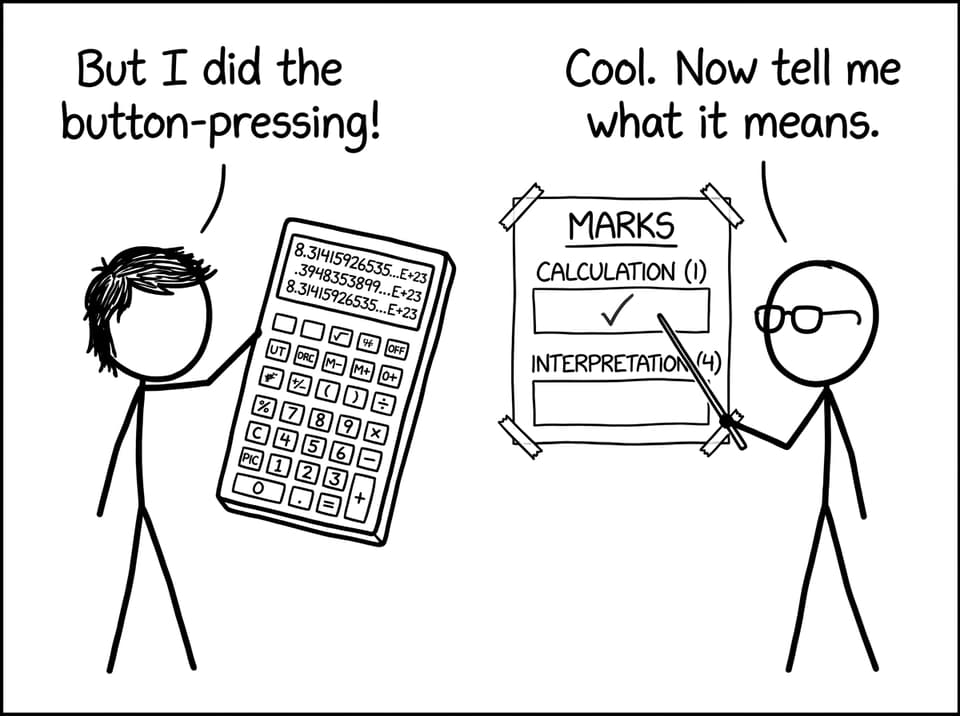
The big idea: IB Math is testing meaning, not button-pressing
Z-score calculation is procedural. Once you know (z=\frac{x-\mu}{\sigma}), a calculator can do the rest. That’s exactly why IB Math questions rarely treat a z-score as the destination.
Instead, the exam is designed to reward what a z-score represents:
-
Position: how far above or below the mean (in standard deviations)
-
Unusualness: whether the value is typical or rare
-
Comparison: whether two values from different distributions can be fairly compared
-
Decision-making: what the result implies in a real context
If you want a clean refresher on why z-scores feel intangible (and why the exam loves them), read Why Z-Scores Feel Abstract but Matter So Much.
A quick checklist: what to write after you calculate a z-score
Use this as your automatic “interpretation sentence builder” in IB Math:
-
State direction: above/below the mean
-
State distance: about (|z|) standard deviations from the mean
-
State judgement: typical/unusual/very unusual (use cautious language)
-
Tie back to the context (what the variable actually is)
One strong line often beats three vague ones.
Why interpretation earns more marks in IB Math questions
The z-score is usually a step, not the answer
In most IB Math exam-style tasks, the question is secretly about probability, comparison, or reasonableness. The z-score just standardises the value so you can talk about it clearly.
A common pattern looks like this:
-
Find a z-score (method mark)
-
Use it to find a probability or percentile (method mark)
-
Interpret what that probability means in real terms (often multiple marks)
That’s why students who stop at the z-score feel like the exam “moved the goalposts.” It didn’t. The goal was always interpretation.
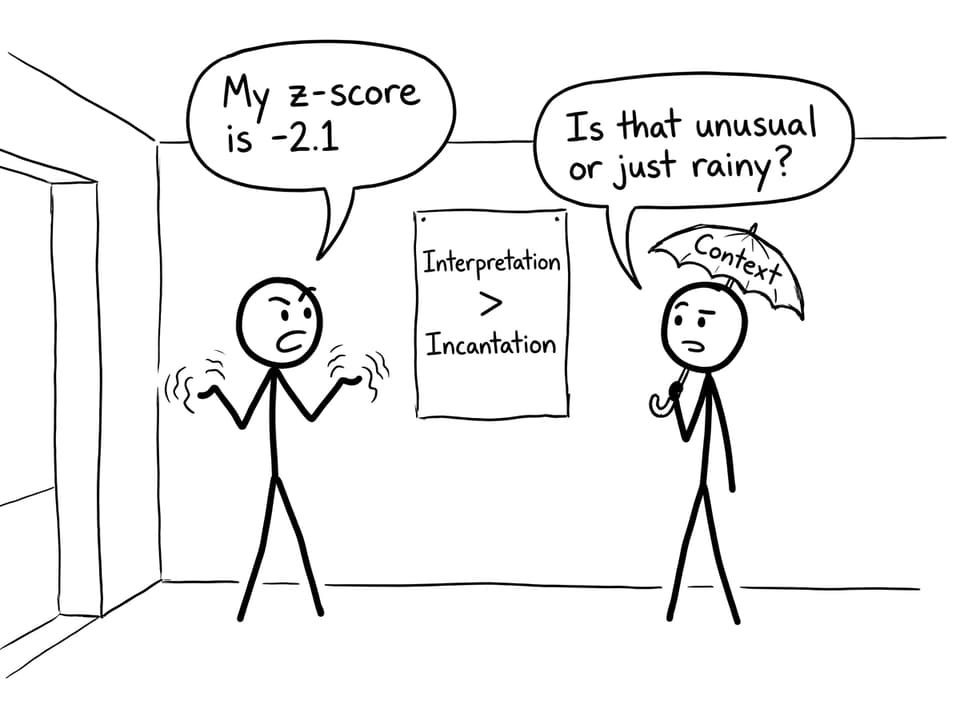
IB Math rewards communication because it reveals understanding
A correct z-score can still come from imitation. Interpretation can’t.
When you explain what the z-score implies, you show the examiner that you understand:
-
what “standard deviations from the mean” actually means
-
how to translate a number into a claim about rarity
-
how to avoid overconfident conclusions
If you’re revising normal distribution heavily, pair this post with Why the Normal Distribution Appears Everywhere in IB Maths.
Technology makes calculation cheap, so the exam makes meaning expensive
In IB Math, calculators can produce z-scores instantly. So the assessment focus shifts to what calculators can’t do well: judgement, wording, and context.
This is especially obvious in Paper 2 style problems. For strategies built around that reality, see Ace IB Math Applications and Interpretation Paper 2.
How RevisionDojo helps you turn calculation into marks
The fastest improvement in IB Math often comes from practicing the last two lines of solutions.
RevisionDojo makes that practical:
-
The Math AI Statistics and Probability hub builds interpretation skills alongside methods
-
The Statistics and Probability Questionbank trains you on examiner-style prompts where meaning matters
-
Study Notes and Flashcards help you memorise interpretation phrasing you can reliably reuse
-
AI Chat can help you rewrite weak conclusions into examiner-ready sentences
-
Grading tools, Mock Exams, and Predicted Papers help you test whether your explanations actually score
-
Coursework Library and Tutors support students who need feedback on how they communicate math, not just compute it
For a wider roadmap, How to Score 7 in IB Math AI SL and How to Improve Your Scores in IB Math AI both reinforce the same theme: interpretation is not “extra,” it’s the core.
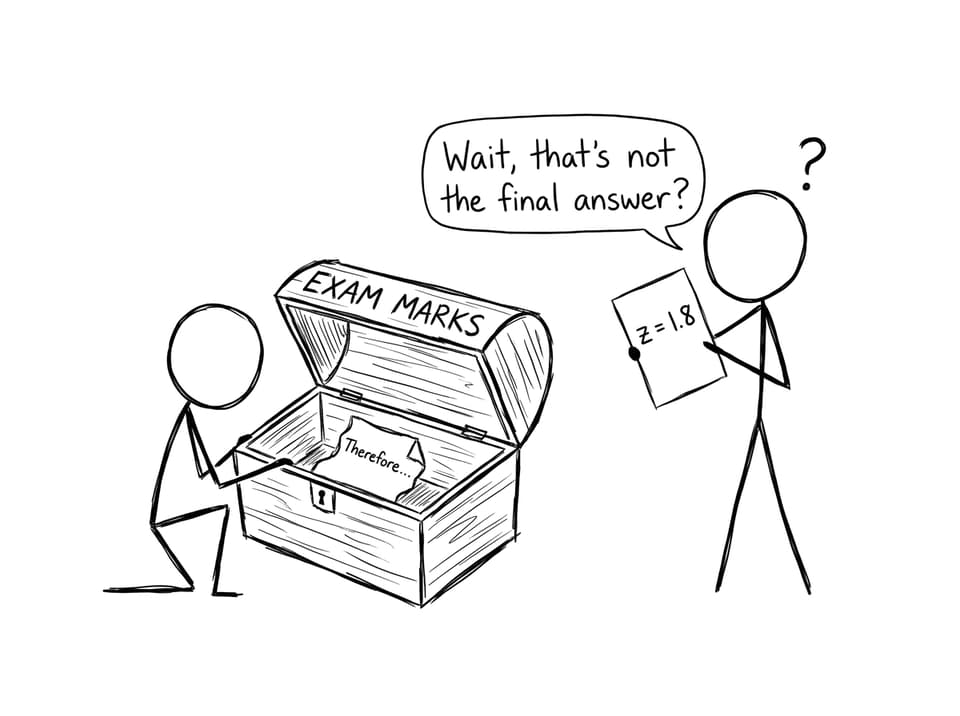
Conclusion: treat the z-score like a tool, not a trophy
In IB Math, z-score calculation is the quick part. Interpretation is the part that proves you understand.
If your answers are often “numerically right but marks-light,” make your new habit this week: after every z-score, write the meaning in one calm, contextual sentence. Then practise it in timed sets using RevisionDojo’s Questionbank, Study Notes, Flashcards, AI Chat, and Mock Exams until it feels automatic.
That’s how IB Math stops being a game of formulas and becomes a skill you can actually rely on.