


The moment IB Math surprises almost everyone
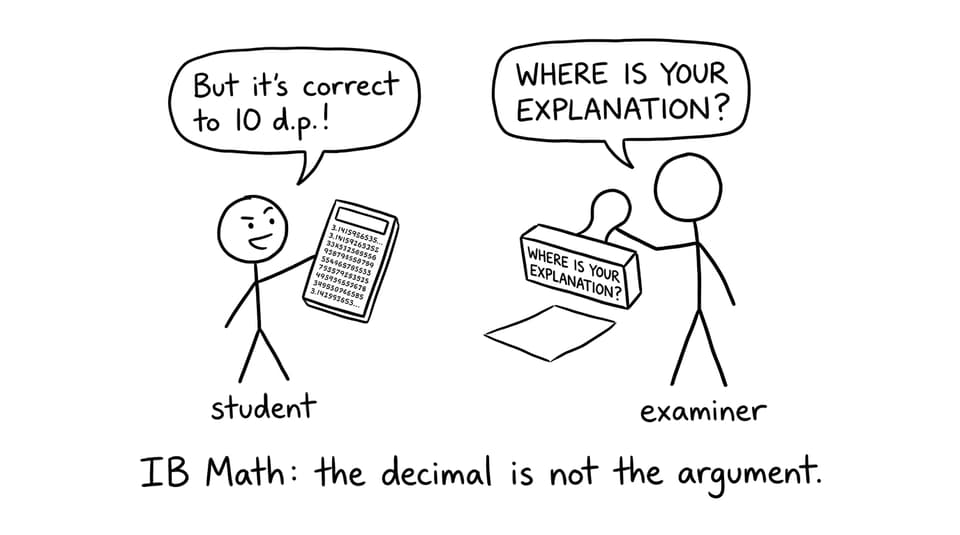
You finish an IB Math question, your calculator gives a clean answer, and you feel that small, rare peace. Then you open the markscheme and realise you lost marks anyway. Not because the number was wildly wrong, but because you didn’t say enough.
That moment feels personal. It shouldn’t. In IB Math, especially in Applications & Interpretation, the programme is built to reward understanding you can communicate, not just numerical output you can produce. A calculator can generate digits. Only you can show reasoning.
Quick checklist: what IB Math expects beyond the number
Before you move on from a final answer in IB Math, check that you also:
-
Named the method/model you used and why it fits
-
Showed the key steps where decisions happened
-
Interpreted the result in context (units, meaning)
-
Commented on reasonableness (does it make sense?)
-
Noted assumptions or limitations when the question is real-world
If you want a practical way to train this, pair targeted practice with the RevisionDojo IB Math AI hub and then review your scoring using markscheme habits from How to Analyze Markschemes for IB Math AA and AI.
Why IB Math values explanation more than numerical accuracy
Understanding is harder to fake than calculation
The IB knows something students don’t like admitting: many calculations are “press the right buttons” once you recognise the pattern. In IB Math, explanation is the part that reveals whether you understood the pattern, chose it intentionally, and could defend it under pressure.
That’s also why command terms matter so much. A question that says “justify” or “interpret” is literally asking for marks that a number cannot earn. For that skill, see How to Read Math Questions Carefully (and Avoid Traps).
Real-world answers are often approximate (and that’s the point)
In modelling, statistics, regression, sampling, and numerical methods, small differences are normal. Two students can make slightly different rounding choices and both be mathematically reasonable. So IB Math examiners look for the chain of logic: what you assumed, why your method fits, and what your result means.
If you struggle with this in calculator-heavy sections, Ace IB Math Applications and Interpretation Paper 2 is a useful reference for how to communicate clearly even when technology is involved.
Decision-making earns marks, not just results
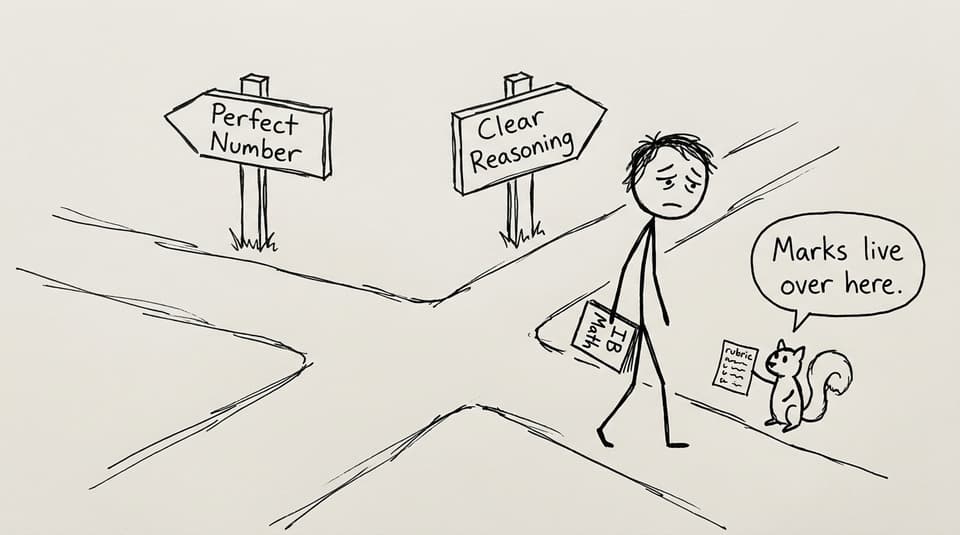
A common IB Math pattern is: compute something, then decide something. Choose the better option. Evaluate the model. Explain what the parameter implies. These are judgement tasks.
That’s why the “wrong model” issue can be brutal: you can do flawless arithmetic inside an unsuitable model and still lose major credit. This is explained clearly in Why Does Choosing the Wrong Model Lose Full Marks in IB Maths.
Communication is part of the assessment
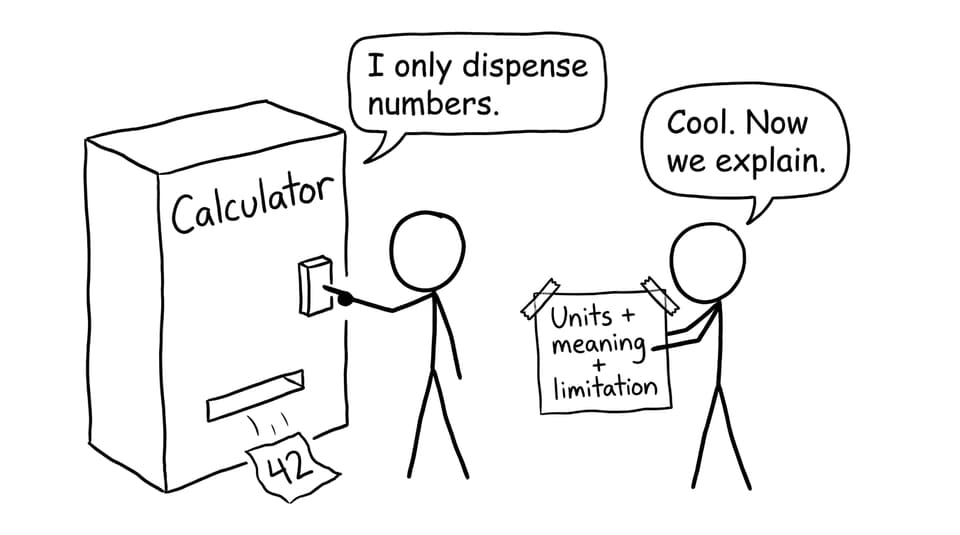
In IB Math, your working is a form of writing. Examiners award marks for readable structure, correct interpretation, and clear mathematical language. Even calculator output can lose marks if it’s dumped without translation into human meaning. See Why Does Calculator Notation Lose Marks in IB Maths Exams.
How to train explanation in IB Math (without writing essays)
Explanation in IB Math is not about being long. It’s about being targeted. A good habit is a 2-sentence finish:
-
Interpretation: “This means… (include units/context).”
-
Reality check: “This is reasonable because… / This may be limited because…”.
Then practise that habit systematically:
-
Drill exam-style questions using the Functions questionbank for IB Math AI or Number and Algebra questionbank for IB Math AI
-
Use How to Use the Questionbank for Targeted Math Revision to set up short, repeatable sessions
-
When you need quick feedback on wording, use RevisionDojo’s AI Chat to ask: “Where are the interpretation marks in my response?”
A calmer way to score higher in IB Math
The shift is simple but powerful: in IB Math, the number is rarely the finish line. It’s the start of your explanation.
If you want to build that skill fast, RevisionDojo is designed for it: Study Notes and Flashcards to make concepts feel obvious, a Questionbank to practise examiner-style prompts, AI Chat and Grading tools to tighten your wording, plus Predicted Papers, Mock Exams, a Coursework Library, and Tutors when you need extra calibration. When your explanations improve, your marks usually follow.


