



The moment the question stops being maths
You’re cruising through IB Math. You calculate. You regress. You graph. Then you hit the words: “Evaluate the model.”
Suddenly, the question feels less like a problem and more like a conversation you didn’t prepare for. How much do they want? Are you supposed to “criticise”? Can two different answers both be right?
Yes. And that’s exactly why it feels open-ended.
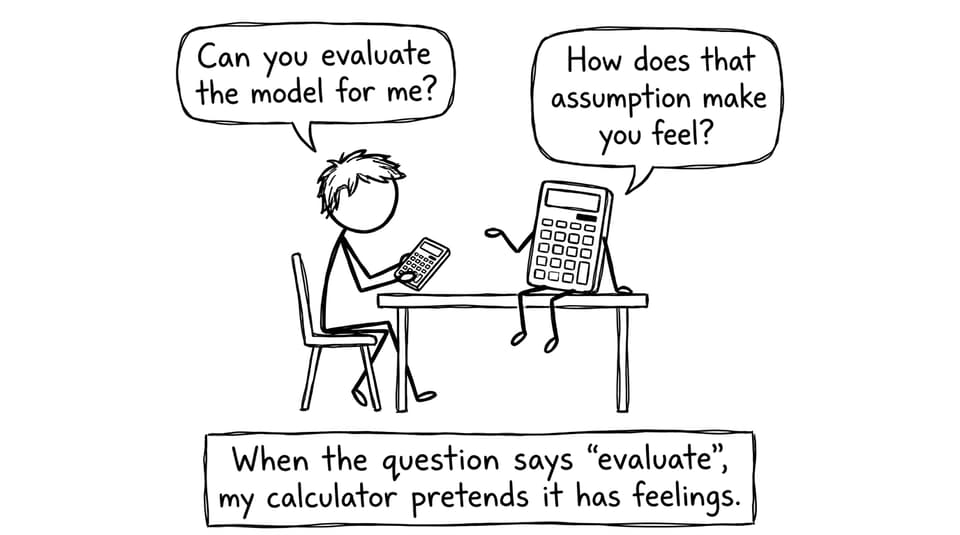
In IB Math, “evaluate the model” is deliberately designed to test judgement, not just procedure. It asks whether you understand what your maths means in the real world, and whether you can explain trust and limitations with calm, specific reasoning.
A quick checklist for “evaluate the model” in IB Math
When IB Math asks you to evaluate, use this mental checklist:
-
Purpose: What was the model trying to do?
-
Fit: How well does it match the data or situation?
-
Assumptions: What did you assume, and are those assumptions realistic?
-
Limitations: Where does it break, and why?
-
Implications: So what does that mean for predictions or conclusions?
-
Balance: At least one strength and one weakness, explained.
If you want a deeper modelling-focused walkthrough, read How to Evaluate the Accuracy of Mathematical Models in the IB Math IA.
Why “evaluate” feels vague: there isn’t one correct ending
Most of your IB Math training rewards certainty. You simplify to a final answer. You show a method. You land the plane.
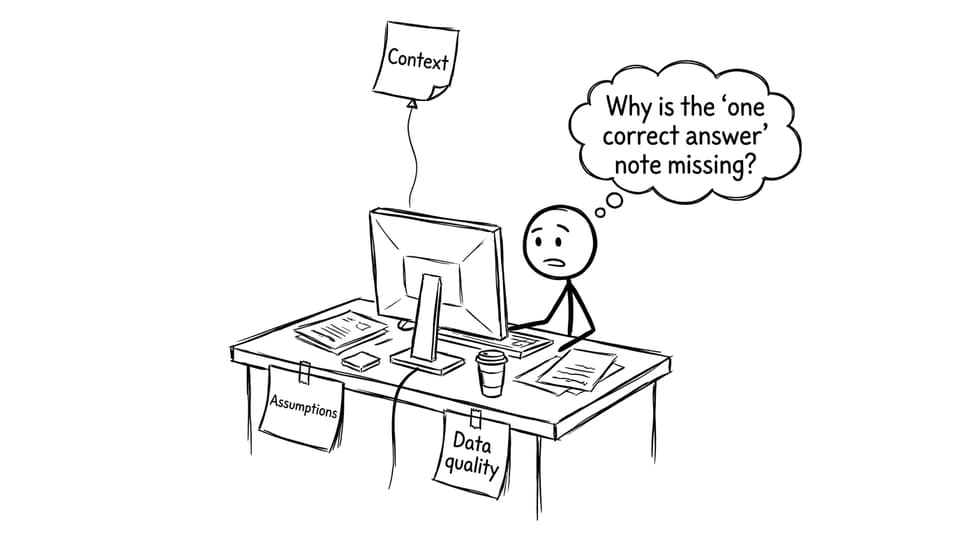
Evaluation questions don’t work like that because models don’t work like that. Two students can evaluate the same regression model and reach different conclusions if they justify them using the context, assumptions, and evidence. Examiners are not looking for a secret sentence. They’re looking for a defensible judgement.
That’s also why generic lines like “the model is not perfect” rarely score well. A model is always imperfect. Evaluation marks come from explaining how the imperfection shows up in this situation.
The hidden trap: students think evaluation equals criticism
In IB Math, evaluation is balanced. Many students interpret “evaluate the model” as “attack the model.” Others do the opposite and defend it like it’s their best friend.
High-scoring evaluation does neither. It sounds more like:
-
Strength: “The model captures the overall trend and predicts values within the observed range reasonably well.”
-
Limitation: “However, predictions beyond the dataset may be unreliable because the relationship may not remain linear.”
Notice what’s doing the work: context and specificity.
For a related skill (and a common place where evaluation appears), see Why Does Extrapolation Feel Risky but Still Get Tested in IB Maths.
What examiners reward: organised judgement, not long paragraphs
Evaluation feels scary because students start writing without a structure. They end up listing random issues (sampling! outliers! rounding!) without connecting them to the question.
A cleaner IB Math approach is to organise points like a mini argument:
-
Claim: The model is reasonably suitable / only partly suitable.
-
Evidence: A comparison to data, residual patterns, or a contextual reason.
-
Consequence: What that means for reliability or prediction.
If you’re working on Internal Assessment style writing, How to Master Reflections and Evaluations in the IB Math IA and How to Reflect on Model Limitations in the IB Math IA both show what “reflection that scores” looks like.
How RevisionDojo makes “evaluate the model” predictable
The irony is that evaluation questions feel subjective, but IB Math marking is consistent. Once you practice enough examples, the patterns repeat.
RevisionDojo helps you build that pattern recognition through:
-
The free Questionbank for targeted “interpretation + evaluation” practice
-
IB Mathematics Applications & Interpretation Resources for syllabus-aligned revision
-
Study Notes and Flashcards to turn evaluation language into reusable phrasing
-
AI Chat and Grading tools to test whether your evaluation is specific enough
-
Predicted Papers and Mock Exams to practise under time pressure
-
Coursework Library and Tutors when you need examples and feedback that feel human
If you’re aiming for top-band performance, How to Score 7 in IB Math AI SL shows how evaluation fits into a broader exam strategy.
The takeaway: evaluation is structured judgement
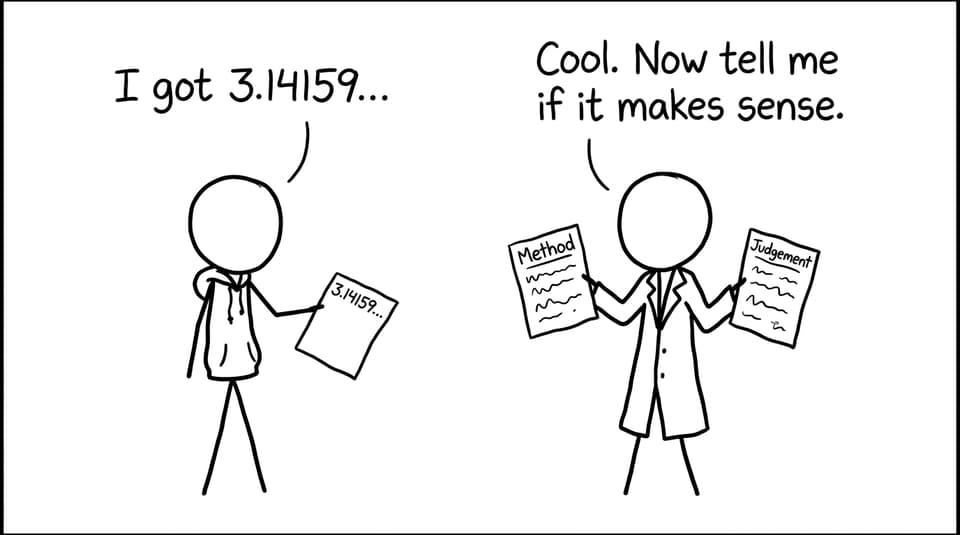
“Evaluate the model” feels open-ended because it is asking you to act like a mathematician, not a calculator. In IB Math, the point is not to worship a model or roast it. The point is to decide how much to trust it, and to explain why.
If you want evaluation to feel less like guessing, build repetition: practise questions, get feedback, and reuse a simple structure until it becomes automatic. Start with IB Mathematics Applications & Interpretation Resources and train the skill using the Questionbank so “evaluate the model” becomes a familiar prompt instead of a blank page.