


Sigma notation has a weird talent: it can make a confident algebra student feel like they just forgot how addition works.
In IB Math, the symbol Σ is small, neat, and supposedly “efficient.” But the moment it appears, many strong students hesitate. Not because the arithmetic is hard, but because the notation asks a different question than the one your brain wants to answer. It’s less “simplify this expression” and more “describe a process accurately, without losing your place.”
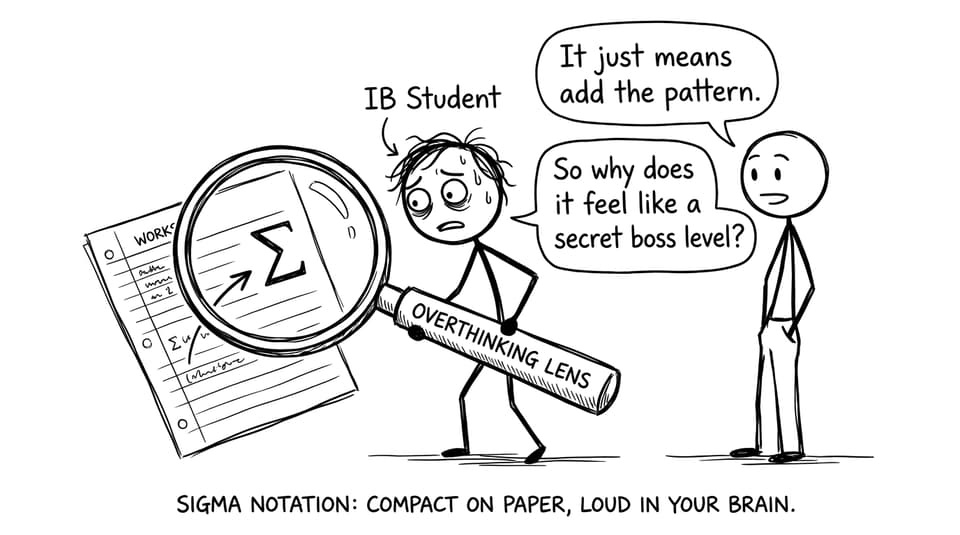
Quick checklist: how to read sigma notation in IB Math
Before you calculate anything, do this mini-scan:
-
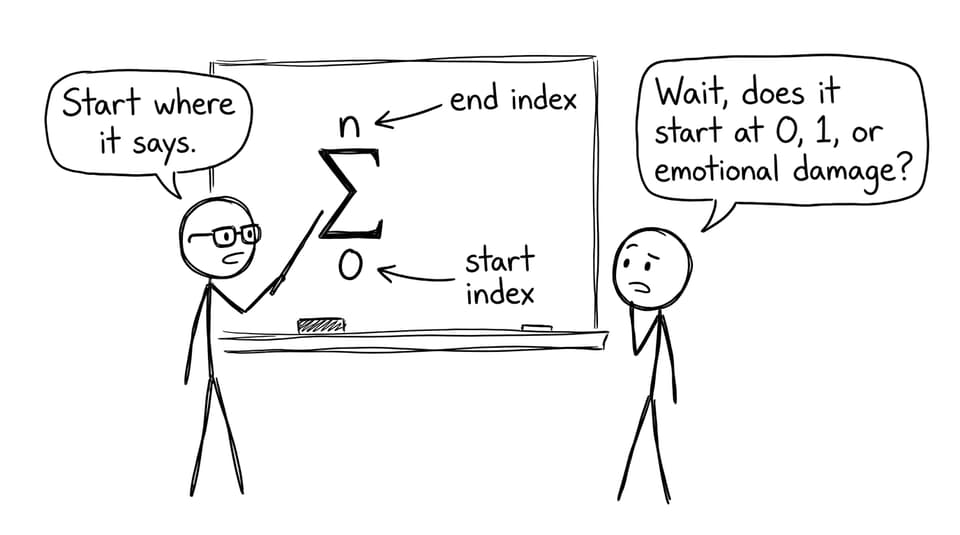
Identify the index (the counting variable, like (i) or (k))
-
Read the lower limit (where counting starts)
-
Read the upper limit (where counting stops)
-
Say in words what the expression means: “Add the term ___ as the index runs from ___ to ___.”
-
Write out the first 2-3 terms to confirm the pattern
If you want guided practice aligned to the syllabus, start with SL 1.2 Sequences and Sigma Notation on RevisionDojo.
What sigma notation is actually testing in IB Math
Sigma notation is repeated addition with a rule.
That’s the whole idea. But in IB Math, Σ often appears inside modelling, sequences, statistics outputs, and calculator screens. So the skill being tested is not “can you add?” It’s: can you track structure under pressure?
Algebra training teaches you to hunt for a cleaner form. Sigma notation often punishes that instinct. If you rush to “get rid of the sigma,” you can accidentally destroy the very structure the question is awarding marks for.
A great way to build this fluency is to pair short notes with many tiny drills. RevisionDojo’s Math AI resources hub is designed for exactly that loop: quick concept clarity, then immediate practice.
Why the index and limits cause most sigma mistakes
Most sigma errors are counting errors disguised as algebra.
Students misread the lower limit, assume the index always starts at 1, or forget that changing the starting point changes every term. Sometimes the term uses (i-1) or (2i+3), which means your “first term” is not what your intuition expects.
A reliable exam move is to write:
-
term when index = lower limit
-
term when index = lower limit + 1
-
term when index = lower limit + 2
Then check what the last term would be when index hits the upper limit.
For more repetition on the broader topic, it helps to revise sequences alongside summation. The blog post Why Do Sequences and Series Feel So Abstract in IB Maths? explains the same “structure over calculation” idea from another angle.
Why sigma notation feels extra abstract in Applications & Interpretation
In IB Math AI, sigma notation often stands for something real: total cost, total distance, total change, or a repeated process over time. The number you get matters, but the meaning matters more.
That’s why IB questions sometimes reward an explanation like “this sum represents the accumulated total from year 1 to year n.” It’s also why RevisionDojo’s step-by-step lessons and topic videos for sigma notation can feel unusually calming: they slow the process down enough for you to see what’s being accumulated.
And if you’re practicing under exam conditions, build sets from the Number and Algebra questionbank to get used to sigma showing up in different disguises.
The “strong student” trap: treating Σ like a simplification command
Strong algebra students are often fast. They spot patterns. They compress expressions. They want closure.
Sigma notation delays closure on purpose.
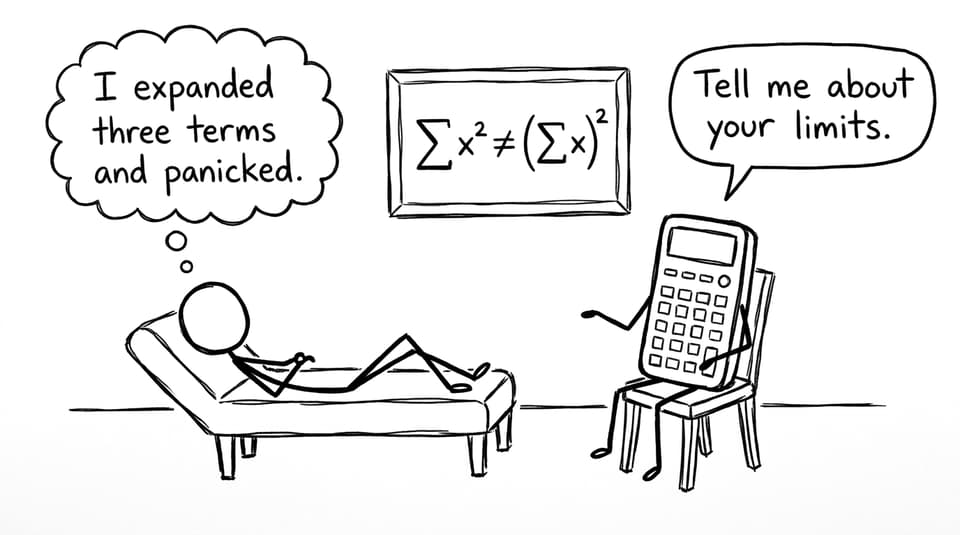
Instead of one expression, you’re managing a sequence of expressions. So the risk is not ability, it’s impatience. You expand too few terms. You shift an index without adjusting limits. You simplify before checking what the sum is even summing.
One surprisingly effective fix is to train tiny recall habits. Use RevisionDojo Flashcards for formula mastery to remember common series forms and common index shifts, so your working memory stays free for interpretation.
Exam-safe tips that actually work for IB Math sigma notation
-
Write out the first few terms every time you feel uncertainty.
-
Box the lower and upper limit so you don’t drift.
-
Check the number of terms: upper - lower + 1.
-
If the question is contextual, state what the sum represents before evaluating.
-
After calculating, do a sanity check: does the size of the total match the size of the terms?
To rehearse timing and stamina, you can mix targeted drills with full-paper practice using Math AI Predicted Papers and then patch gaps with the Questionbank.
Closing: make sigma notation boring (that’s the goal)
Sigma notation feels confusing when you treat it as a symbol you must eliminate. It becomes manageable when you treat it as a sentence: “add this pattern from here to here.”
If you’re revising IB Math and want sigma notation to stop feeling like a trapdoor, build a simple routine: learn the structure with notes, drill it with Questionbank sets, and rehearse it under time with predicted exams and mock-style practice. RevisionDojo brings that full loop together with Study Notes, Flashcards, AI Chat, Grading tools, Predicted Papers, Mock Exams, and even Tutors when you want a human walkthrough. Sigma notation won’t shrink on the page, but your stress about it can.