


Scientific notation looks like a small detail until a global data question quietly raises the stakes.
One moment you’re reading a graph about CO₂ emissions, energy use, or population growth. The next, you’re deciding whether 3.2 x 10^11 is “a bit bigger” than 4.1 x 10^9 (it isn’t). In IB Math, those exponents are not decoration. They’re the whole story.
Global data questions aren’t testing whether you can copy a calculator screen. They’re testing whether you understand scale well enough to interpret the world without getting hypnotized by zeros.
A quick IB Math checklist for scientific notation
Use this as your quick mental routine in IB Math whenever numbers get huge or tiny:
-
Look at the power of ten first (the exponent carries the meaning).
-
Compare exponents before you compare coefficients.
-
Convert only when necessary (conversion creates mistakes).
-
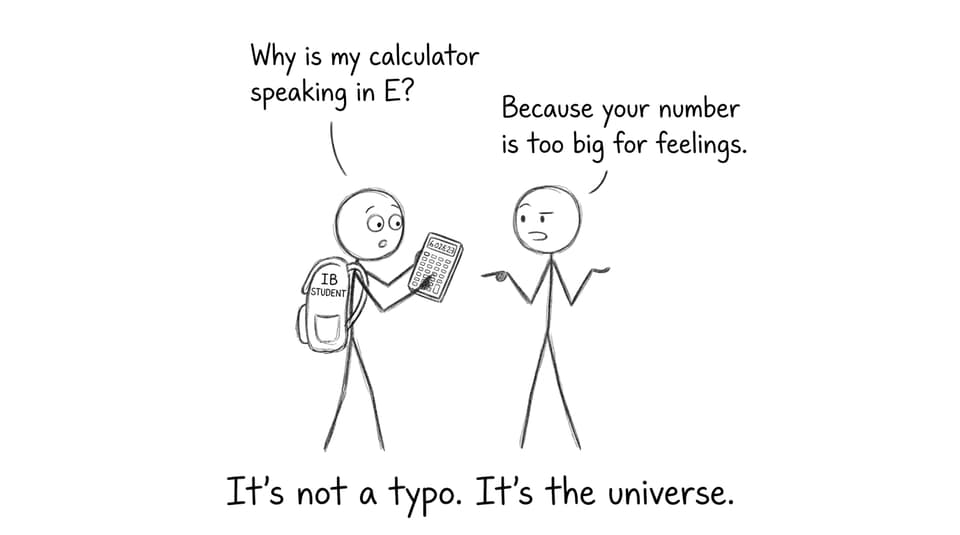
Translate calculator output into clear math language.
-
End with an interpretation sentence in context (units, magnitude, what it implies).
What scientific notation really does in IB Math
Scientific notation isn’t just a way to write numbers neatly. In IB Math, it’s a compression tool for thinking.
When numbers spread across millions, billions, and trillions, ordinary decimal form becomes a trap. Your eyes start “counting zeros,” and your brain starts guessing. Scientific notation forces structure:
-
The coefficient (between 1 and 10) tells you the “front-of-number” size.
-
The exponent tells you the order of magnitude.
That order of magnitude is what global comparisons live on. Two countries can look close on a bar chart, but a one-digit exponent shift means a tenfold difference. That’s not a rounding issue. That’s a different planet.
If you want a clean foundation for standard form, RevisionDojo’s notes on Using standard form (AA SL 1.1) are a fast way to rebuild confidence.
Why global data questions make scientific notation unavoidable
Global data is extreme by nature. It stretches across space, time, and populations. That’s why IB Math uses it so often, especially in Applications and Interpretation.
A typical dataset might include values like national budgets, worldwide energy consumption, or environmental measurements. Writing everything in full decimal form is slow and error-prone. But more importantly, it hides what the question is really asking:
-
Which quantity is larger, and by how much?
-
Is the difference meaningful in context?
-
Does a model imply realistic growth, or absurd growth?
Scientific notation makes those questions answerable at a glance. It turns “counting zeros” into “reading magnitude.”
The mistakes IB Math students keep repeating (and why)
Most errors aren’t because students “don’t know scientific notation.” They happen because students treat it like formatting instead of meaning.
Common patterns examiners punish in IB Math:
-
Comparing coefficients only (e.g., thinking 9.1 x 10^6 is bigger than 1.2 x 10^8).
-
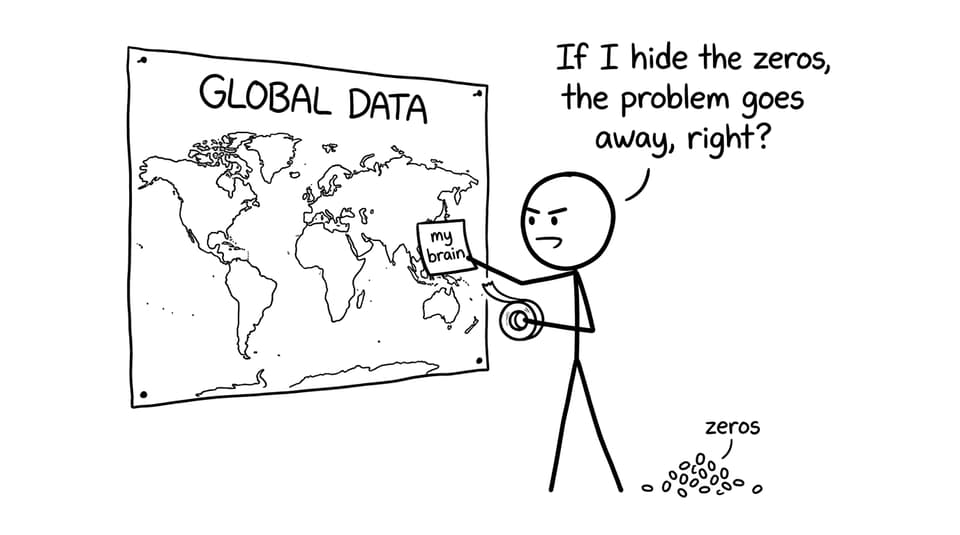
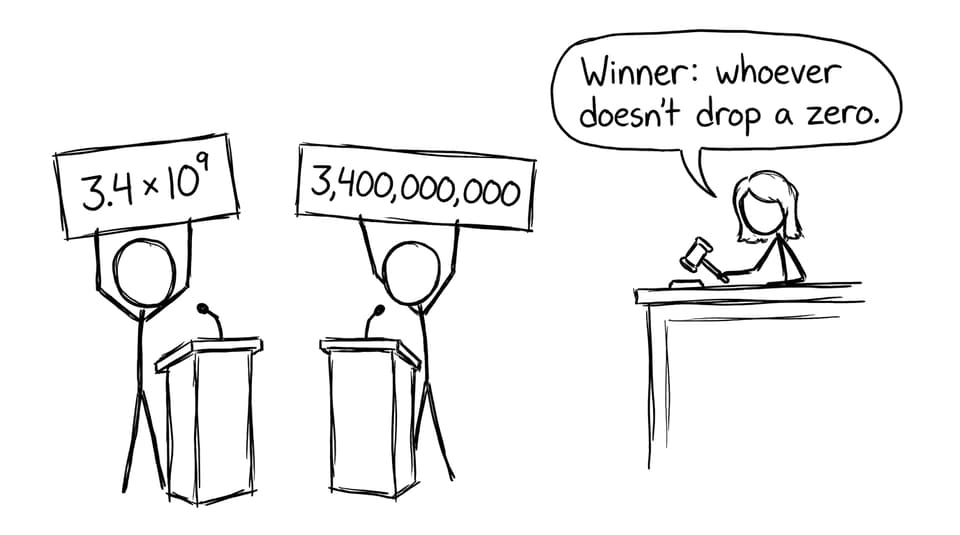
Converting back and forth and dropping a zero.
-
Copying calculator E-notation without explaining what it means.
-
Losing the context (units, what the magnitude implies, reasonableness).
If calculator output is part of your workflow, this post helps you protect marks: Why calculator notation can lose marks in IB Maths exams.
Why this shows up so much in Math AI
Applications and Interpretation focuses on interpreting real datasets, not polishing algebra for its own sake. That’s why scientific notation becomes a thinking skill in IB Math AI.
If you’re revising AI, build a tight loop:
-
Learn the concept quickly using Math AI Functions Notes.
-
Drill the skill with Using standard form Questionbank (AI SL 1.1).
-
Then stress-test it under exam timing with Math AI Predicted Papers.
That loop is basically the RevisionDojo philosophy: Study Notes for clarity, Flashcards for recall, Questionbank for application, AI Chat when you’re stuck, and Mock Exams plus Predicted Papers for realistic rehearsal.
Exam tips for global data questions in IB Math
A few habits save a surprising number of marks in IB Math:
-
Write comparisons like: “Since 10^11 is 100 times 10^9, …” (this is interpretation, not just arithmetic).
-
If you round, state it explicitly and keep consistent significant figures.
-
When you see E-notation, translate it once into standard form, then work consistently.
-
After every calculation, add one sentence: “This means … in context.”
To make this routine stick, use spaced repetition with IB Flashcards with Spaced Repetition (SRS) and turn your most common exponent mistakes into cards.
Conclusion: scientific notation is a meaning tool, not a format
The point of scientific notation in global data questions is simple: the world runs on scale, and IB Math wants you fluent in it.
If you want this to feel automatic by exam day, build a calm system: learn with RevisionDojo Study Notes, lock it in with Flashcards, apply it in the Questionbank, ask AI Chat the moment confusion appears, and rehearse under pressure with Mock Exams and Predicted Papers. Global data stops being scary when your brain stops counting zeros and starts reading magnitude.