



IB Math: why integration feels like a different subject
The first time many IB students meet integration, it’s not the algebra that hurts. It’s the feeling. Differentiation in IB Math can feel like a clean machine: spot the rule, apply it, move on. Then integration shows up and the same students who could differentiate in their sleep suddenly hesitate, erase, and second-guess.
That reaction is normal. In IB Math, integration asks you to reverse your thinking, tolerate ambiguity, and translate symbols into meaning (area, total change, accumulation). Differentiation often rewards speed. Integration rewards interpretation.
Quick checklist: what to remember before you practise
-
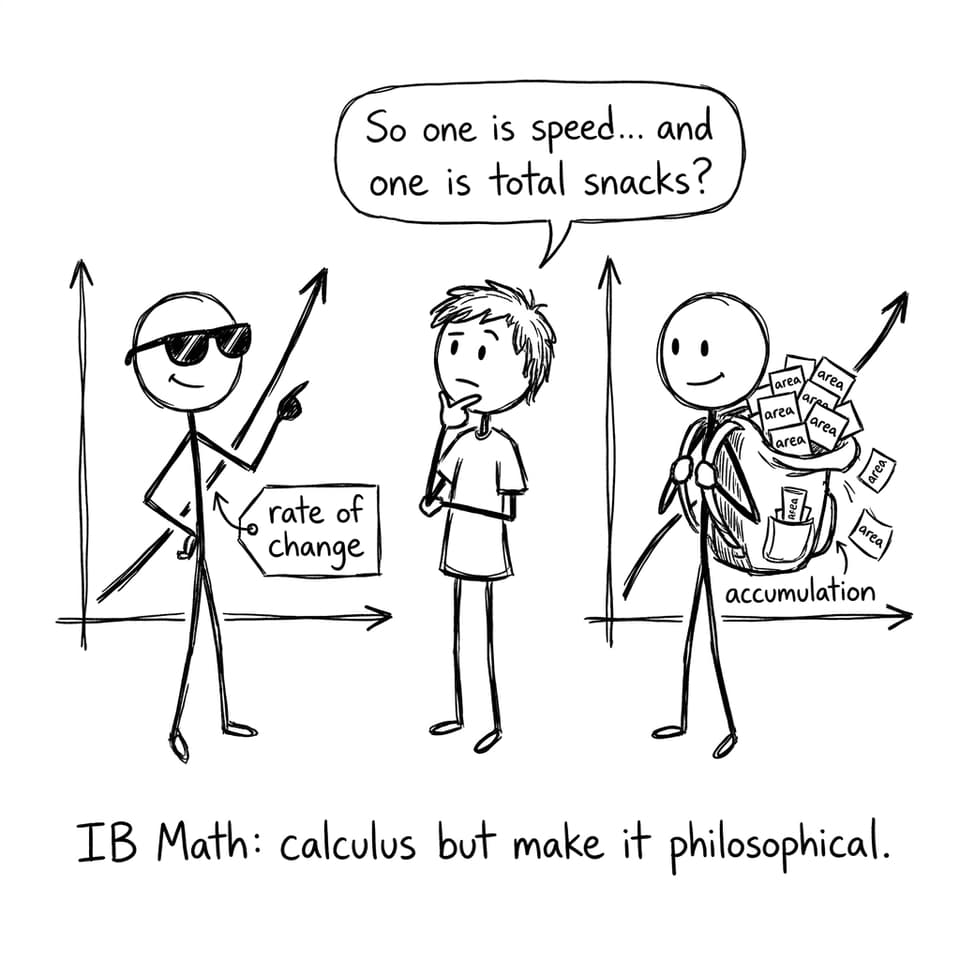
Differentiation is about rate of change; integration is about accumulation in IB Math.
-
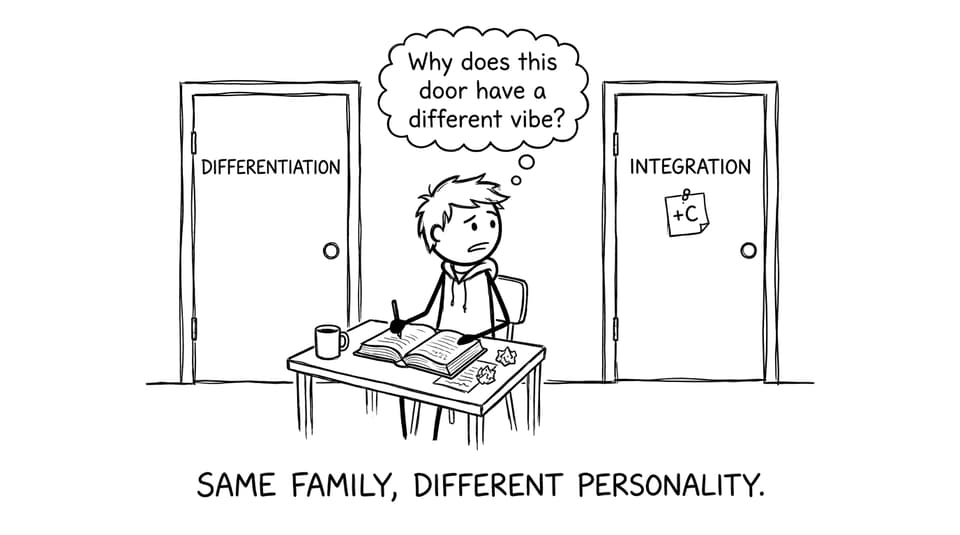
Indefinite integrals describe a family of functions, so "+ C" matters.
-
Definite integrals are about net area (sign included), not just “area-looking numbers.”
-
You’ll score more marks by explaining setup and meaning than by rushing.
-
Use one loop: notes, then practice, then feedback, then reattempt.
If you want a solid home base, start with the IB Math AA Calculus hub and keep it open while you revise.
Differentiation feels procedural; integration feels like a decision
A derivative usually has one main pathway: apply a known rule and simplify. Integration in IB Math often asks a different question: “What could produce this?” And there are many answers.
That’s why the constant of integration exists. If (F'(x)=f(x)), then ((F(x)+7)'=f(x)) too. Differentiation deletes constants without telling you. Integration has to admit they were there.
When you’re learning, that feels unfair. In reality, it’s honest mathematics.
To tighten the technique side, pair concept reading with targeted drills in the AA Calculus Questionbank, then use RevisionDojo’s AI Chat to ask, “Why was substitution the best choice here?” (That one question fixes a lot.)
IB Math teaches integration through area because your brain needs a picture
IB doesn’t introduce integration only as “anti-differentiation.” It anchors it in geometry: area under a curve, signed area, and accumulated change. That visual idea is what later unlocks kinematics, modelling, and probability.
If you treat integrals as rule-matching only, you can still get some marks. But the moment IB asks for interpretation (units, meaning, “what does this represent?”), you’ll feel the ground move.
To build that intuition, read How to Interpret Integration as Area and Accumulation and compare it to the more exam-styled confusion points in Why Do Applications of Integration Feel So Abstract in IB Maths?.
How IB Math tends to assess early integration
In IB Math, introductory integration questions usually reward understanding over flashiness:
-
Find antiderivatives (often straightforward)
-
Evaluate definite integrals (sometimes with tech)
-
Connect integrals to graphs and area regions
-
Explain meaning in context (the “why” marks)
If the theory link feels important-but-fuzzy, the article Why Does the Fundamental Theorem of Calculus Feel So Important Yet So Confusing is worth a calm read.
The most common integration mistakes (and the real cause)
Most errors aren’t “bad at calculus.” They’re “bad at meaning.” Typical slips in IB Math include:
-
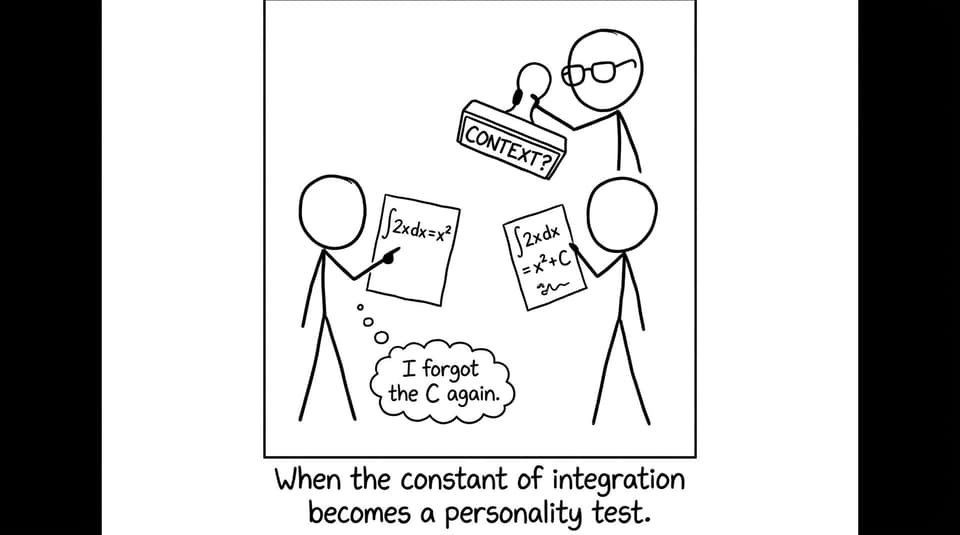
Dropping (+C) on indefinite integrals
-
Mixing up definite vs indefinite integrals
-
Forgetting signed area (below the axis counts negative)
-
Setting wrong limits because you didn’t sketch
-
Finishing with a number but not a sentence (when the question wants interpretation)
A practical fix: keep a mistake log, then rebuild confidence with focused resources like the SL 5.5 integration notes and the broader IB Math AA Calculus notes.
A final way to make integration click (and score)
If differentiation is reading the slope of a story, integration is reading the whole plot. In IB Math, that difference matters because exam questions often pay marks for interpretation, setup, and communication.
Build your routine with RevisionDojo: learn concepts in Study Notes, practise in the Questionbank, lock in recall with Flashcards, ask AI Chat the “why,” and then simulate pressure with Mock Exams and Predicted Papers. Integration stops feeling alien when you see it as accumulation, not a trick.