


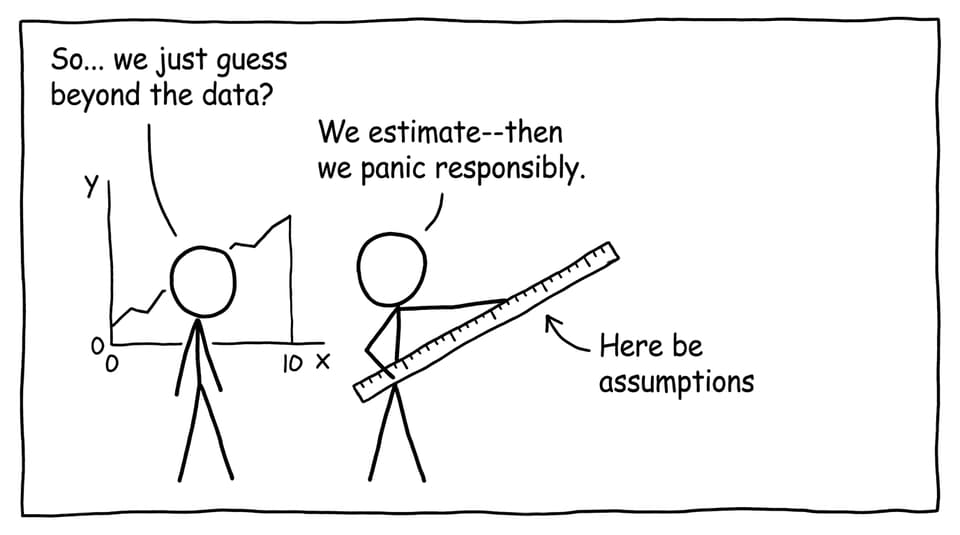
Extrapolation is the moment in IB Math where the graph ends, but the question keeps walking.
You’ve probably felt it: the data points stop at a neat boundary, your regression line looks confident, and then the exam asks for a prediction outside the range. Your instincts say “this is dangerous.” And they’re right. That discomfort isn’t weakness; it’s mathematical maturity. The surprise is that IB Math still tests extrapolation anyway.
What extrapolation means in IB Math
In IB Math, extrapolation is using a model (often a function or regression equation) to estimate values beyond the observed data range. It’s different from interpolation, which stays between known points.
The key is not the calculation. Your calculator can substitute a value into an equation in seconds. The real skill is recognising that the model’s evidence comes only from the original domain. Outside it, you are leaning on assumptions.
If you want a syllabus-aligned refresher on modelling boundaries and what examiners flag as unrealistic, the AI modelling skills notes are a good anchor: AI SL 2.6 Modelling Skills Notes.
Why extrapolation feels risky (and why that feeling is valid)
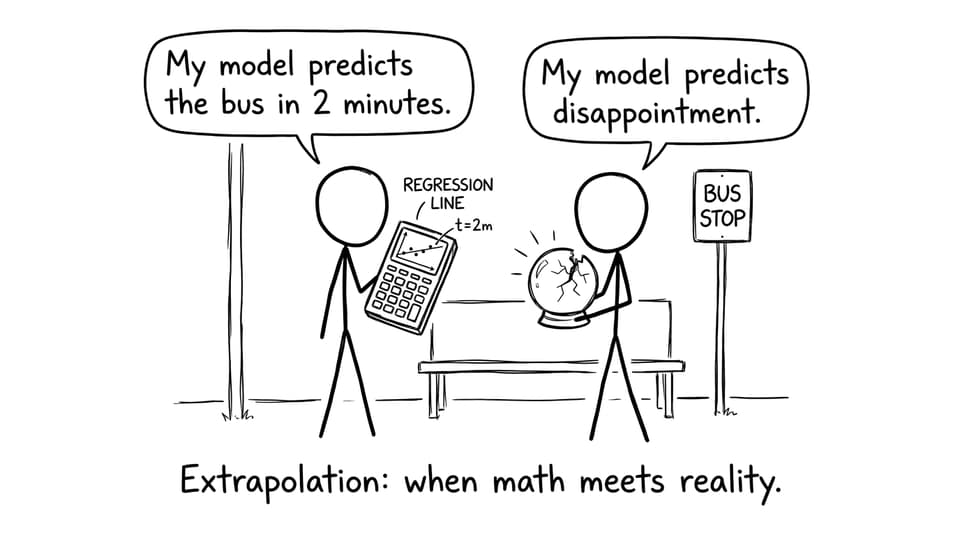
Extrapolation feels risky in IB Math because it quietly asks you to believe that today’s pattern will behave like tomorrow’s world.
Common reasons it breaks:
-
Trends change: growth can slow, plateau, or reverse.
-
Hidden variables appear: a relationship that looked clean might depend on something you didn’t measure.
-
Models are local: many models behave well only over short intervals.
-
Error compounds: small uncertainty inside the range can become large outside it.
That’s why IB cares so much about judgement in modelling. If modelling questions often feel vague, that is intentional: Why Do IB Modelling Questions Feel So Under-Specified?
Why IB Math still tests extrapolation
IB Math tests extrapolation for the same reason driving tests include wet roads. Not because it’s pleasant, but because it reveals whether you can think responsibly under uncertainty.
Extrapolation questions are really asking:
-
Do you recognise you are outside the data?
-
Can you state assumptions clearly?
-
Can you comment on reliability without overstating certainty?
This is especially central in Applications and Interpretation, where the course is designed to reward interpretation, not just algebra. If you’re working through modelling practice, build sets directly from the syllabus with targeted feedback using: AI SL 2.6 Modelling Skills Questionbank.
A quick exam checklist for safer extrapolation in IB Math
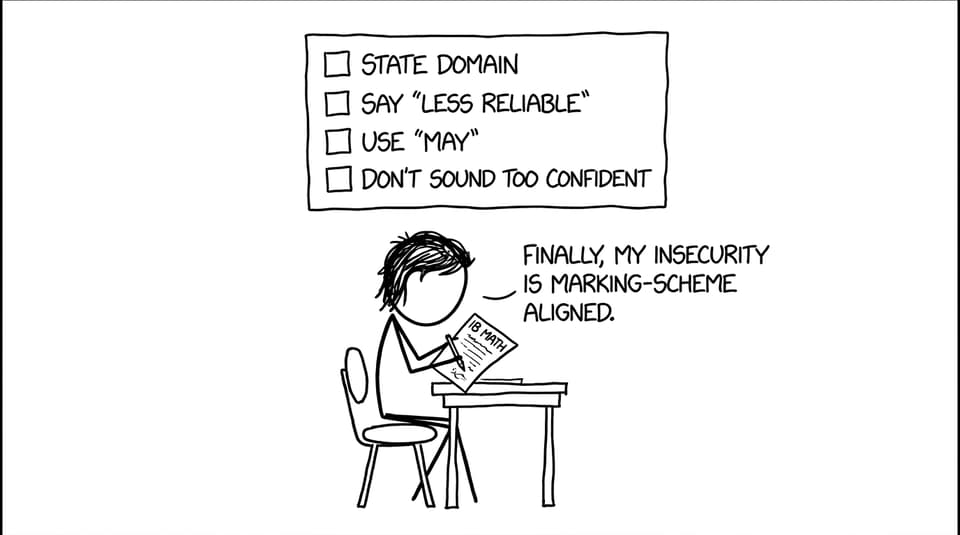
Use this mini-checklist whenever you spot extrapolation in IB Math:
-
Say explicitly: “This is extrapolation because…”
-
Mention the domain of the original data.
-
Use cautious language: may, suggests, likely, less reliable.
-
Add one context reason it could fail (trend change, constraints, real-world limits).
-
Keep conclusions conditional, not absolute.
For students who want to strengthen the “explain the model” part (the marks many people leak), these guides connect well:
The most common way students lose marks
In IB Math, students usually don’t lose marks because the regression equation is wrong.
They lose marks because they treat the extrapolated value as certain.
Examiners reward the student who writes: “The model predicts 62, but this is less reliable because it is outside the data range and assumes the trend continues.” That’s mathematical honesty.
If you want to practise writing that kind of commentary under time pressure, combine topic drills with timed simulations:
Conclusion: make the risk part of the answer
Extrapolation feels risky in IB Math because it should. The exam isn’t trying to trick you into trusting a fragile model; it’s checking whether you can use a model without worshipping it.
If you want that skill to become automatic, RevisionDojo is built for it: drill extrapolation with the Questionbank, solidify language with Flashcards, learn the method through Study Notes, test yourself with Predicted Papers and Mock Exams, and polish explanations using AI Chat and grading tools. When the data ends and the question keeps going, you’ll know exactly what to do in IB Math: estimate, then evaluate.
