


The painful moment every IB Math student recognises
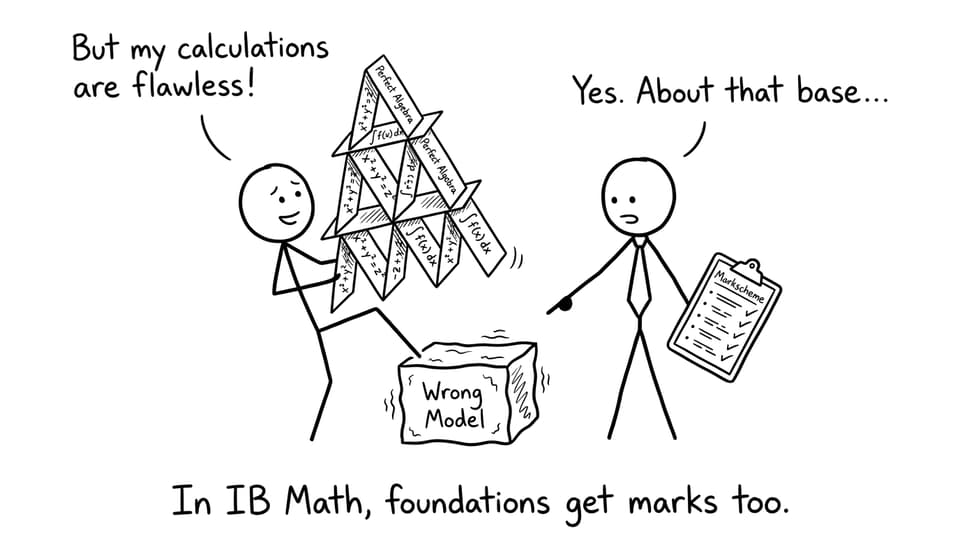
You finish the question. Your calculator agrees. Your algebra is clean. And then your teacher writes something that feels personal: “Wrong model.”
In IB Math, especially in Applications & Interpretation, that comment can erase almost everything you think you earned. It’s not because IB is trying to trap you. It’s because the course is quietly testing something deeper than computation: whether you can translate a real situation into mathematics that actually represents it.
A fast checklist before you commit to a model (save marks in 20 seconds)
Before you calculate, pause and run this mini-check. It’s the quickest way to stop IB Math from punishing a good method built on the wrong foundation.
-
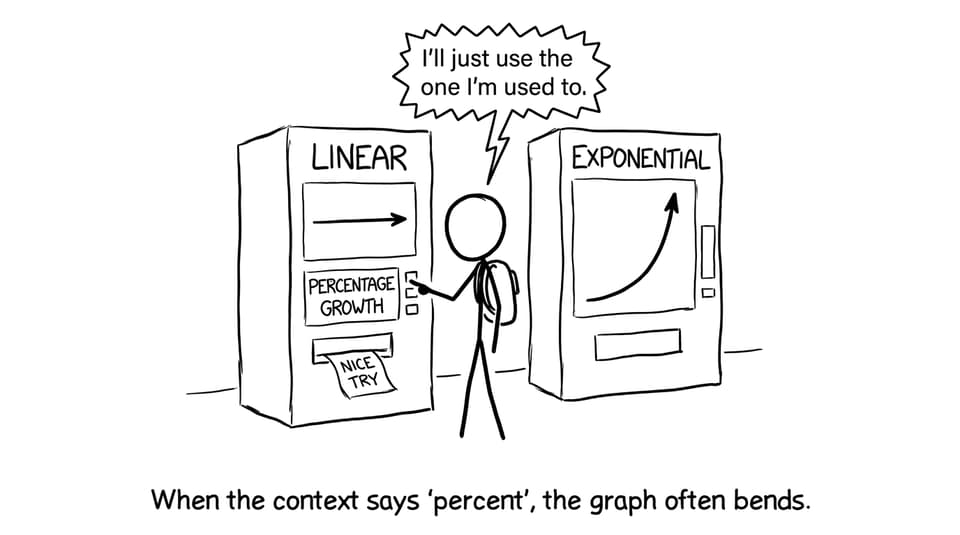
What type of change is described (fixed amount vs percentage vs seasonal vs random noise)?
-
Are we modelling discrete steps or something continuous?
-
Do the units match what the model assumes?
-
What happens if time doubles? Does the situation still make sense?
-
Can you justify the choice in one sentence?
For more structured practice on these decisions, start in the Mathematics Applications & Interpretation (AI) hub.
What “choosing a model” actually means in IB Math
A model is the mathematical story you decide to tell about the context. In IB Math, that story might be:
-
Linear vs exponential vs quadratic behaviour
-
Arithmetic vs geometric sequences
-
A specific regression type (linear, exponential, power, etc.)
-
Restrictions like domain, constraints, and whether values must be integers
That choice isn’t decoration. It’s assessed.
If you want to see how IB treats modelling as a skill (not a bonus), the syllabus-aligned section on SL 2.6 Modelling skills is a good place to anchor your thinking.
Why the wrong model can wipe out full marks (even with perfect maths)
In IB Math, correct calculations are only meaningful if they answer the question in context. A wrong model is like measuring temperature with a ruler: the method can be flawless and still irrelevant.
Here’s what examiners often see when you choose the wrong model:
-
Conceptual mismatch: You used linear change where the context screams compound growth.
-
Unrealistic assumptions: Your model allows negative time, negative population, or fractional people.
-
Nonsense predictions: The model behaves wildly outside the given data range.
That’s why marks disappear. The examiner isn’t marking your algebra in isolation; they’re marking whether your approach demonstrates understanding.
For a deeper look at how modelling judgement shows up in exam questions, read How to Approach Math AI SL Modeling Questions.
Why IB Math rarely tells you which model to use
Real problems don’t come with labels. You’re not told “this is exponential” in life, so IB Math mirrors that reality.
If the exam simply handed you the model, it would only test execution. But Applications & Interpretation is designed to test:
-
interpretation
-
decision-making
-
justification
-
awareness of limitations
That’s also why IB sometimes accepts more than one reasonable model. The key is whether you can defend it. (This idea is explored well in Why Do IB Maths Questions Accept Multiple Valid Models?.)
What examiners look for when judging a model
A model doesn’t have to be perfect. It has to be reasonable.
In IB Math, examiners tend to reward models that:
-
match the described change (percentage growth, fixed increases, cyclical patterns)
-
use sensible assumptions and restrictions
-
produce realistic outputs over the relevant interval
-
include a brief justification (even one line)
When regression is involved, remember that “best fit” is not the same as “best explanation.” If regression trips you up, Why Do Regression Models Never Fit Perfectly in IB Maths? is worth a read.
A simple way to protect marks: write the one-sentence justification
Under exam pressure, aim for a single sentence that links the context to the model.
Examples (adapt the wording):
-
“Because the quantity increases by a constant percentage each year, an exponential model is appropriate.”
-
“Because the change is a fixed amount per interval, a linear model is reasonable over this domain.”
-
“Because the data curves and levels off, a non-linear regression is more suitable than a linear fit.”
That sentence often secures method marks you’d otherwise lose.
If you want drills that force you to practise this habit, use RevisionDojo’s Questionbank for modelling topics and check your reasoning with AI Chat. Start with SL 2.6 Modelling skills Questionbank and build up from there.
The takeaway: IB Math rewards foundations, not just finish lines
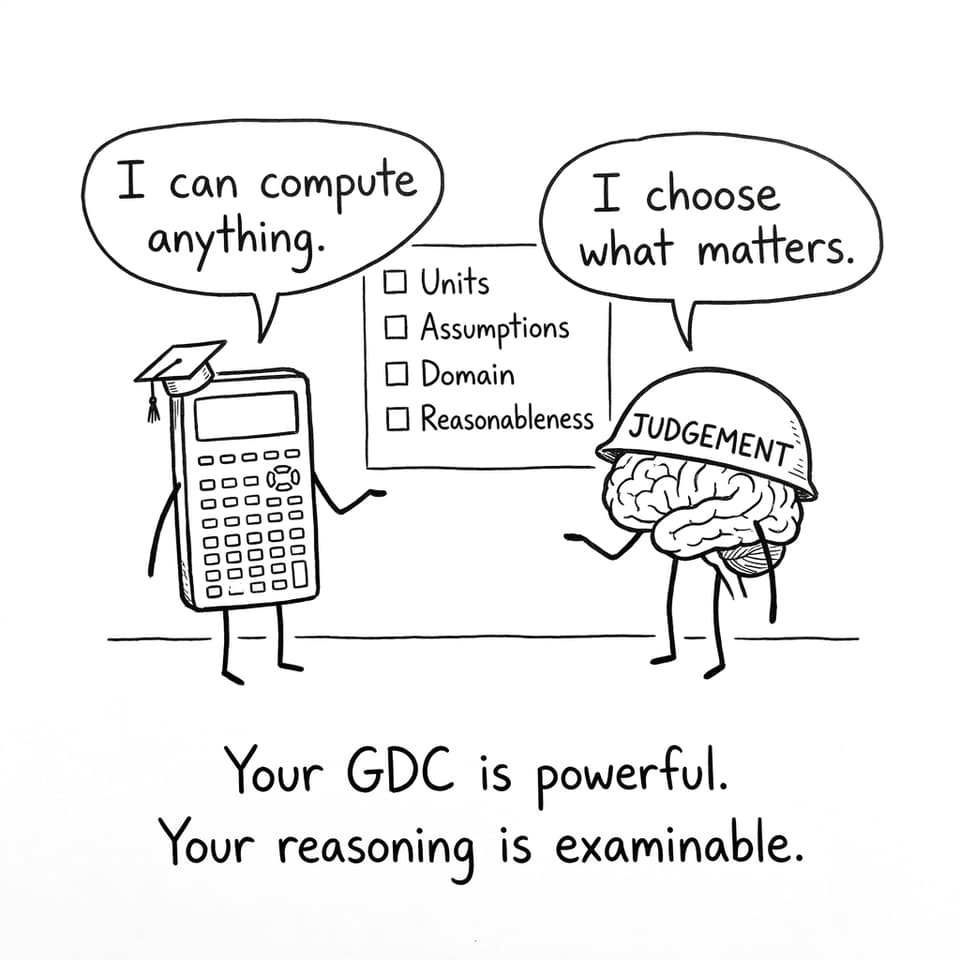
The hard truth is also the hopeful one: in IB Math, losing marks for the wrong model isn’t random. It’s feedback about judgement.
Build the habit of pausing for 20 seconds, choosing a model with intent, and writing a one-sentence justification. Then practise that loop until it feels automatic.
RevisionDojo is built for exactly this. Use the Questionbank to train model selection, Study Notes to clarify when each model fits, Flashcards to memorise context cues, AI Chat to check your justification, and Mock Exams plus Predicted Papers to rehearse under time pressure. In IB Math, the model is part of the answer, and with the right practice, it becomes one of your easiest mark gains.


