



You know the feeling: your calculator gives 2.718281828, your friend writes 2.72, and you freeze because approximation in IB Math feels like a vibe, not a rule.
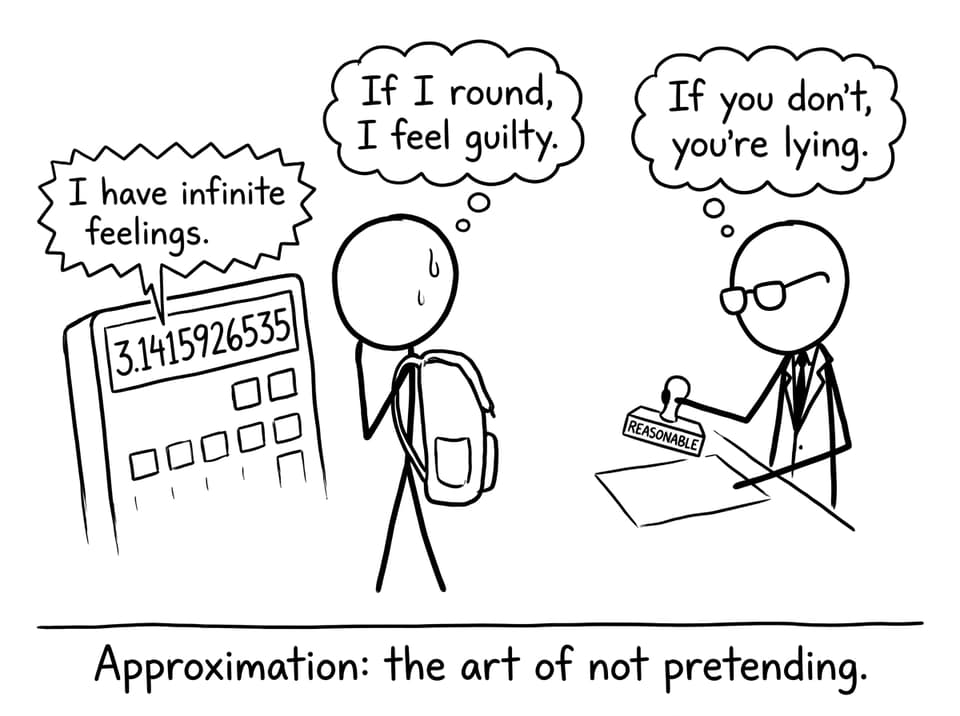
That anxiety is understandable. Most of your maths life trained you to chase “the” exact answer. But in IB Math, approximation is where the course quietly shifts from calculation to judgement. It can feel subjective because it asks you to make a decision, and then defend it.
The real reason IB Math uses approximation
Approximation shows up so often because IB Math is trying to model how numbers behave outside textbooks. Real data is measured. Models simplify. Predictions are uncertain. So the “best” answer is often the most reasonable one.
If you want the bigger picture on why exam questions accept approximate results, read Why IB Accepts Approximate Answers So Often. It explains the core idea examiners reward: sensible interpretation over false precision.
A fast checklist: how to make approximation feel objective
When approximation in IB Math feels risky, use this quick rule set:
-
Match your rounding to the accuracy of the given data.
-
Delay rounding until the final step (unless instructed).
-
Keep consistent decimal places or significant figures throughout.
-
Use context language: “about”, “approximately”, “to 3 s.f.”
-
Make your assumption visible in one sentence.
For targeted practice on the mechanics, try SL 1.6, Approximating and estimating and the focused drills like Rounding numbers to a specific value in significant figures.
Why approximation feels subjective (but isn’t)
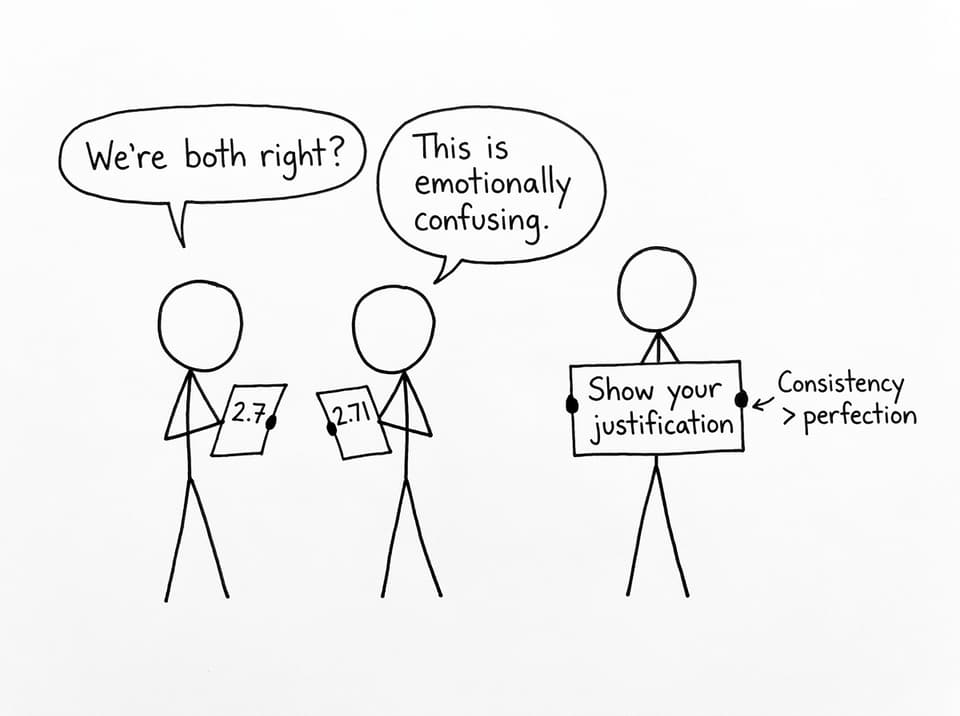
Approximation feels subjective because multiple answers can sit inside a “reasonable tolerance.” Two students might round differently and both be correct, as long as their choices are consistent with the data and method.
What’s being marked is not your instinct. It’s your logic.
A useful mental shift in IB Math is this: examiners don’t fear decimals; they fear unjustified decimals.
Where IB Math “hides” approximation most often
Approximation isn’t only in rounding questions. It’s baked into:
-
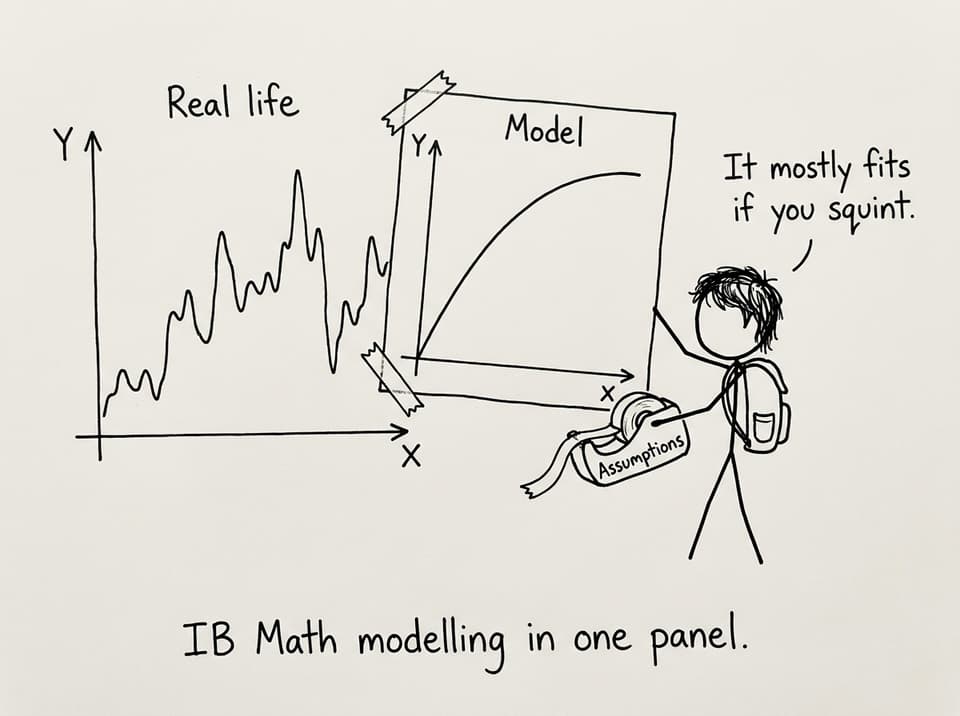
regression and prediction (models are estimates)
-
statistics summaries (sampling and measurement error)
-
error, tolerance, and bounds
-
applied calculus interpretations
If bounds still feel fuzzy, When Do Upper and Lower Bounds Actually Matter in IB Exams is a strong clarifier. And if modelling is your pain point, Why Do Regression Models Never Fit Perfectly in IB Maths? shows why “not exact” is the whole point.
The most common approximation mistakes in IB Math
These patterns cause the most lost marks:
-
rounding early, then building the rest of the solution on that rounded value
-
switching between 2 d.p., 3 d.p., and 3 s.f. with no reason
-
presenting long decimals that imply certainty the context doesn’t support
If you’ve ever watched your final answer drift because you rounded too soon, Why Do Rounding Errors Keep Compounding in Long IB Maths Calculations explains the “small mistake, big difference” effect.
Build judgement (not just decimals) with RevisionDojo
Approximation only feels subjective when you’re doing it alone, in your head, under time pressure. RevisionDojo makes IB Math feel more objective by giving you repetition and feedback: practice with the Questionbank, lock in rules with Flashcards, clean up explanations using Study Notes, and pressure-test your accuracy with Mock Exams and Predicted Papers. If coursework or calculator methods confuse the story, the Coursework Library, Grading tools, and Tutors help you tighten it.
In IB Math, “reasonable” is a skill. Train it, and approximation stops being scary, but it starts being controllable.