


A hook you can actually use in IB Global Politics
Picture this: a government signs a human rights treaty on Monday, then limits protest, expands surveillance, or detains opponents by Friday. That gap isn’t just hypocrisy. It’s the core puzzle in IB Global Politics: why states publicly endorse universal rights, but privately treat rights as negotiable when power, fear, and incentives collide.
If you can explain why the violation makes sense to leaders (even when it’s morally wrong), you can write sharper Paper 2 arguments and more convincing Paper 1 analysis.
Quick checklist: the most common drivers
Use this as a fast planning frame in IB Global Politics essays:
-
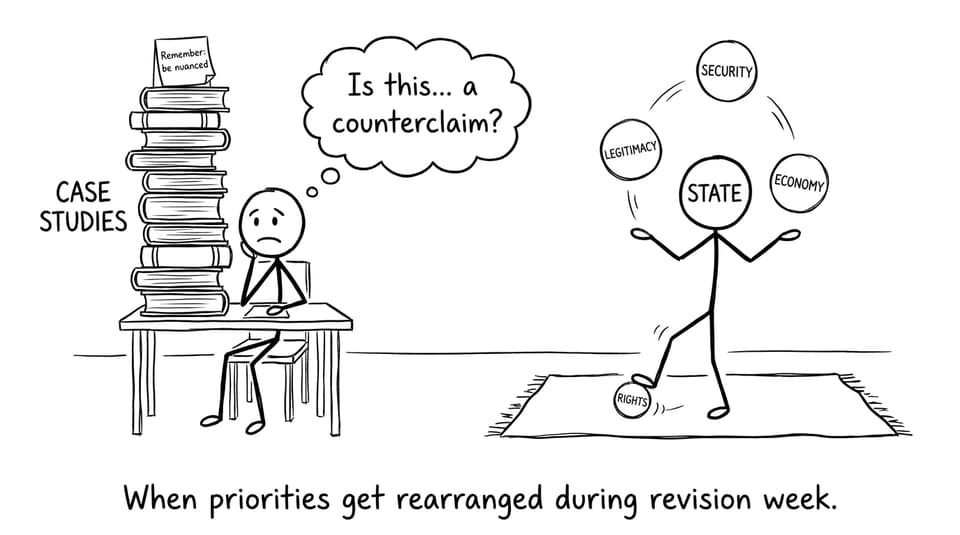
National security and emergency politics
-
Regime survival and control of opposition
-
Weak institutions and low accountability
-
Economic pressure and “development trade-offs”
-
International politics and selective enforcement
-
Cultural/ideological framing to justify limits
For definitions and framing, pair this with What Are Human Rights in Global Politics? and the IB Global Politics Rights and Justice hub.
National security: when fear becomes policy
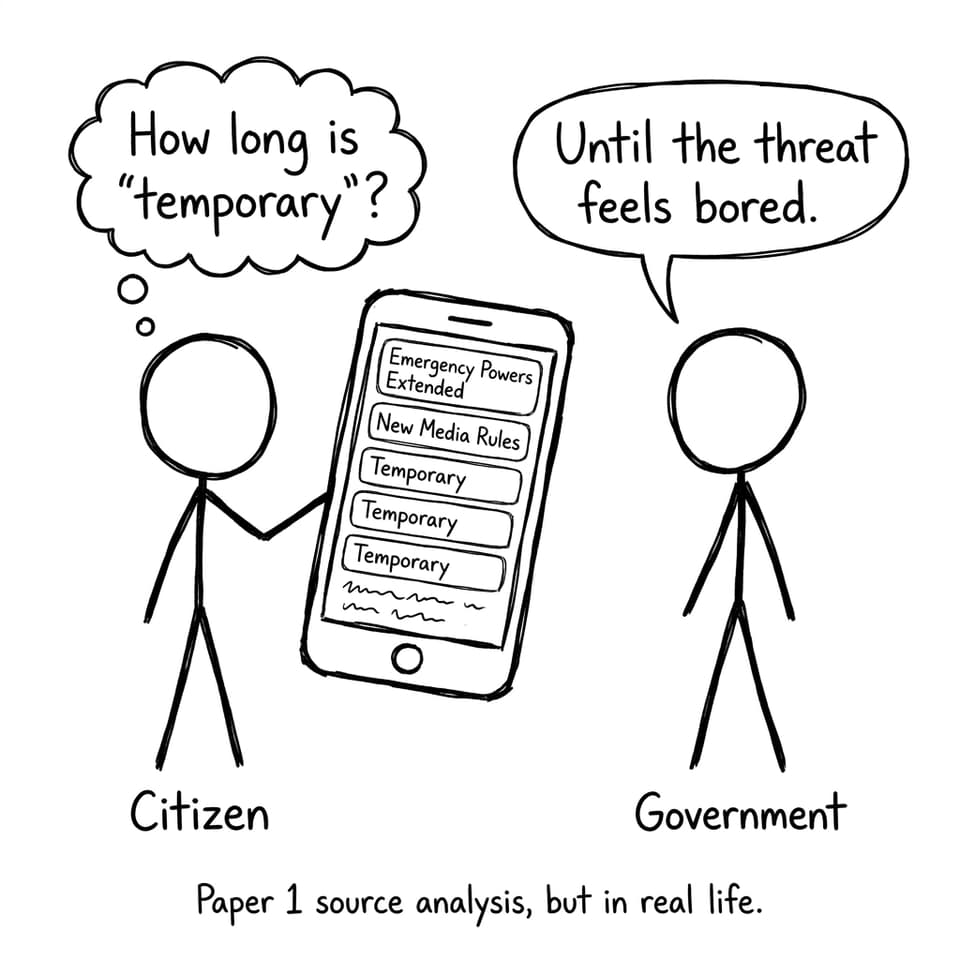
Security is the most exam-friendly explanation because it links directly to sovereignty and legitimacy in IB Global Politics. States often argue that terrorism, civil unrest, separatism, or war requires restrictions on speech, movement, privacy, or due process. Some limits can be legal in genuine emergencies. The political temptation is to stretch “temporary” measures until they become normal.
A strong evaluation line: security policies can protect people, but they also expand state capacity to monitor and punish. For more balanced counterclaims, see Is Security More Important Than Human Rights?.
Regime survival: power preservation beats restraint
When leaders believe they may lose office, rights protections are often treated as obstacles. In authoritarian systems this can look like censorship, arbitrary detention, intimidation, or policing that targets opposition. In hybrid systems, it can be subtler: restrictive NGO laws, legal harassment, or controlling the information environment.
This is where IB Global Politics concepts become practical: legitimacy isn’t only moral, it’s strategic. If you want practice prompts on legitimacy and coercion, use the Legitimacy Questionbank and connect it back to Power in Global Politics.
Weak institutions: when laws exist only on paper
Even when constitutions promise rights, enforcement depends on courts, media, and oversight bodies. Where judges lack independence, corruption is common, or journalists are threatened, abuse is easier and cheaper. In IB Global Politics, this is a clean way to show structural causes, not just “bad leaders.”
A useful sentence for essays: weak accountability lowers the political cost of violating rights, so violations persist over time.
Economics and development: the quiet violations
Human rights violations are not limited to arrests and censorship. Economic and social rights can be harmed through neglect, inequality, unsafe labor, displacement, or environmental damage justified as “growth.” When resources are scarce, governments may prioritize stability, investment, or megaprojects over protections for vulnerable groups.
To strengthen your analysis vocabulary, pull quick evidence and framing from What Is the Human Development Index (HDI)? and revise from the Global Politics Cheatsheets.
International politics: the enforcement gap
International law matters, but enforcement is uneven. Powerful states can resist pressure, and allies are often shielded because of trade, military cooperation, or regional strategy. That creates a predictable incentive: comply when the cost is high, ignore when the cost is low.
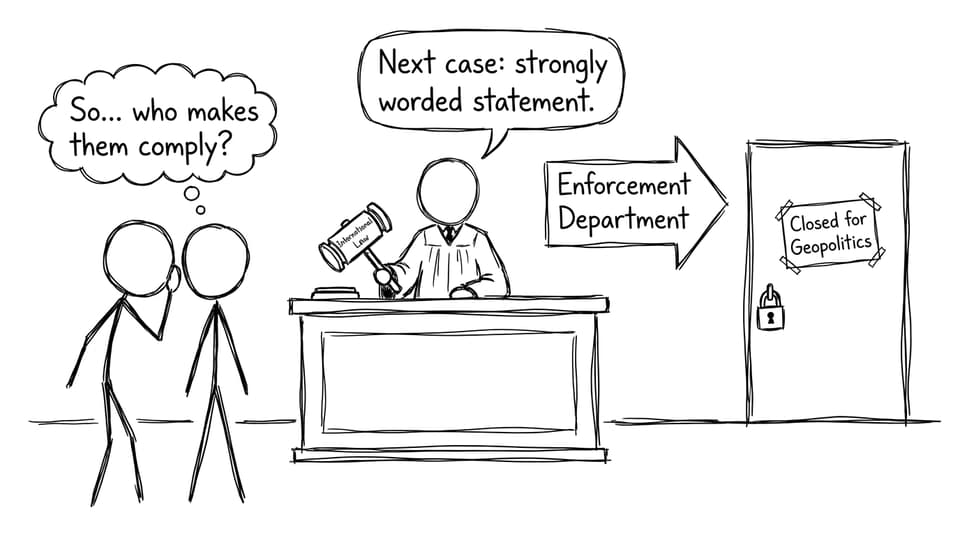
To add nuance in IB Global Politics, compare legal commitments to real consequences: sanctions, naming-and-shaming, conditional aid, or international courts, and then evaluate why these tools fail or succeed.
How to turn this into exam marks (fast)
Use RevisionDojo to make the topic feel automatic:
-
Build argument depth with the IB Global Politics Paper 2 Guide and Paper 2 Notes
-
Train source skills with Paper 1 Notes
-
Drill definitions using IB Flashcards with Spaced Repetition and the Framing Global Politics flashcards
Conclusion: the essay insight examiners notice
States violate human rights when protecting rights conflicts with staying in power, maintaining security, or avoiding costs. The most convincing IB Global Politics answers don’t pick one cause; they show interaction: fear enables repression, weak institutions normalize it, and geopolitics reduces accountability.
If you want to turn that insight into marks, use RevisionDojo’s Questionbank, Study Notes, Flashcards, AI Chat, Grading tools, Predicted Papers, Mock Exams, Coursework Library, and Tutors to practise arguments until they feel inevitable under time pressure. Start with the IB Global Politics Resources hub and build your next essay plan around the checklist above.