


The moment two graphs start arguing
In IB Math, there’s a specific kind of panic that hits when a box plot and a histogram show up for the same dataset and seem to tell different stories. The box plot looks skewed. The histogram looks almost symmetric. Your brain quietly assumes one of them must be lying.
But in IB Math, graphs rarely “contradict” each other. They answer different questions. And once you see what each one is built to reveal (and what it hides), mixed-representation questions stop feeling like tricks and start feeling like opportunities.
Quick checklist: what to say when both appear
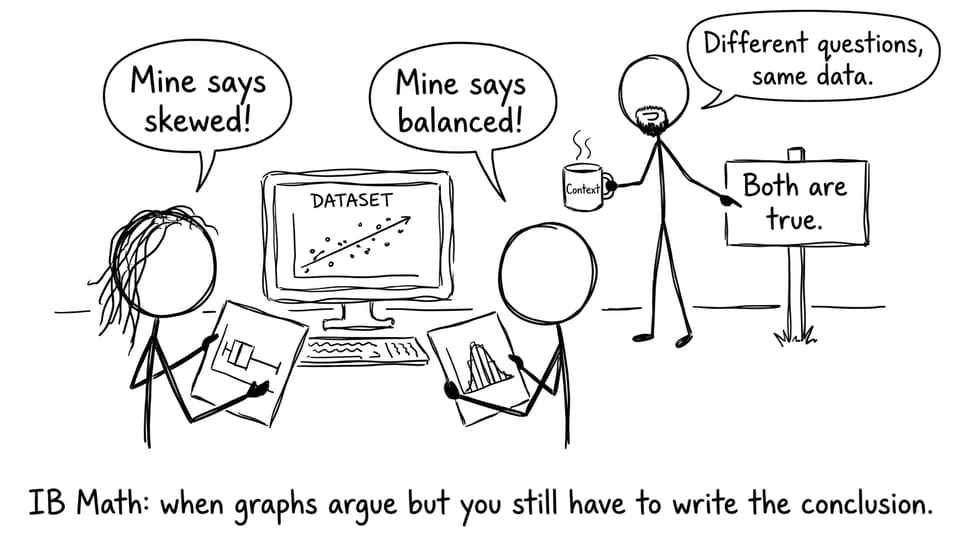
Use this quick exam checklist in IB Math whenever you’re given both graphs:
-
Identify centre using the box plot (median).
-
Compare spread using the box plot (IQR, range, outliers).
-
Describe shape using the histogram (skewness, modality, gaps, clusters).
-
Explain why impressions differ: box plots compress; histograms reveal structure.
-
Finish with a short synthesis sentence: “Together, this suggests…”
If you want targeted practice on this exact skill, the SL 4.2 resources are a strong starting point: SL 4.2: Histograms, CF graphs, box plots.
What a box plot is really doing in IB Math
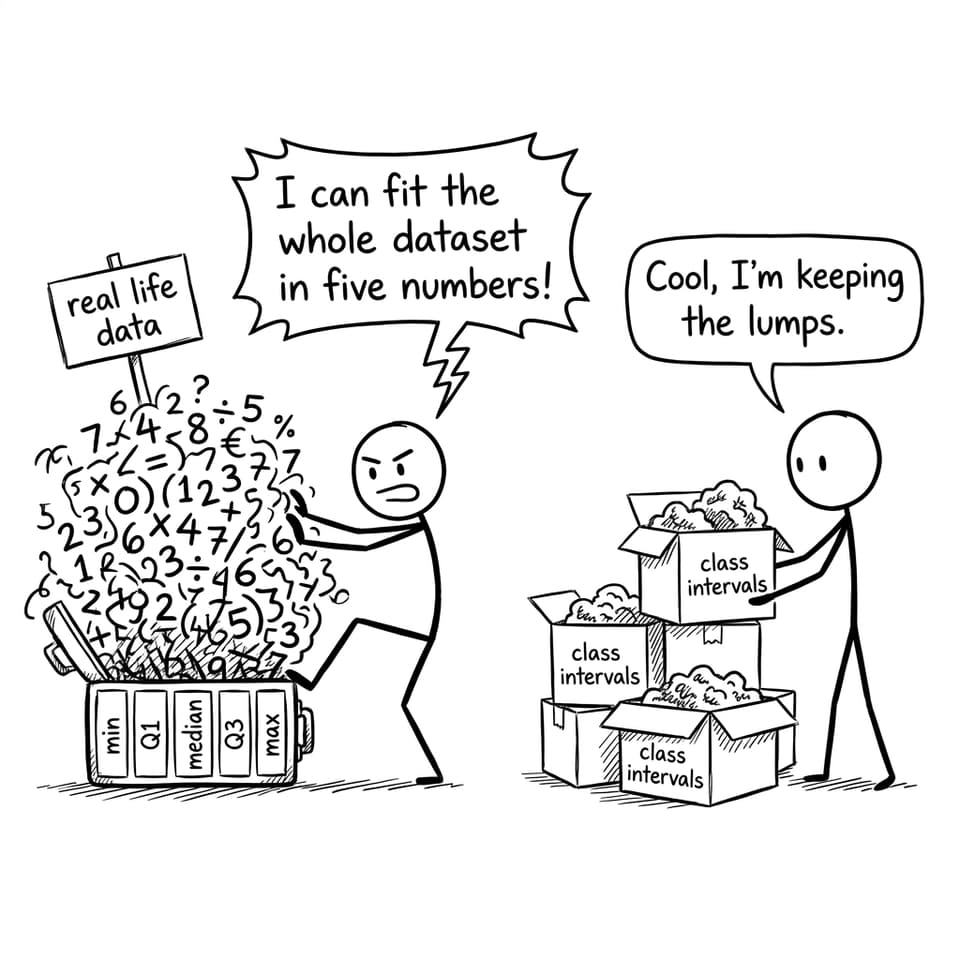
A box plot is a summary machine. In IB Math, it takes a messy dataset and turns it into five anchor points: minimum, Q1, median, Q3, maximum. That’s its superpower.
It is excellent for:
-
comparing two groups quickly,
-
spotting possible outliers,
-
talking about median and interquartile range with confidence.
But the cost of that convenience is detail. A box plot does not show how data behaves inside each quartile. Fifty percent of the data lives inside the box, but the box won’t tell you whether that half is evenly spread or crowded into one corner.
If you need a refresher on how examiners expect you to read it, this is useful context: Box and Whisker Plot in IB Math.
What a histogram is really doing in IB Math
A histogram is a shape detector. In IB Math, it answers a different question: “Where are the values concentrated?”
It helps you see:
-
clusters (where bars pile up),
-
gaps (empty intervals),
-
skewness in a more visual way,
-
whether the distribution looks unimodal or has multiple peaks.
But histograms come with their own trade-off: the story changes depending on class width and boundaries. Two histograms of the same dataset can look very different if the bins change.
That’s why class width is such a common examiner lever in IB Math: Why Does Choosing the Wrong Class Width Distort Histograms in IB Maths.
For topic-aligned notes, you can also use: AI SL 4.2 Presentation of data notes.
Why they tell different stories (and why both can be true)
Here’s the core reason box plots and histograms can “disagree” in IB Math:
-
A box plot compresses the dataset into five numbers.
-
A histogram spreads the dataset across intervals.
So you can absolutely have a dataset where quartiles look evenly spaced (suggesting balance), but frequencies inside those quartiles are uneven (suggesting clustering and skew when you look at bars).
A common example: imagine many values packed just below the median and then a thin tail above it. The median might still sit in a place that makes the box look fairly centred, while the histogram reveals the lopsided pile-up.
This is also why IB cares about outliers: a box plot may flag them clearly, while a histogram can make them look like tiny, forgettable bars at the end. If outliers confuse your interpretations, read this alongside: Why Do Outliers Matter So Much in IB Math AI?.
How to write the top-mark synthesis sentence
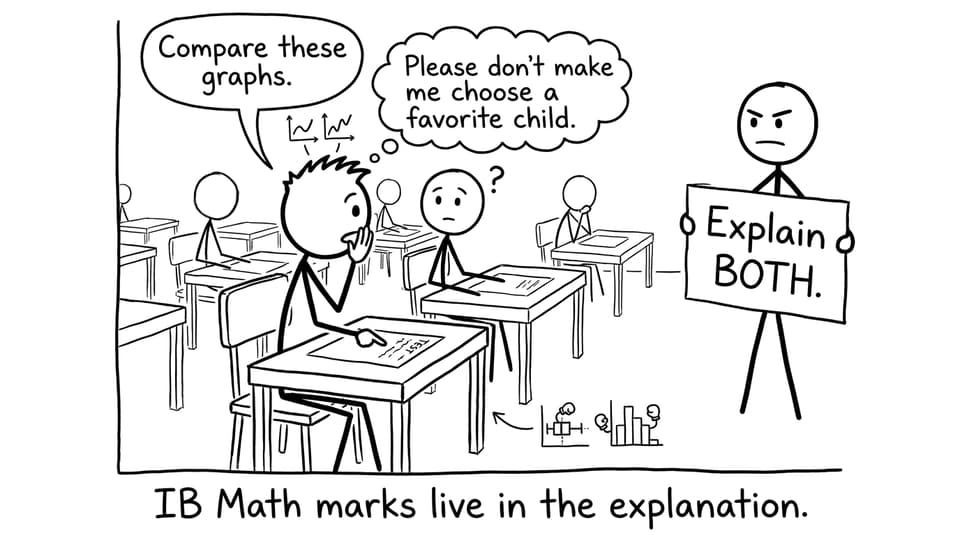
In IB Math, marks often come from how well you combine representations. Try this exam-ready template:
“The box plot suggests a (higher/lower) median and (larger/smaller) IQR, while the histogram shows (skewness/cluster/gap). This difference occurs because the box plot summarises quartiles and hides within-quartile clustering, whereas the histogram shows frequency across intervals.”
If you want a bigger workflow for writing these interpretations under time pressure, this guide helps: How to Interpret Data in IB Math AI Using Technology.
Closing: in IB Math, different stories means more information
Box plots and histograms don’t tell different stories because one is wrong. In IB Math, they tell different stories because real data has more than one truth: centre, spread, shape, and oddities at the edges.
If you want to get consistent interpretation marks, practise combining both visuals until it feels automatic. RevisionDojo makes that practice practical with Questionbank drills, Study Notes, Flashcards, AI Chat feedback, Grading tools, Predicted Papers, Mock Exams, a Coursework Library, and Tutors when you want a human to check your thinking. In IB Math, confidence is often just repeated, well-guided exposure to the same skill in new disguises.