
IB Biology: Why DNA Replication Must Occur Before Cell Division
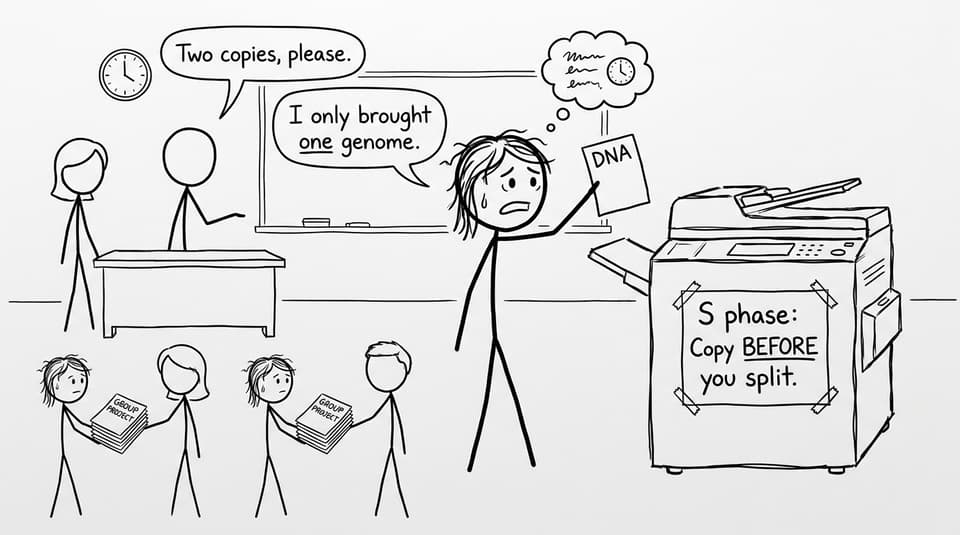
A cell has one job when it divides: don’t lose the story. Every instruction for enzymes, membranes, and metabolism lives in DNA, and cell division is the moment that story gets handed to two new readers. In IB Biology, this comes up again and again in questions on the cell cycle, mitosis, and meiosis. The logic is simple but strict: replicate first, then split. If the order flips, “half a genome” becomes the best-case outcome.
Quick checklist (the exam-friendly version)
For IB Biology, you can usually justify “DNA replication must occur before cell division” with these points:
-
Genetic continuity: each daughter cell needs a complete genome.
-
Sister chromatids: mitosis/meiosis rely on duplicated chromosomes.
-
Checkpoints: the cycle pauses if replication is incomplete or damaged.
-
Chromosome handling: replicated DNA can condense and segregate reliably.
If you want the syllabus-aligned overview, start with IB Biology Topic D1.1: DNA Replication and IB Biology Topic D2.1: Cell and Nuclear Division Notes.
Genetic continuity: why “half a genome” isn’t a partial credit situation
The core reason is genetic continuity. A dividing cell is not donating “some DNA” to each daughter cell; it is trying to produce two functional cells that can both transcribe genes, synthesize proteins, and respond to signals. Without replication, each daughter cell would inherit only a fraction of the chromosomes. That creates missing genes, broken pathways, and cells that cannot survive or work properly.
This is why the S phase exists in the first place. Interphase isn’t downtime; it’s preparation. For HL details, RevisionDojo’s Phases of the cell cycle (HL) notes make the timing crystal clear.
Sister chromatids: division needs duplicates to separate cleanly
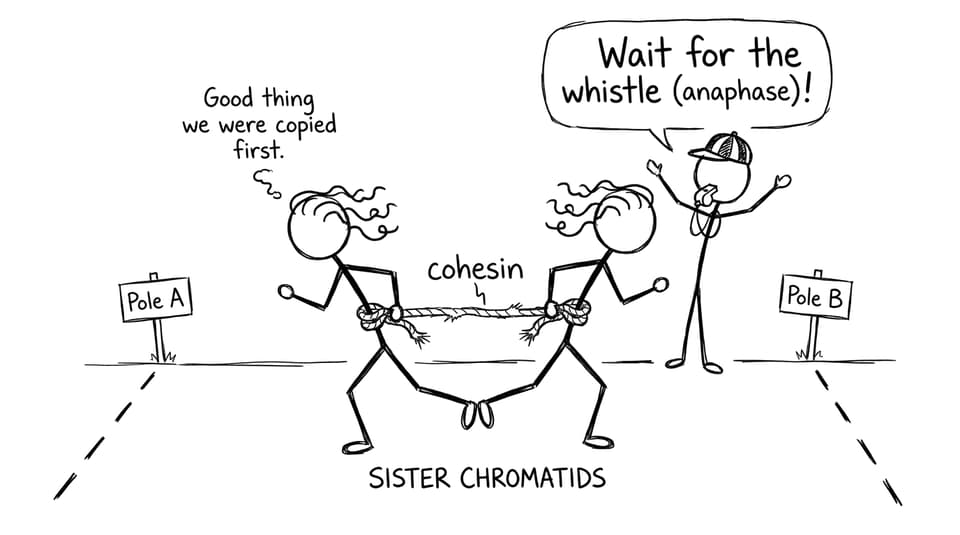
Mitosis works because every chromosome has been copied into two sister chromatids joined at a centromere (held by cohesins). The spindle attaches, aligns them, and then separates them so each daughter nucleus gets one chromatid from every pair.
No replication means no sister chromatids. And no sister chromatids means there is nothing symmetrical to pull apart in anaphase. In IB Biology, that’s a high-yield chain of reasoning: replication to sister chromatids to accurate segregation.
To consolidate mitosis vs meiosis outcomes, pair this with 1.6 Cell division notes and the D2.1.4 Roles of mitosis and meiosis in eukaryotes.
Checkpoints: the cell won’t “risk it” with unfinished DNA
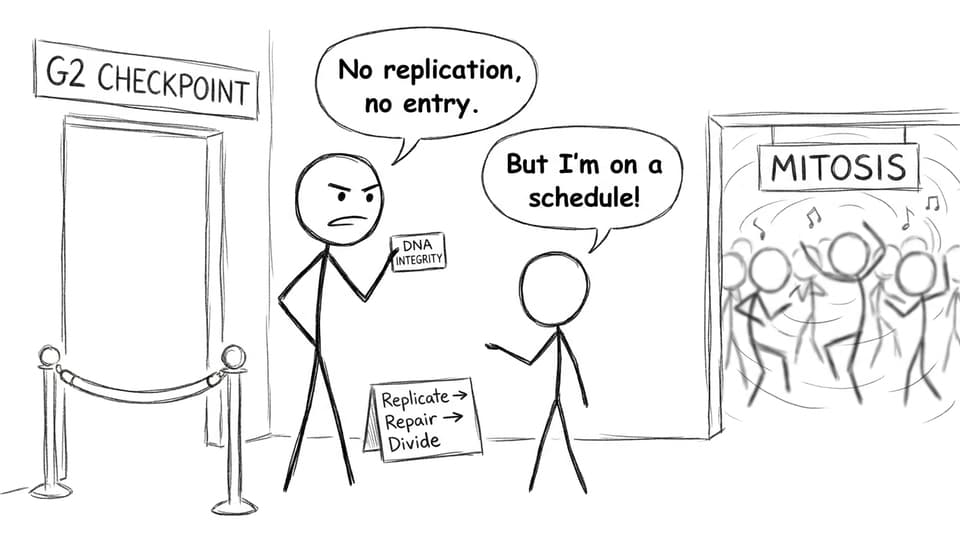
Cells also act like cautious editors. After DNA replication, checkpoint controls verify that replication is complete and that major damage has been repaired before the cell commits to division. If the DNA is incomplete, division would lock errors into two lineages of cells.
RevisionDojo explains this quality control clearly in How checkpoint controls ensure accurate cell division and connects it to regulation in Control of the cell cycle using cyclins (HL).
Meiosis: replication happens once, divisions happen twice
Meiosis is where many IB Biology students hesitate: DNA replicates once (before meiosis I), then the cell divides twice (meiosis I and meiosis II). That single replication step is essential because meiosis II separates sister chromatids, which only exist if replication happened earlier. Without replication, you cannot produce viable haploid gametes with complete sets of chromosomes.
How to revise this fast with RevisionDojo
If you’re preparing for exam-style wording, use RevisionDojo like a loop:
-
Read the core explanation in D1.1 DNA replication notes.
-
Practice retrieval with the Flashcards and tighten weak spots with AI Chat.
-
Drill application using the Questionbank and build timed sets with Mock Exams and Predicted Papers.
-
If you want feedback on phrasing, the Grading tools and Tutors help you turn “I kind of get it” into markscheme language.
You can also start broad with IB Biology Resources or zoom out to strategy using IB Biology: Complete Guide for IB Exam Prep.
Closing: the order is the point
DNA replication must occur before cell division because division is a promise: two new cells, each with the full instruction manual. In IB Biology, the high-scoring explanation links S phase, sister chromatids, and checkpoints into one story of accuracy. When you’re ready to turn that story into marks, RevisionDojo’s Study Notes, Questionbank, Flashcards, AI Chat, Mock Exams, and Predicted Papers help you practice until the sequence feels automatic: replicate, check, then divide.