



If you have ever looked at a climate headline and felt a strange mix of urgency and helplessness, you have already touched the core tension of IB Global Politics: responsibility is everywhere, but accountability is slippery. Sustainability sounds like a shared goal. In practice, it turns into a global group project where some people did the early work, some control the budget, and others are stuck dealing with the mess.
In IB Global Politics, “Who is responsible for global sustainability?” is not a trick question. It is an invitation to weigh power, capacity, and justice. Strong exam answers avoid blaming a single actor. Instead, they explain how responsibility is shared, and why it is not shared equally.
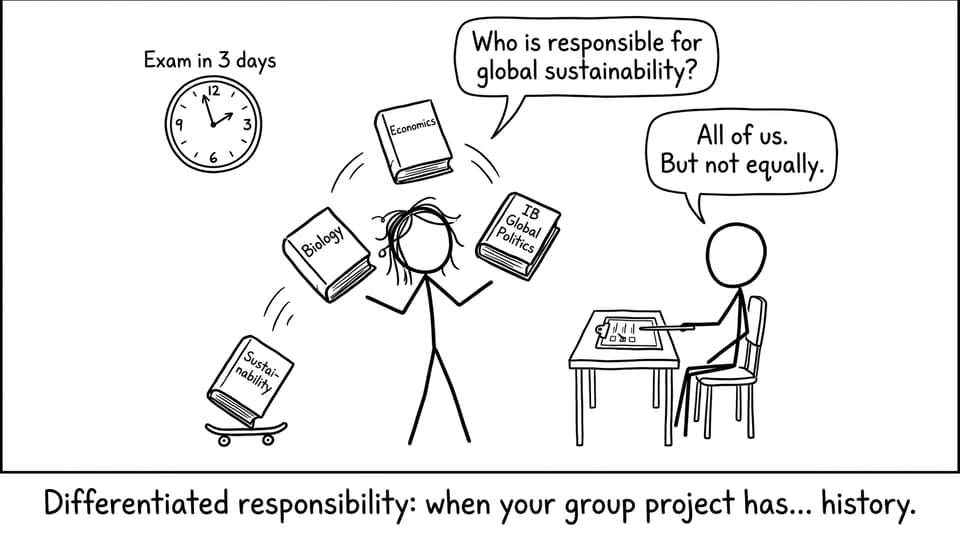
Quick exam checklist for responsibility (IB Global Politics)
Use this mini-framework whenever you see sustainability in IB Global Politics essays, Paper 1 sources, or HL extension discussions:
-
Identify actors: states, corporations, international institutions, civil society/individuals
-
Assess power: who can set rules, fund transitions, or block change?
-
Assess capacity: who has technology, wealth, and administrative ability?
-
Assess contribution: who caused more harm historically and currently?
-
End with a judgement: shared responsibility, but differentiated by power and history
If you need a syllabus-aligned home base, keep IB Global Politics Resources open while you revise.
States lead because they can turn goals into rules
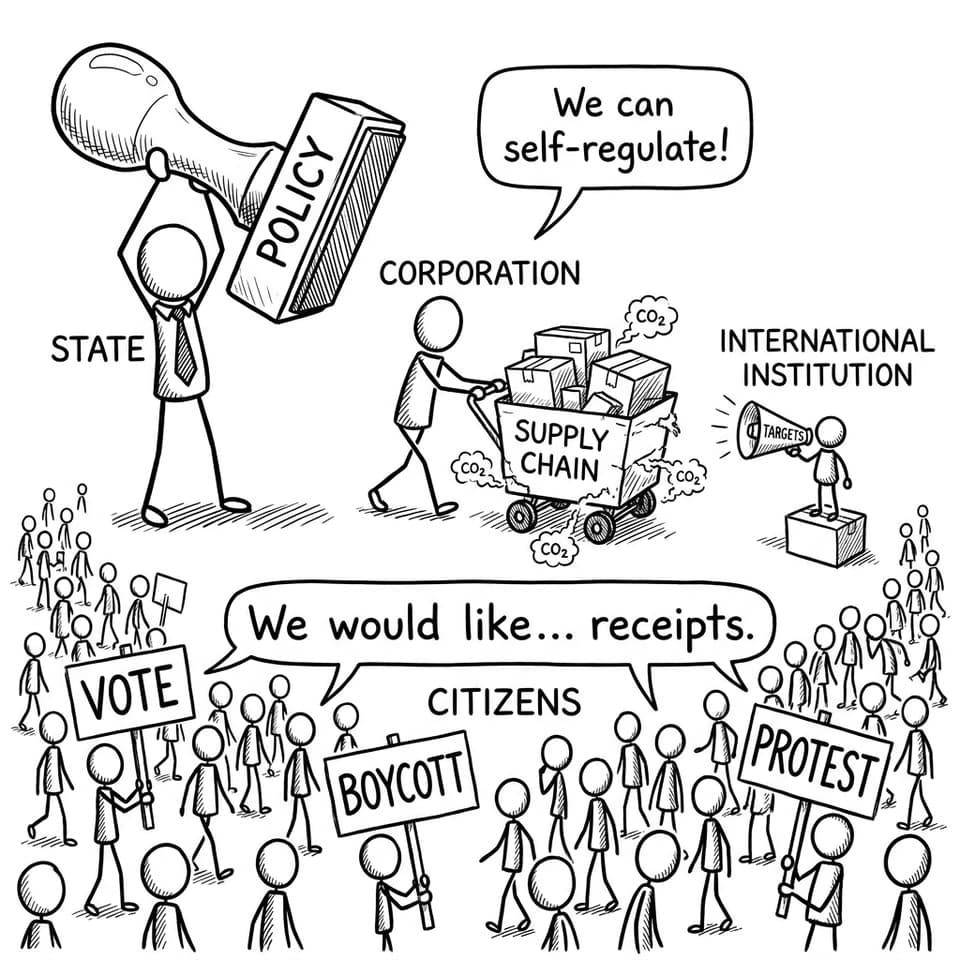
In IB Global Politics, states carry primary responsibility because they have legal authority. Governments set environmental standards, design energy policy, control land use, and decide whether sustainability is a real priority or a speech topic.
This is why exam responses often start with states: they can tax, subsidise, regulate, and enforce. When you revise “development and sustainability,” it helps to connect state responsibility directly to policymaking power and sovereignty. Revision-wise, the Development and Sustainability hub is useful for seeing how the course frames these trade-offs.
But IB Global Politics also expects nuance: not all states can act the same way, even if the problem is global.
Differentiated responsibility: the justice argument students must use
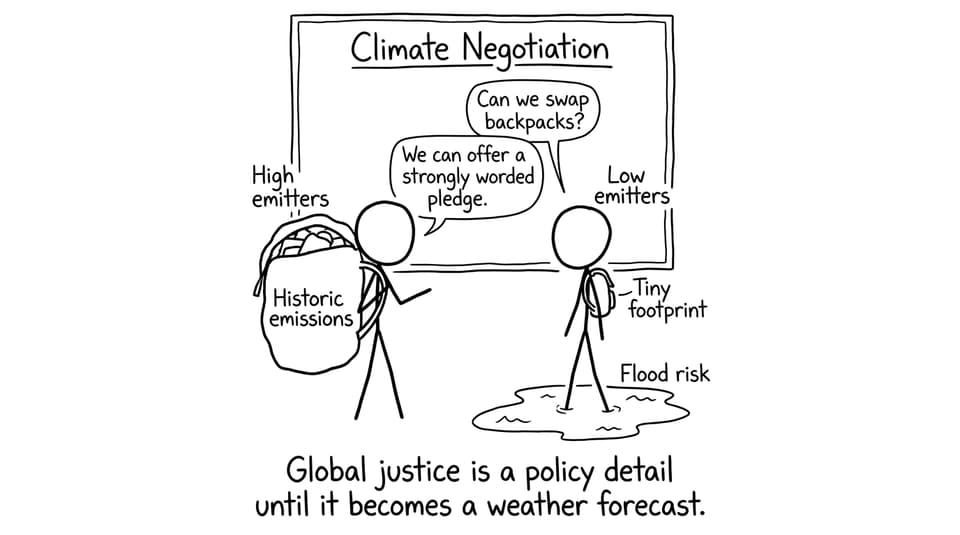
The heart of the debate is unequal burden-sharing. Many developed states industrialised earlier and consumed more resources over time. Many developing states argue it is unfair to impose equal limits when they contributed less and still face poverty and infrastructure gaps.
In IB Global Politics, this becomes a global justice argument: responsibility should align with historical contribution and present capacity. That is what differentiated responsibility means in practice. You can strengthen this with conceptual clarity using What Is Sustainable Development in Global Politics? and then extend it into evaluation with Is Sustainable Development Achievable?.
Corporations shape outcomes, so they cannot sit out responsibility
Multinational corporations influence sustainability through extraction, production, and global supply chains. In IB Global Politics, they matter because they operate across borders and can be wealthier than some states.
The exam-ready point is this: voluntary corporate action is unstable when profit incentives point the other way. So IB Global Politics students should link corporate responsibility to regulation, transparency, and incentives. If you want targeted practice, build drills from the Debates on development and sustainability Questionbank and turn weak areas into flashcard prompts.
International institutions coordinate, but enforcement is limited
International institutions help create shared frameworks, targets, and cooperation. In IB Global Politics, they are essential because sustainability problems cross borders. Yet their power is constrained by state sovereignty and unequal influence inside institutions.
This is a good evaluation line for Paper 2: institutions can coordinate and legitimise action, but they rarely compel it without state buy-in.
Individuals and civil society: small actions become political pressure
It is tempting to say sustainability is about consumer choices. IB Global Politics usually rewards a more political take: individuals matter most when they act through civil society, voting, protest, campaigning, and agenda-setting.
This is also where exam technique matters. If you are practising timed writing, use IB Global Politics Paper 1 Guide Notes to sharpen source analysis, then transfer the same “actor + power + impact” thinking into essays with Notes for Paper 2 Guide - IB.
Conclusion: shared responsibility, unequal burden
Global sustainability is not owned by one actor, and IB Global Politics is clear about why: power is distributed, incentives clash, and the costs land unevenly. The best exam answers argue for shared responsibility with differentiated expectations, backed by capacity and justice.
To revise efficiently, use RevisionDojo as your all-in-one system: Study Notes to lock in concepts, Flashcards for definitions, the Questionbank for exam-style practice, AI Chat to test your reasoning, Grading tools to improve structure, Predicted Papers and Mock Exams for timed runs, plus the Coursework Library and Tutors when you need personalised feedback. And when you write your final line, bring it home: in IB Global Politics, responsibility matters most when it becomes enforceable action.