




IB Design Technology has a funny way of humbling people.
The student who can sketch beautifully sometimes stalls when asked to justify choices. The student who thinks they are “not creative” quietly racks up marks because they document every decision like it matters (because it does). If you are revising for exams and wondering whether you are the “right type” for IB Design Technology, the honest answer is reassuring: the course rewards habits more than personality.
The students who succeed most in IB Design Technology are not the loudest innovators. They are the ones who can think clearly, explain their reasoning, and keep improving when their first idea isn’t the one.
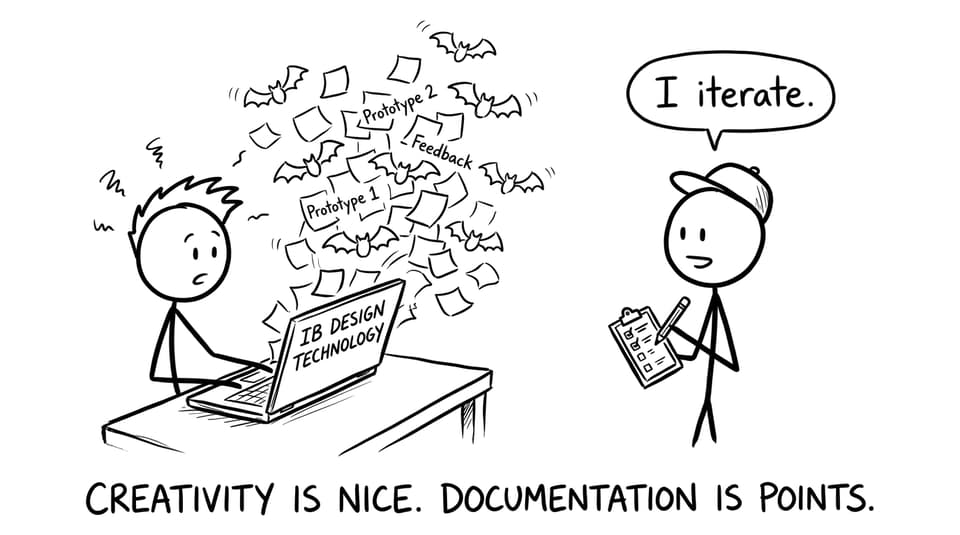
A quick checklist: do you fit the IB Design Technology success profile?
Use this as a fast self-audit for IB Design Technology:
-
You can explain why you made a design decision (not just what you made).
-
You are comfortable showing rough drafts, testing notes, and changes.
-
You work steadily instead of relying on deadline adrenaline.
-
You actively use feedback and can rewrite, redesign, or re-evaluate.
-
You enjoy applying theory to real products, real users, and real constraints.
If you are missing two or three of these, that’s not a verdict. It’s your study plan.
The biggest myth: only “creative” students win in IB Design Technology
The myth survives because DT looks like a “creative” subject from the outside. But in IB Design Technology, creativity is only valuable when it is paired with evidence.
Examiners reward:
-
justification
-
evaluation
-
iteration
-
user focus
-
clear communication
A dazzling idea that is poorly explained often scores less than an average idea that is tested, refined, and defended with logic. If you want a fuller map of what the subject actually demands, keep The Complete Guide to IB Design Technology open while you plan your revision.
The students who score highest in IB Design Technology
Students who can explain their thinking (even when it’s messy)
Top students treat every choice as something they might need to defend under pressure. In exams, that means writing with command terms in mind and showing the “because.” In coursework, it means keeping a decision trail.
They can answer questions like:
-
Why is this design suitable for this user?
-
What trade-offs did you accept (cost vs durability, sustainability vs performance)?
-
What evidence supports the final direction?
If your explanations feel vague, practise with targeted questions from the IB Design Technology Questionbank, then use RevisionDojo’s AI Chat to turn your rough reasoning into markscheme-style language.
Students who improve ideas instead of protecting them
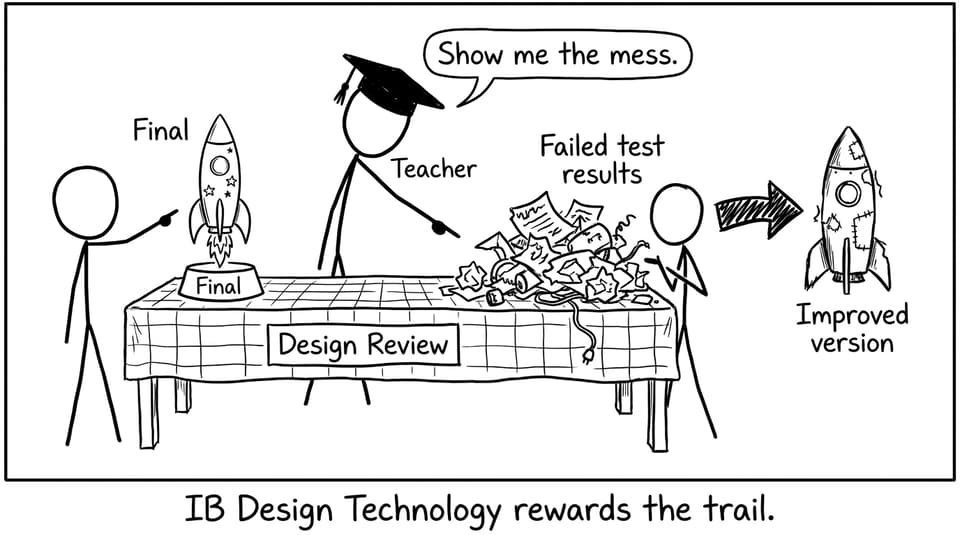
There is a specific moment in IB Design Technology where good students pull ahead: when a prototype fails.
Some students panic and try to hide the failure. Strong students do the opposite. They document what went wrong, extract what it taught them, then redesign.
That mindset shows up everywhere in DT, including topic areas like manufacturing decisions. For example, when you revise production pathways, Computer-integrated manufacturing (CIM) becomes more memorable if you attach it to a redesign story: “We needed consistency, so we changed the process.”
Students who work consistently (DT is not a cramming subject)
A lot of exam stress in IB Design Technology comes from uneven effort: long gaps, then frantic catch-up. But DT rewards sustained momentum because your skills compound.
The highest scorers tend to:
-
do small weekly coursework updates (even 20 minutes)
-
revise definitions with spaced repetition
-
practise structured responses early
-
keep a running list of improvements to make
If you want a simple routine that matches how DT really works, use Best Study Strategies for IB Design Technology Students as your weekly template, and reinforce it with RevisionDojo Flashcards and Study Notes.
Students who respond well to feedback (without taking it personally)
Feedback is fuel in IB Design Technology. The students who succeed most treat critique like free data.
They do three things fast:
-
Identify what the feedback is really asking for (clarity, evidence, evaluation).
-
Make the change.
-
Reflect briefly on the change so it earns marks.
RevisionDojo makes this loop easier: you can practise exam-style questions, get immediate guidance, and use Grading tools to see how your response aligns with what examiners reward.
The students who often struggle in IB Design Technology (and how to flip it)
Students usually struggle when their habits clash with assessment:
-
They focus on appearance over reasoning.
-
They avoid evaluation because it feels like admitting weakness.
-
They leave coursework until deadlines.
-
They look for one “correct” answer instead of arguing a justified best option.
The fix is not a new personality. It is a new workflow.
If you tend to start from inspiration alone, read IB Design Technology: Can You Reuse Products or Ideas? and borrow its core idea: start from an existing product, identify unmet user needs, then improve with measurable evidence. That is how you turn “nice idea” into marks.

How to train the traits that IB Design Technology rewards
The fastest way to become the “type” who succeeds in IB Design Technology is to practise like an examiner is watching.
Try this simple loop:
-
Learn content with the IB Design Technology hub (Study Notes + Key Definitions).
-
Lock recall with Flashcards (short sessions, most days).
-
Practise under time with Questionbank sets (Paper-style).
-
Use AI Chat to rewrite one weak explanation per session.
-
Run a realistic rehearsal with IB Predicted Papers when you are closer to exams.
If you want a DT-specific walkthrough of how RevisionDojo fits into your year, use How to Use RevisionDojo for IB Design Technology Success.
The type of student who succeeds most in IB Design Technology
The student who succeeds most in IB Design Technology is usually not the one with the flashiest idea. It is the student who can explain, iterate, and keep moving when the work looks imperfect.
If you want to become that student before exams, build your system around RevisionDojo: Study Notes to learn fast, Flashcards to retain, Questionbank to practise, AI Chat to get unstuck, Grading tools to understand marks, and Predicted Papers and Mock Exams to rehearse performance. IB Design Technology rewards the process you can prove. Make your process undeniable.