
When a syllabus changes, it rarely feels like a gentle update. It feels like someone moved the furniture in a dark room and told you the exam is tomorrow.
That’s the emotional truth behind the IB Biology 2025 redesign. Not because the subject suddenly became “harder,” but because the rules of what counts as understanding have shifted. The new course asks you to think like a biologist: connect ideas across scales, interpret evidence, and explain living systems in a way that holds together under pressure.
If you’re an IB student preparing for exams, this guide will make the new IB Biology syllabus feel navigable again. You’ll see how the four themes work, what SL vs HL really means, what happened to the exams, and how to build a revision plan that matches what the course now rewards.
Quick checklist: the IB Biology 2025 changes to know
Use this as your “no panic” list for the IB Biology 2025 syllabus:
-
Content is organised through four conceptual themes, not isolated topic blocks.
-
You revisit ideas across four levels of biological organisation: molecules, cells, organisms, ecosystems.
-
SL and HL share the same foundation; HL goes deeper and adds integrated extension areas.
-
Practical work remains central, with more emphasis on design, analysis, and evaluation.
-
Assessment is now two exam papers + Internal Assessment (IA); Paper 3 is removed.
-
Exams increasingly reward data interpretation and connections, not just recall.
For a course-level home base, keep the IB Biology resources hub open as your map.
The new IB Biology structure: four themes that run everything
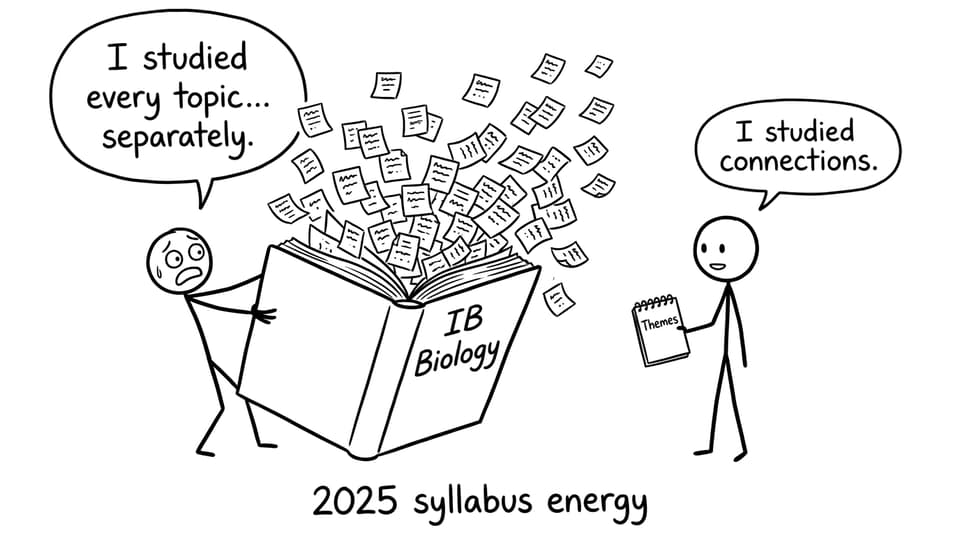
The biggest change in IB Biology 2025 is not a single topic added or removed. It’s the shape of the course.
Instead of treating genetics, ecology, and cell biology as separate boxes, the syllabus now threads content through four themes. Think of themes like lenses: you can look at the same concept (say, membranes) and be asked to explain it through function, interaction, or change.
Theme A: Unity and diversity
This theme is about patterns. The shared features of life, and the differences that arise through evolution and classification. In IB Biology, this is where you’ll see how evidence supports the way we group organisms, and why variation matters.
Theme B: Form and function
Biology is full of “why this shape?” questions. Surface area, diffusion distance, tissue structure, enzyme active sites. IB Biology 2025 leans into structure-function reasoning at every level.
Theme C: Interaction and interdependence
Nothing in biology is truly isolated. Cells signal, organisms regulate, ecosystems shift. This theme trains you to explain systems and feedback loops, which pairs naturally with the new exam style.
Theme D: Continuity and change
DNA replication, inheritance, gene expression, natural selection, climate change. This is the “how life persists and transforms” storyline inside IB Biology, and it connects molecular mechanisms to long-term outcomes.
If you want a longer orientation to the course and how the syllabus is framed, read IB Biology: Complete Guide for IB Exam Prep.
What SL and HL students study in IB Biology 2025
A common fear is that HL is a totally different subject. In the 2025 IB Biology syllabus, that’s not really how it works.
SL and HL students travel the same conceptual road. HL doesn’t just “add more units.” It adds depth, extra connections, and a few extension areas that are meant to feel integrated rather than attached.
Across both levels, you’ll see core content like:
-
Cell biology: structures, transport, origins of cells
-
Molecular biology: biomolecules, enzymes, metabolism, DNA replication and expression
-
Genetics and biotechnology: inheritance, gene editing concepts, gene expression
-
Ecology and evolution: populations, ecosystems, selection, biodiversity
HL extends within the same thematic framework, with added depth in areas such as:
-
Muscle and motility
-
Chemical signalling (HL) and deeper system integration
-
Regulation of gene expression and viruses (HL elements)
-
Classification and cladistics (HL)
The practical effect: HL students in IB Biology need stronger “linking” skills. You’ll be asked to move between a molecular explanation and a systems outcome quickly.
For structured revision content, RevisionDojo’s IB Biology revision notes (SL/HL) are organised to support that theme-and-connection thinking.
Practical work requirements: what the syllabus actually expects
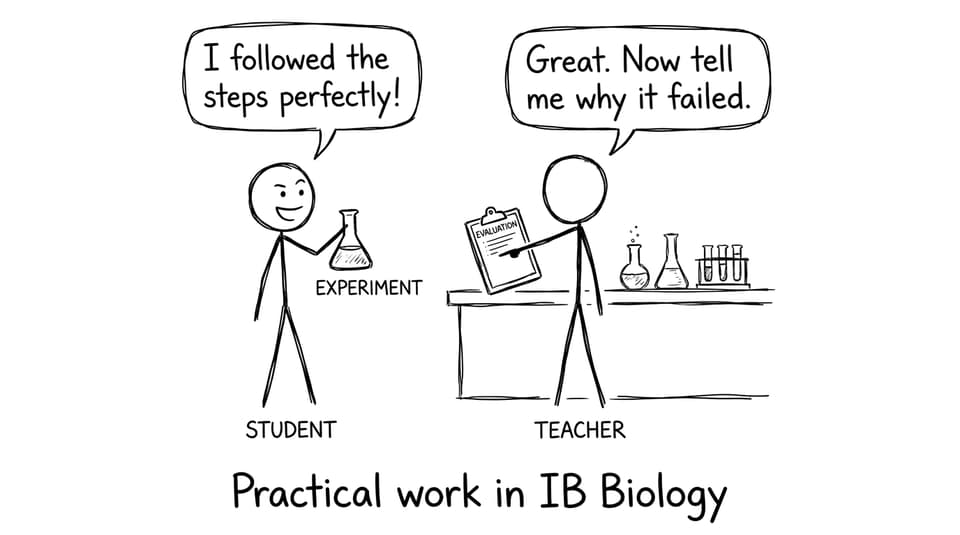
Practical work is still the heartbeat of IB Biology. But the 2025 shift is subtle: you’re not being rewarded for being good at following a recipe. You’re being rewarded for thinking about what makes evidence trustworthy.
Time requirements remain broadly:
-
SL: approximately 40 hours of practical work within about 150 teaching hours
-
HL: approximately 60 hours of practical work within about 240 teaching hours
Those hours can include lab investigations, data processing, modelling, and IA preparation. What matters is that you can justify choices, control variables, analyse patterns, and evaluate limitations.
A useful mindset is this: in IB Biology, “evaluation” is not an apology paragraph at the end. It’s your proof that you understand how science behaves in real life.
Assessment changes in IB Biology: what the exams look like now
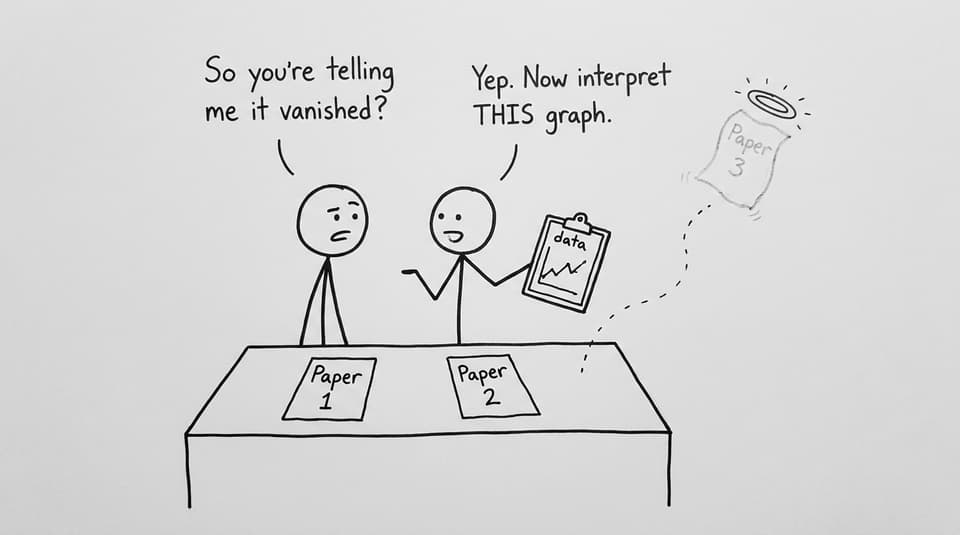
The headline is simple: Paper 3 is gone.
But the deeper shift is that the remaining papers are built to test skills that used to be “extra.” In IB Biology 2025, interpreting unfamiliar data is no longer a side quest. It’s central.
Paper 1
Paper 1 focuses on multiple-choice plus data-based questions, testing conceptual understanding and analytical thinking aligned to the themes. Expect questions that reward careful reading, patterns, and evidence-based choices.
Paper 2
Paper 2 focuses on short-answer and extended-response questions. You’ll need to explain mechanisms, apply ideas to new contexts, and evaluate claims or experimental results.
Internal Assessment (IA)
The IA is still worth 20%. You design and run an individual investigation, typically completed in around 10 hours of class time (timing varies by school). In IB Biology, strong IAs start with a research question that’s focused enough to generate meaningful data.
If you want to train specifically for exam performance under the new structure, the Comprehensive Guide to IB Biology Paper 1 and Paper 2 is a solid next step.
How to revise for IB Biology 2025 (without studying twice as long)
The old method was predictable: read, highlight, rewrite, hope.
The new IB Biology syllabus punishes hope-based studying. It rewards a tight loop: understand, recall, apply, fix.
Organise revision around themes (and keep a “connections list”)
When you finish a topic, write three links to other areas using theme language.
Example: enzymes (Theme B form/function) connects to metabolism (Theme C interactions), and to mutation effects on protein structure (Theme D change). This kind of linking is what exam questions quietly demand.
Start data practice early and make it weekly
Use exam-style data questions before you feel “ready.” Read graphs, interpret tables, evaluate methods. That discomfort is skill-building.
RevisionDojo makes this easier with:
-
The Questionbank feature page for targeted practice
-
The strategy guide IB Question Bank | How to Use It Effectively
Use “small daily recall” to stop forgetting
Flashcards aren’t a vibe. They’re a system. In IB Biology, definitions and processes must be retrievable on command.
Pair notes with active recall:
-
Review key concepts using Biology Cheatsheets: Visual Study Guides
-
Then lock them in using the Flashcards feature inside the IB Biology resources hub
Simulate exam pressure on purpose
You don’t rise to the occasion. You fall to the level of practice.
A smart rhythm for IB Biology is one timed section per week early on, then scaling up. RevisionDojo’s Biology Predicted Papers (Free) and Mock Exams help you rehearse pacing, stamina, and question selection with realistic formatting.
If your goal is top-band performance, How to Get a 7 in IB Biology 2025 Onward adds an exam-focused roadmap.
Closing: treat IB Biology like a story, not a stack of facts
The 2025 IB Biology syllabus is built on a quiet assumption: that biology makes more sense when you see it as a connected story. Molecules become cells, cells become organisms, organisms reshape ecosystems, and ecosystems push back.
If you study that way, the exams stop feeling like random traps. They start feeling like a conversation you can follow.
To make that shift easier, use RevisionDojo as your all-in-one home base for IB Biology: Study Notes for clarity, Flashcards for recall, the Questionbank for exam-style practice, AI Chat for instant help, Grading tools for stronger written responses, Predicted Papers and Mock Exams for timed rehearsal, plus a Coursework Library and Tutors when you need deeper support.
Start here and build your plan around it: IB Biology resources hub.