
If you don’t get an offer in UCAS Clearing, it can feel like the universe just closed a door you were already halfway through.
You’ve done the hard part: exams, waiting, results. And then this. No offer. No quick fix. Just a blank space where September was supposed to be.
But blank space is also room. Room to make a decision that’s calmer, smarter, and more you than whatever panic wants to pick in the next 30 minutes.
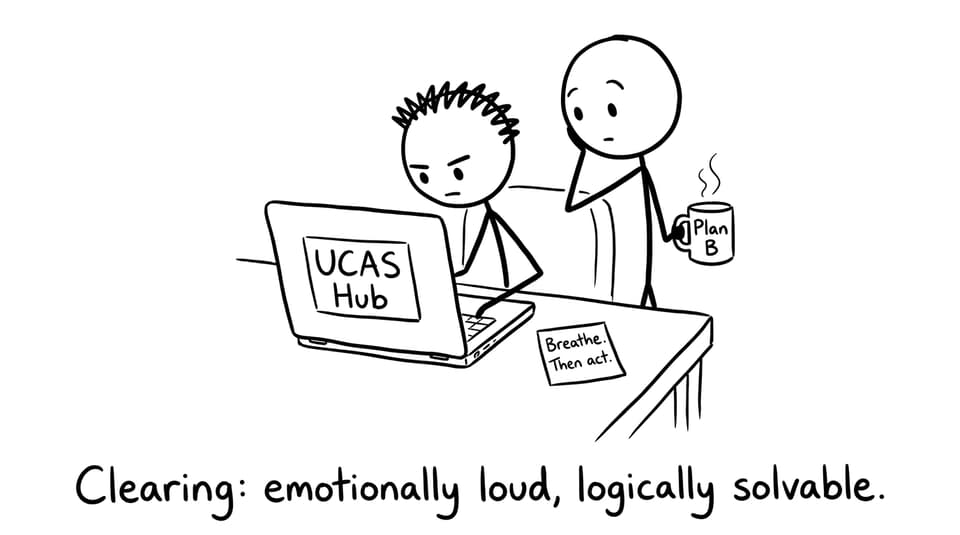
UCAS Clearing with no offer: a quick reset checklist
-
Check your status and details in UCAS Hub (don’t assume anything).
-
Re-check vacancies daily; they move more than you expect.
-
Expand your search to related courses and flexible entry routes.
-
Ask about foundation years and alternative start dates.
-
Decide if a gap year is strategic (not just a delay).
-
If reapplying, write a plan now while the data is fresh.
For a full grounding on process and timing, use UCAS Clearing Explained: Step-by-Step.
Keep checking UCAS Clearing vacancies (yes, again)
The hardest part of UCAS Clearing is that it feels final when it’s actually fluid. Courses can reopen when other students decline places, funding changes, or departments reshuffle capacity.
Use a simple routine: check in the morning, mid-afternoon, and evening. And don’t just browse silently. Call. A short, prepared call can uncover options that haven’t fully appeared online yet.
If you want to sound confident (even if you’re not feeling it), read How to Negotiate Offers During UCAS Clearing Calls.
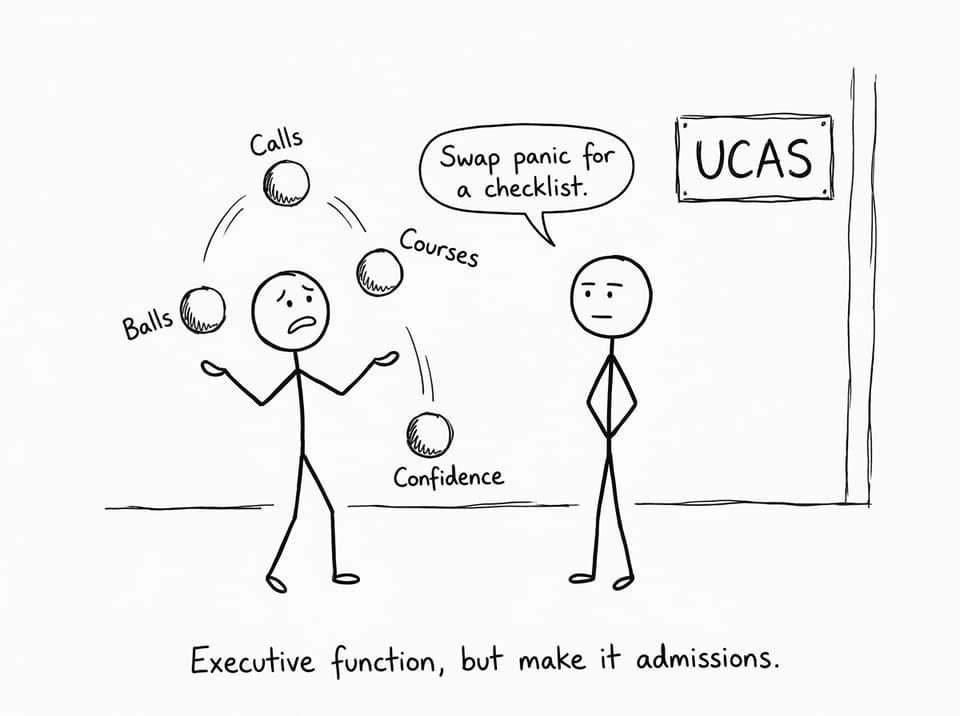
Use UCAS flexibility: pivot to a nearby course, not a random one
If your first-choice subject is full, avoid the trap of choosing something you don’t even like just to “have a place.” A better move is adjacent thinking.
Examples:
-
Psychology to Sociology, Education, Cognitive Science
-
Law to Politics, Criminology, International Relations
-
Engineering to Physics, Environmental Science, Materials
This is where your IB subjects become leverage. Your HL choices, Extended Essay, and IAs often fit multiple degree routes. If you need to tailor your explanation quickly, use Writing a Personal Statement in a Hurry (Clearing Guide) and How to Highlight Skills and Experience in UCAS Applications.
Ask about foundation years and alternative pathways
A foundation year isn’t a consolation prize. It’s a structured bridge: you build academic skills, meet the subject expectations, and often progress straight into year one.
When you contact a university through UCAS Clearing, ask directly:
-
“Do you offer a foundation year for this course?”
-
“What grades do you need for that route?”
-
“Does it guarantee progression if I meet the pass requirements?”
Also consider whether you simply need a smarter application structure next time. UCAS Application Structure Explained: Choices, Personal Statements, References is a good reference point.
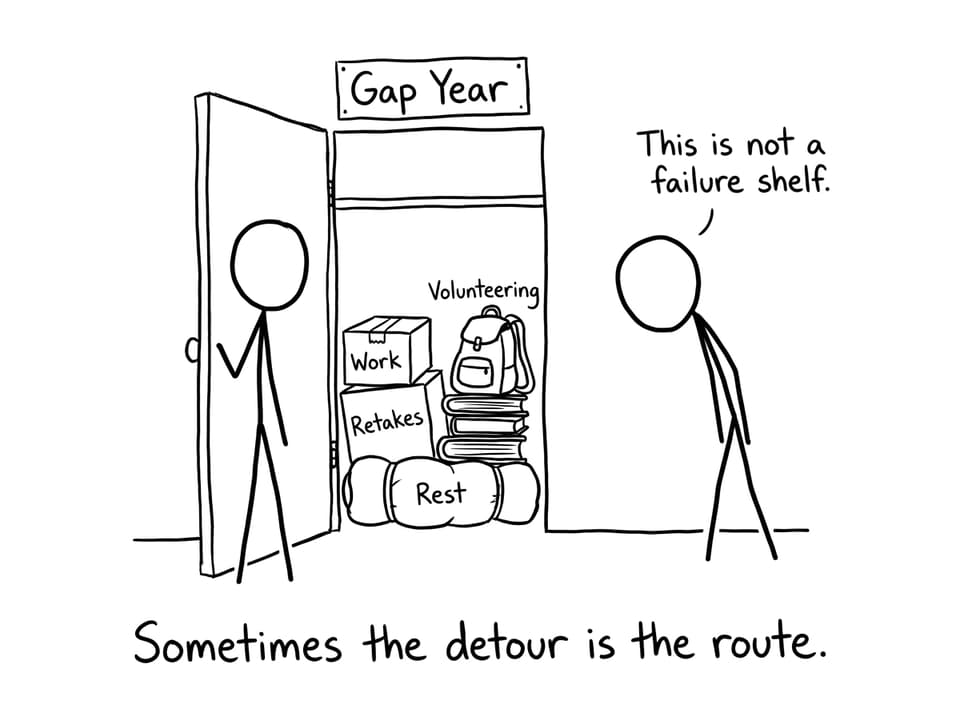
Consider a gap year (only if it has a purpose)
A gap year can be the most adult decision you make at 17 or 18: choosing long-term fit over short-term relief.
A useful gap year usually includes at least two of these:
-
Work or volunteering that builds independence
-
A clear academic upgrade plan (retakes, skills, reading)
-
Time to craft a stronger UCAS application
-
Space to recover from burnout and return sharper
If results day has knocked you emotionally, start here: IB Results Day: How to Prepare Emotionally.
Reapply through UCAS with a stronger plan
Reapplying isn’t “starting over.” It’s iterating. The students who win the second time usually do three things: they learn what didn’t work, they build better evidence, and they stop guessing.
To tighten your next attempt, review Mistakes Students Make During UCAS Applications and How to Use UCAS Hub Effectively.
And because you’re an IB student, this part matters: if you’re retaking or resitting, your prep needs to be targeted, not longer. RevisionDojo is built for that loop: Study Notes for clarity, Flashcards for daily recall, Questionbank for exam practice, AI Chat for quick unblocking, and Grading tools to improve written responses. When you need realism, add Mock Exams and Predicted Papers. If coursework is the stress point, use the Coursework Library. If you want a human plan, use Tutors.
Conclusion: UCAS Clearing isn’t the end of your story
Not getting an offer in UCAS Clearing hurts because it interrupts a plan you’ve been rehearsing for months. But it doesn’t remove your options; it forces you to choose them deliberately.
If you want your next step to be calmer and stronger, use RevisionDojo to prepare the part you can control: your IB grades, your exam skill, and the evidence you bring into every UCAS conversation. When you’re ready, start with targeted practice in the Questionbank, lock it in with Flashcards, and build confidence with Mock Exams and Predicted Papers, then go back to UCAS with leverage, not hope.