


IB Design Technology doesn’t teach you to build products; it teaches you to build judgment
The first time many students realise what IB Design Technology is really assessing, it isn’t in the workshop. It’s later, when they’re staring at a markscheme thinking: Why didn’t I get the marks? I did the work.
DT can feel like a subject about making things. But the high-scoring reality is quieter: IB Design Technology rewards clear thinking that leaves a trail. Decisions. Constraints. Trade-offs. Evidence. Reflection. If you learn those skills, the “product” becomes almost secondary.
To revise well, it helps to name the skills the course is training you to repeat under pressure.
Quick checklist: the real skills IB Design Technology rewards
-
Structured problem-solving (define, research, generate, test, refine)
-
Analytical evaluation (compare options with reasons)
-
Evidence-based decision-making (data beats opinion)
-
Long-term project management (especially the IA)
-
Communication and justification (clear writing and visuals)
-
Iteration and learning from failure (change, explain, improve)
-
User-centred thinking (real people, real contexts)
If you want one home base for all of this, start with the IB Design Technology resources hub on RevisionDojo and work outward as you spot weaknesses.
Structured problem-solving (the skill hiding in plain sight)
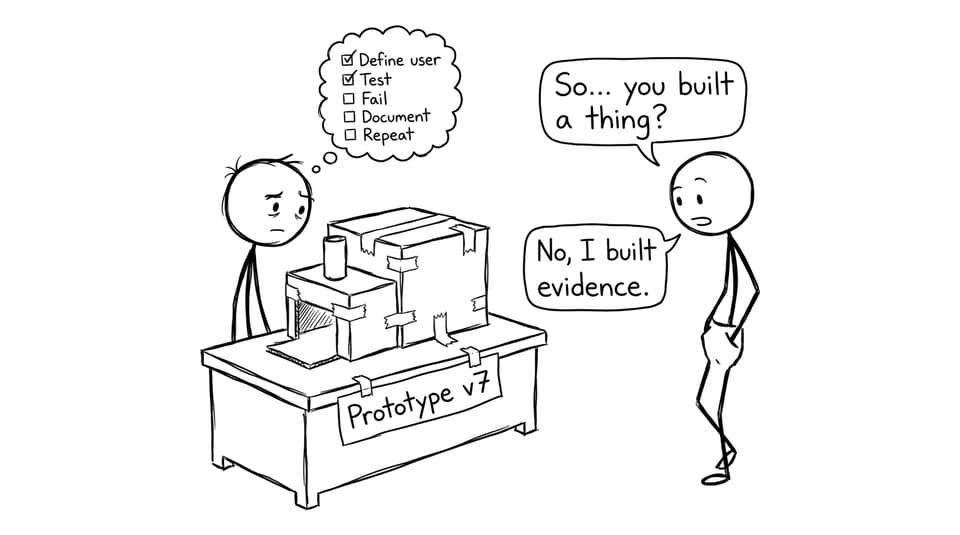
At its core, IB Design Technology teaches a repeatable method for attacking messy problems.
Not “be creative.” Not “make something cool.”
Instead, DT pushes you to define a problem tightly, identify constraints, and move through a loop: research, ideas, development, testing, refinement. That loop is what exam questions are trying to extract from you, even when the question looks theoretical.
To practise this skill for exams, use topic-focused drills from the IB Design Technology Questionbank. The best approach is to mark your answers against the logic of the command terms: define precisely, then apply to a context, then justify.
Analytical and evaluative thinking (because DT is full of trade-offs)
A lot of subjects let you hide behind a correct final answer. IB Design Technology rarely does.
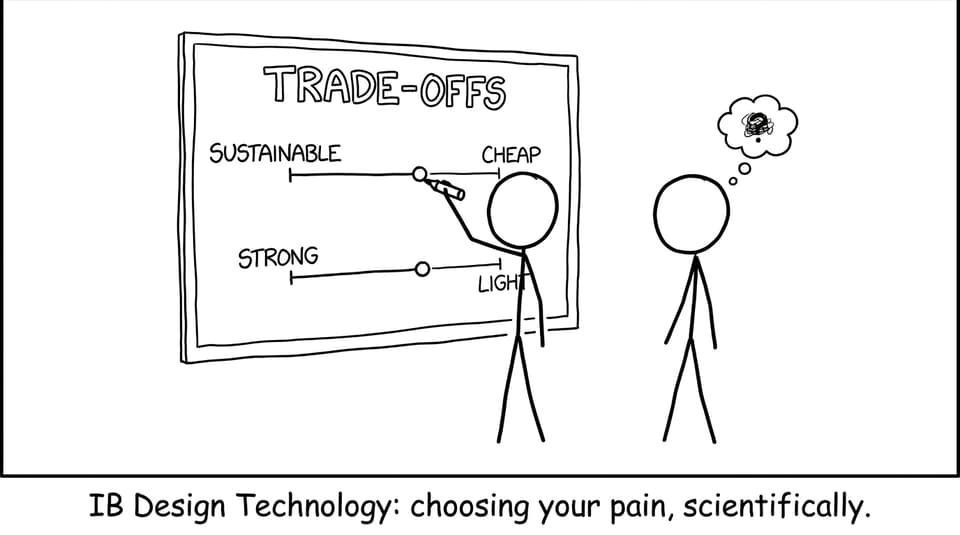
DT wants you to weigh alternatives: which material is best given cost, sustainability, strength, and production scale? Which modelling method is best given time and accuracy? Which manufacturing method makes sense given volume and tolerances?
That’s evaluative thinking: comparing options using criteria, not preference.
A great way to sharpen this is to study a topic where comparisons are unavoidable, like Scales of production study notes, and practise writing short “recommendation paragraphs” that include both pros and cons.
Evidence-based decision-making (the difference between “nice idea” and marks)
Here’s a simple rule: in IB Design Technology, a decision without evidence reads like a guess.
Evidence can be research findings, user feedback, testing data, or clear evaluation linked to requirements. The key is that your choice becomes earned. You’re not just stating what you did; you’re showing why it was reasonable.
This is why DT students often become stronger writers in other subjects. You get trained to make a claim, back it up, and explain the implication.
RevisionDojo makes this easier because you can combine learning and proof-building: use Study Notes to lock in the theory, then turn it into exam-ready explanations with the Questionbank and AI Chat.
Long-term project management (the IA is secretly a life skill)
The Internal Assessment forces a skill most students don’t practise elsewhere: managing a complex project over months.
In IB Design Technology, that means planning, documenting consistently, responding to setbacks, and keeping your work aligned to criteria even when motivation drops.
If you want a practical framework, follow the step-by-step guide to writing a winning IB Design Technology IA, then use the IB Design Technology IA grading rubric tool as a self-check while you draft. This is where RevisionDojo’s Grading tools become more than feedback; they become planning.
Communication and justification (DT is assessed like an argument)
High-scoring IB Design Technology work is usually easy to follow.
That doesn’t mean it’s simple. It means the student structures their thinking so the examiner never has to guess:
-
What the user needs are
-
What the constraints are
-
What options were considered
-
What evidence changed the design
-
What evaluation shows
If you struggle with this, steal the habits of strong DT students: build a living glossary, practise tight definitions, and write in short, markscheme-friendly sentences. The guide on how to create effective IB Design Technology revision notes is a solid blueprint.
Iteration and learning from failure (proof that you changed your mind)
Iteration is where IB Design Technology becomes emotionally challenging and academically valuable.
DT normalises being wrong early. You test. You notice a failure mode. You adjust one variable. You test again. Then you explain what changed and why.
That rhythm creates resilience, but it also creates marks because it produces visible evidence of learning.
If iteration feels vague, this guide on how to show iteration in the IB Design Technology IA makes it concrete and exam-friendly.
User-centred thinking (the subject’s quiet superpower)
Many students start IB Design Technology with a product in mind. Top students start with a person.
User-centred thinking means you design for needs, constraints, context, and usability. It’s not just empathy. It’s disciplined specificity: Which user? In what environment? With what limitations?
This is why DT skills transfer so well to fields outside STEM: business, policy, health, law, and anything involving trade-offs and human outcomes.
To get clearer on this mindset, read how design thinking works in IB Design Technology.
Closing: the product is temporary; the skills stay
A year from now, you may not remember every definition. You might not even keep your final prototype.
But if you learn what IB Design Technology is really teaching: structured problem-solving, evidence-based evaluation, user-centred thinking, and calm iteration, you’ll recognise those skills everywhere: in exams, in university assignments, and in real decisions that don’t come with a markscheme.
If you want a single place to practise those skills with less guesswork, use RevisionDojo: the Questionbank for targeted practice, Study Notes and Flashcards for recall, AI Chat for markscheme wording, Grading tools for IA accuracy, plus Predicted Papers and Mock Exams for timed rehearsal. Start at the IB Design Technology resources hub and build your advantage one skill at a time.