


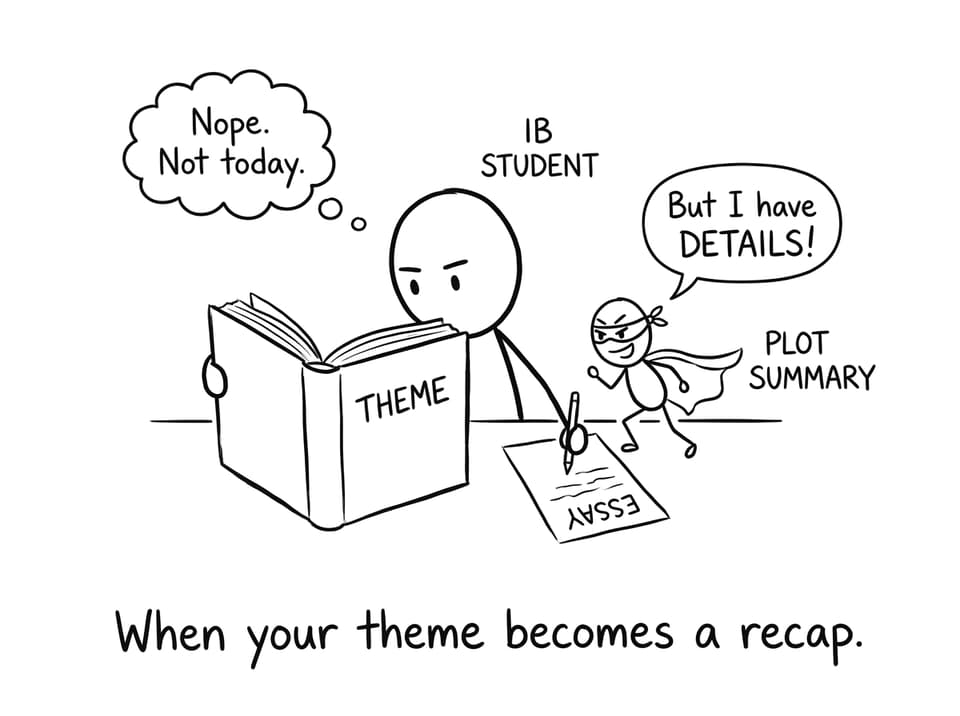
A theme isn’t a decoration you sprinkle over an essay when you run out of quotes. It’s the quiet engine underneath the whole text, the reason certain images return, why a character keeps making the same mistake, why the ending feels inevitable instead of random. If you’re revising for IB English, learning what makes a good literary theme is one of the most efficient ways to raise your mark: it turns your writing from “what happens” into “what it means.”
Most students can name topics. Love. Power. Identity. War. The jump to high-level IB English is turning those topics into claims, specific, arguable ideas that you can prove by tracking patterns and authorial choices.
A quick theme checklist (use this before you write)
When you draft a theme statement for IB English, run it through these checks:
-
Is it a full sentence claim? Not a single word.
-
Is it arguable? Could someone reasonably disagree?
-
Is it grounded in patterns? Repetition, contrast, structure, motifs.
-
Can you link it to technique? Imagery, narration, symbolism, tone, form.
-
Does it develop? The idea should shift or deepen across the text.
If you want a clearer definition of theme (and why it’s not plot), keep a tab open on Define “Theme” in Literature | IB English Analysis and Essay Guide.
Theme vs. topic: the difference that changes your grade
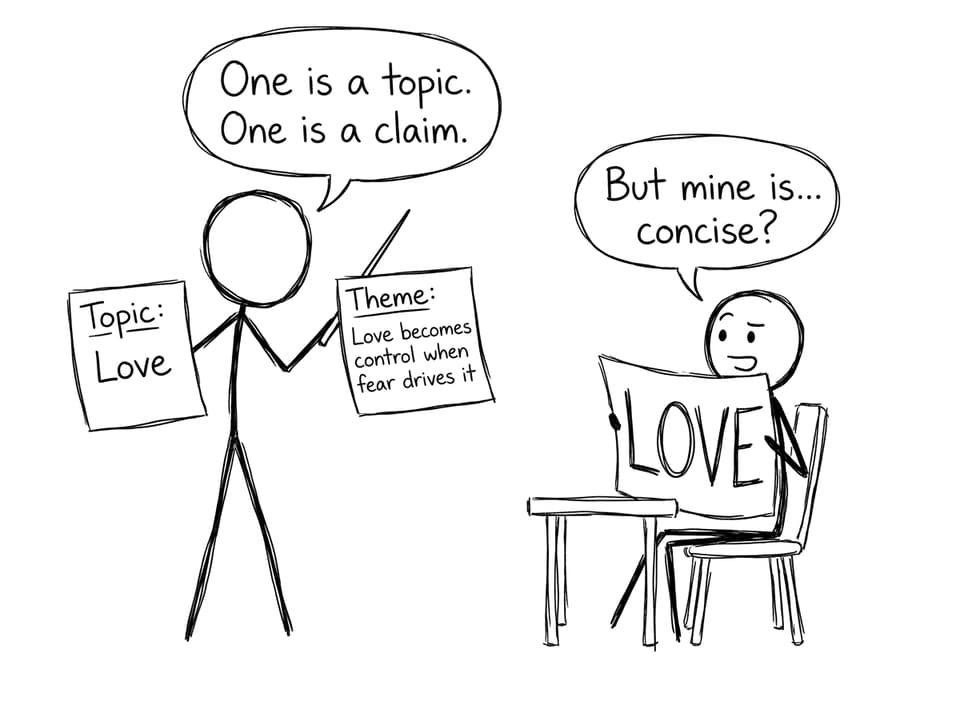
In IB English, a topic is the label on a folder. A theme is the argument inside it.
-
Topic: power
-
Theme: power becomes most effective when it convinces people they chose it
-
Topic: identity
-
Theme: identity fractures when social acceptance is traded for self-respect
-
Topic: conflict
-
Theme: conflict reveals character not by what people say, but by what they refuse to admit
A good literary theme usually contains tension (two forces pulling against each other) and consequence (what the text suggests happens when one force wins).
For more common thematic directions you can practice with, see Key Themes in IB English Literature.
How to find a strong theme quickly (without guessing)
Theme hunting isn’t mystical. It’s pattern recognition.
Track repetitions and ask “why this again?”
In IB English, repetition is rarely accidental. Look for:
-
recurring conflicts (the same moral choice, re-staged)
-
repeated imagery (light/dark, water, mirrors, thresholds)
-
motifs in dialogue (the same phrases, excuses, insults)
-
structural echoes (beginnings that return at the end)
Then ask: what idea is being pressured here? If you want a step-by-step method, use How to Identify and Discuss Themes in IB English Texts.
Convert observations into a claim
A practical IB English sentence frame:
Through [technique/pattern], the text suggests that [arguable idea], especially when [condition/tension].
This is how you stop listing devices and start building interpretation.
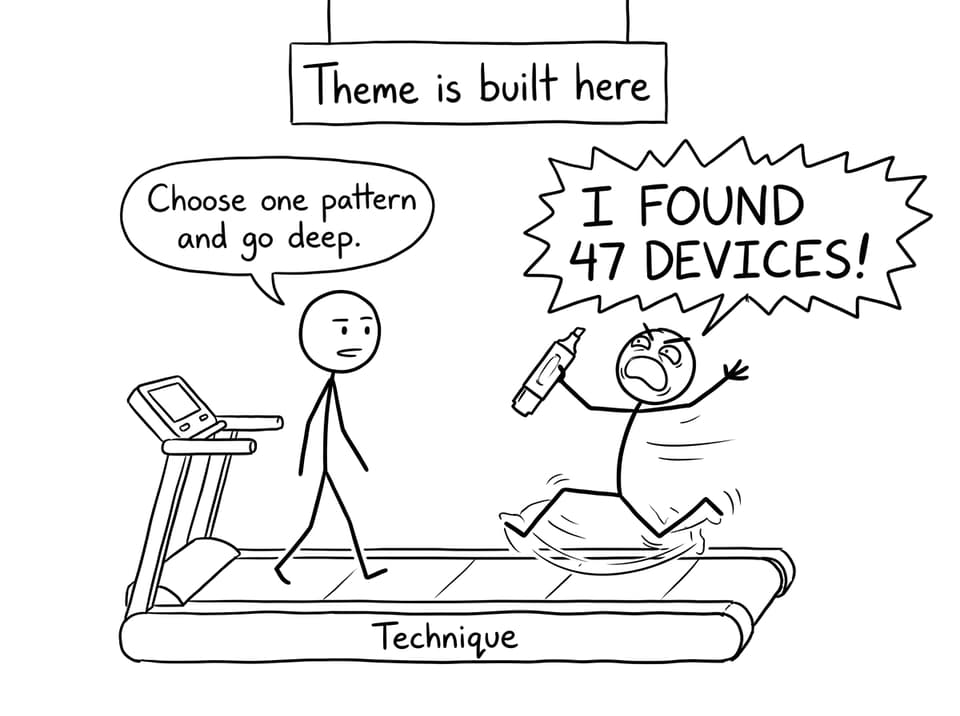
A good theme is built from technique (not vibes)
A theme doesn’t float above the text. It is constructed by craft.
In IB English, examiners reward the link between what the idea is and how it’s made.
-
Fragmented structure can embody uncertainty, trauma, or unstable identity.
-
Shifts in narrative voice can expose hypocrisy, self-deception, or social pressure.
-
Symbolic objects can compress a whole argument (freedom, class, memory) into something tangible.
-
Juxtaposition can reveal contradictions the text refuses to solve neatly.
If your paragraphs are drifting into technique-naming, use Writing Analytical Paragraphs: PEEL Method for IB English A to keep the line of argument tight.
A good theme evolves (it doesn’t stay flat)
Strong themes move. Early scenes often introduce an idea in a simple form; later scenes complicate it.
In IB English, you can show evolution by mapping:
-
the first appearance of the idea (how it’s framed)
-
a turning point (when the idea becomes costly)
-
a late-stage distortion (when characters rationalize, resist, or collapse)
-
the ending stance (resolution, ambiguity, or warning)
That “timeline” approach is a fast way to generate insightful topic sentences under exam pressure.
Thematic complexity: the markband separator
A good literary theme is rarely a motivational poster. It carries contradiction.
Instead of saying:
- “freedom is good”
Try:
- “freedom demands loss, and the text questions whether people truly want what they claim to want”
Instead of:
- “love is powerful”
Try:
- “love becomes coercive when fear of abandonment turns affection into surveillance”
Complex themes help you compare texts too, because you can discuss different answers to the same human question. For Paper 2 support, see Thematic Comparisons Across IB Prescribed Texts and Step-by-Step Guide to Comparative Literary Essays (Paper 2).
How RevisionDojo turns theme into exam practice
Theme gets easier when it becomes a routine, not a talent. On RevisionDojo, many IB English students build that routine by:
-
drilling prompts in the Questionbank and the IB English A Lang & Lit Questionbank
-
practicing Paper 2-focused prompts in the IB English A Lang & Lit English Paper 2 Questionbank
-
tightening technique-to-theme analysis using guides like Mastering Literary Devices in IB English Exams
Pair that with Study Notes, Flashcards, AI Chat, Grading tools, Predicted Papers, Mock Exams, the Coursework Library, and Tutors, and theme stops being “something you hope you get” and becomes something you can train.
Closing: build themes like you build strength
A good literary theme is a developed, evolving claim about a human concern, proven through patterns and authorial choices. That’s the heart of high-scoring IB English: not bigger vocabulary, but clearer thinking. The next time you revise, don’t ask “what is the theme?” Ask, “what is the text arguing about this topic, and how does it build that argument?”
If you want that process to feel repeatable, not stressful, use RevisionDojo to practice: draft theme claims, test them against prompts, and sharpen them with feedback until your IB English essays start sounding like they know where they’re going.