
Sustainable development feels simple until you have to argue it
A city announces a new dam: cheaper electricity, more jobs, fewer blackouts. Then the headlines follow: displaced communities, damaged ecosystems, rising political tension across the border. In IB Global Politics, this is the moment you realise “development” isn’t just about progress. It’s about who benefits, who pays, and who gets to decide.
That’s why sustainable development matters in IB Global Politics. It gives you a language for analysing long-term responsibility in a world obsessed with short-term wins.
What is sustainable development in IB Global Politics?
In IB Global Politics, sustainable development is usually defined as meeting present needs without compromising the ability of future generations to meet theirs. But examiners don’t reward definitions alone. They reward what you do with the definition: applying it to actors, policies, power, and competing values.
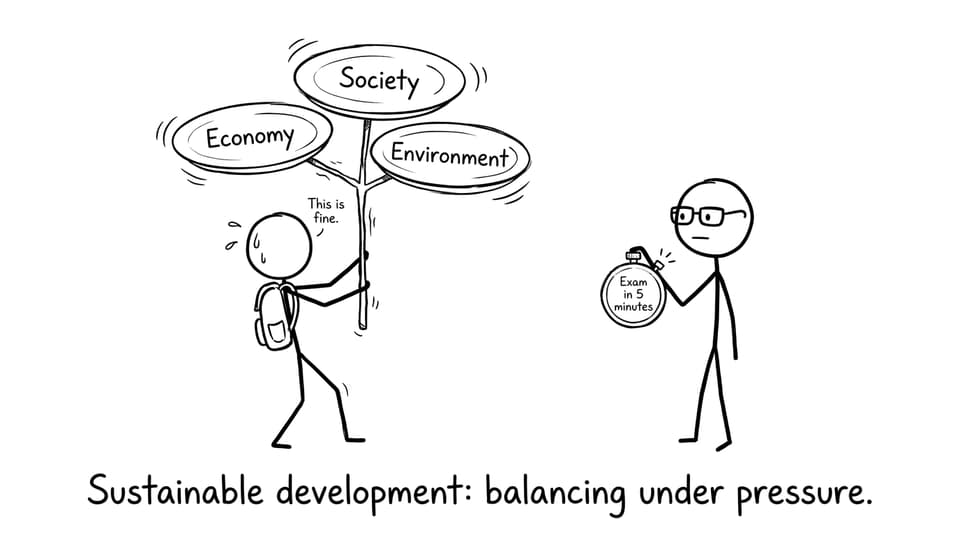
A reliable way to frame it is through the three pillars:
-
Economic development: growth, employment, infrastructure, poverty reduction
-
Social sustainability: equality, inclusion, access to education and healthcare, political participation
-
Environmental sustainability: resource limits, pollution, climate stability, biodiversity
For syllabus-aligned support, use Development and Sustainability resources alongside the wider IB Global Politics hub.
The three pillars (and why they clash)
Economic pillar: growth with consequences
Economic development is often defended as urgent: people need jobs now, states need revenue now, and politicians need results by the next election. In IB Global Politics, you can connect this to legitimacy: leaders maintain authority when citizens see tangible improvements.
But sustainable development asks a harder question: growth for whom, and at what cost?
Social pillar: development that counts everyone
Social sustainability focuses on fairness and access. If development excludes minority groups, deepens inequality, or limits political participation, it can create long-term instability. This is where IB Global Politics links development to rights, justice, and structural power.
If you need quick concept refreshers before practising essays, pair your reading with Core ideas in development and sustainability notes.
Environmental pillar: borders don’t stop the damage
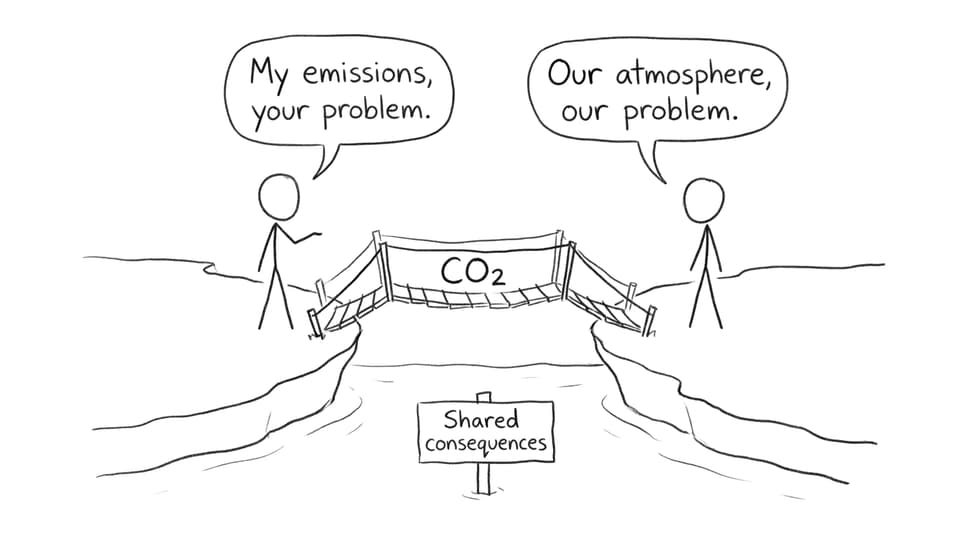
Environmental sustainability is political because the impacts don’t respect sovereignty. Climate change, deforestation, and water scarcity spill across borders and force cooperation, bargaining, and sometimes conflict.
For exam-ready structure on this theme, review Sustainable development revision notes and then test yourself with Sustainable development flashcards.
A mini checklist for exam answers (Paper 1 and Paper 2)
Use this quick checklist to turn sustainable development into analysis in IB Global Politics:
-
Define sustainable development clearly (one sentence)
-
Identify which pillar(s) the example prioritises
-
Name key actors (state, NGO, IGO, corporations, local communities)
-
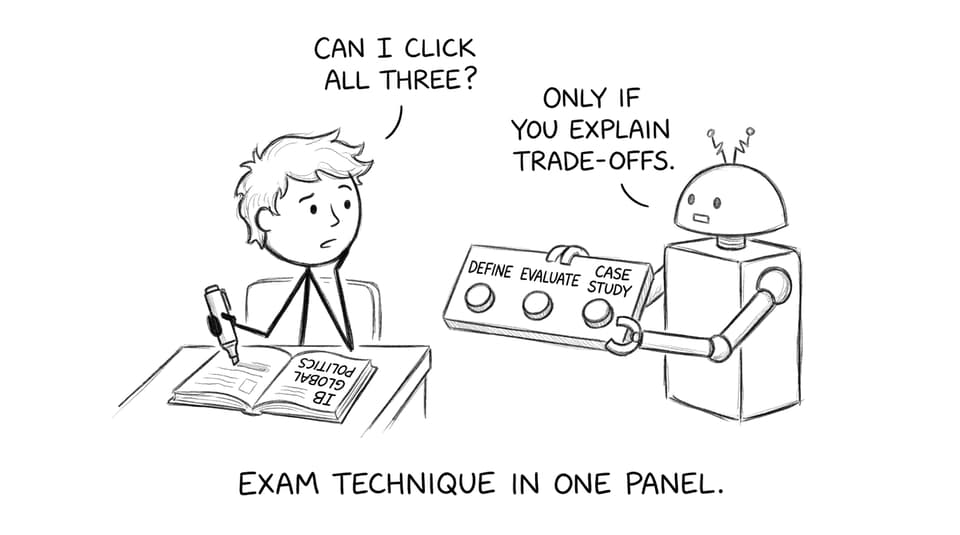
Explain trade-offs and who carries them
-
Add a counterclaim (for balance)
-
Conclude with a judgement linked to the question
To sharpen source analysis and timing, use the Paper 1 guide notes. For essay structure and command terms, use the Paper 2 guide notes.
Why sustainable development is contested in IB Global Politics
Sustainable development is often criticised as vague or rhetorical: everyone supports it, but actors disagree on what it requires. Developing states may argue they need space to industrialise. Wealthier states may promote green goals while maintaining high consumption. Corporations may adopt sustainability language without changing incentives.
This is gold in IB Global Politics essays because it pushes you into evaluation: sustainability isn’t a technical fix. It’s a dispute about power, responsibility, and time.
For deeper practice on argumentative angles, see Debates on development and sustainability.
Conclusion: make the concept work for you
Sustainable development in IB Global Politics is a test of maturity: can you hold multiple truths at once: growth matters, justice matters, and nature has limits. When you revise, don’t just memorise the pillars. Practise weighing them.
If you want to turn this topic into marks, build a routine on RevisionDojo: learn with Study Notes, drill with Flashcards, apply with the Questionbank, then pressure-test your writing using Mock Exams, Predicted Papers, and grading tools. Sustainable development is a debate, and RevisionDojo helps you argue it clearly.