


Market equilibrium is the moment the market stops arguing
In IB Economics, you can almost hear a market negotiating.
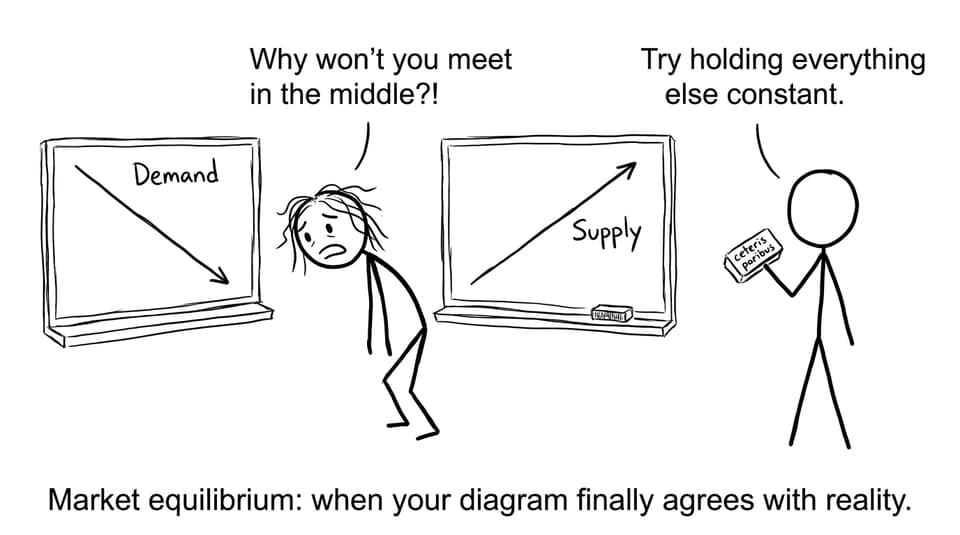
A buyer wants a lower price. A seller wants a higher one. And then, quietly, the argument settles. Not because everyone is happy, but because nobody has a strong reason to change what they are doing.
That resting point is market equilibrium--and it is one of the most exam-friendly ideas in microeconomics because it turns messy real-world behavior into a clean diagram and a clear chain of reasoning.
If you want the syllabus-aligned version with topic navigation, start with Economics - IB Resources.
Quick checklist for IB Economics answers
Before you draw or write, keep this IB Economics checklist in your head:
-
Define equilibrium: Qd = Qs at a specific price
-
Label axes correctly: Price (P) on vertical, Quantity (Q) on horizontal
-
Identify Pe and Qe at the intersection
-
Use the words shortage (excess demand) and surplus (excess supply) precisely
-
Explain the price mechanism: how prices move the market back toward equilibrium
For definition wording that examiners like, pair this guide with Define Supply and Demand - IB Economics.
What is market equilibrium in IB Economics?
Market equilibrium in IB Economics is the price level where the quantity demanded equals the quantity supplied.
-
Equilibrium price (Pe): the price at which buyers and sellers agree through the market
-
Equilibrium quantity (Qe): the amount actually traded at that price
At equilibrium there is no tendency for the price to change, because there is neither excess demand nor excess supply.
If you want a tight, syllabus-matched explanation of the diagram language, use 2.3.1 Demand and supply curves forming a market equilibrium (Notes).
The price mechanism: how markets correct surpluses and shortages
The magic in IB Economics is not the intersection itself. It is the adjustment story you tell around it.
When price is above equilibrium (surplus)
If the market price is set above Pe, producers supply more than consumers want to buy. Inventory builds up. Firms respond by lowering prices or offering incentives. The lower price increases quantity demanded and decreases quantity supplied until the market returns to equilibrium.
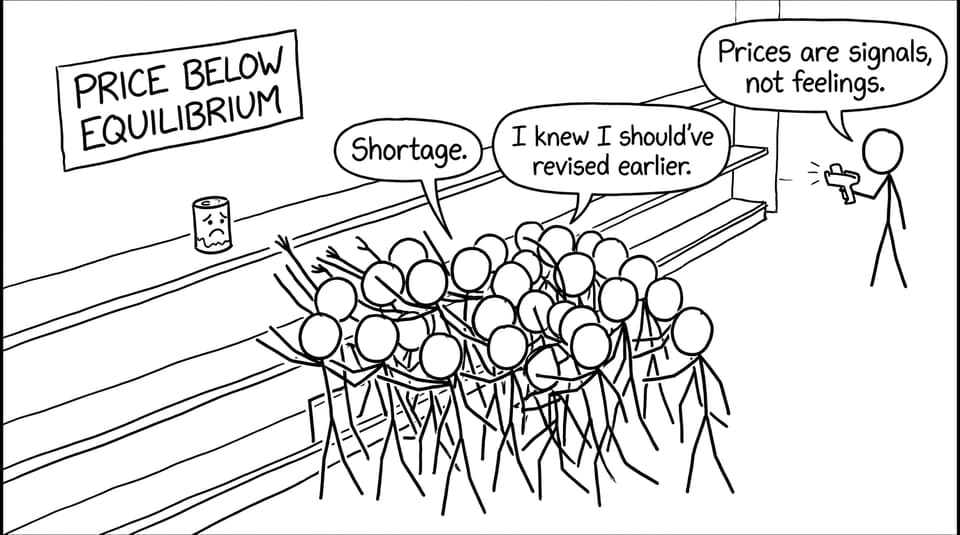
When price is below equilibrium (shortage)
If the market price is below Pe, consumers want to buy more than firms are willing to supply. Shelves empty fast. Some buyers are willing to pay more, and firms notice. Prices rise, which reduces quantity demanded and increases quantity supplied, again pushing back toward equilibrium.
How shifts create a new equilibrium (the part Paper 1 loves)
Equilibrium is not a fixed destination. In IB Economics, you treat it like a moving target that changes whenever demand or supply shifts.
Increase in demand (D shifts right)
When demand increases, the new intersection typically means:
-
Higher Pe
-
Higher Qe
A simple example is rising incomes increasing demand for normal goods. For more practice on how supply-side factors change outcomes, see IB Economics: How Technology Shifts the Supply Curve.
Decrease in supply (S shifts left)
When supply decreases, the new equilibrium usually becomes:
-
Higher Pe
-
Lower Qe
Think droughts, input cost spikes, or supply chain disruptions.
For the full topic pathway (including subtopics like efficiency at equilibrium), go to 2.3 Competitive Market Equilibrium.
Where RevisionDojo fits into your equilibrium prep
Most students lose marks on equilibrium not because they do not understand it, but because they cannot execute it quickly under time pressure.
RevisionDojo helps you build that speed and precision: use the Study Notes and Videos to lock the logic, then use the Questionbank for exam-style repetition with feedback. When you want rapid recall, the Flashcards keep definitions like “willing and able” and “no tendency for price to change” ready on demand.
Useful starting points:
-
IB Economics Topic 2.3 Competitive Market Equilibrium Questionbank
-
Videos for 2.3.1 Demand and supply curves forming a market equilibrium
Final takeaway: equilibrium is a story you can repeat under pressure
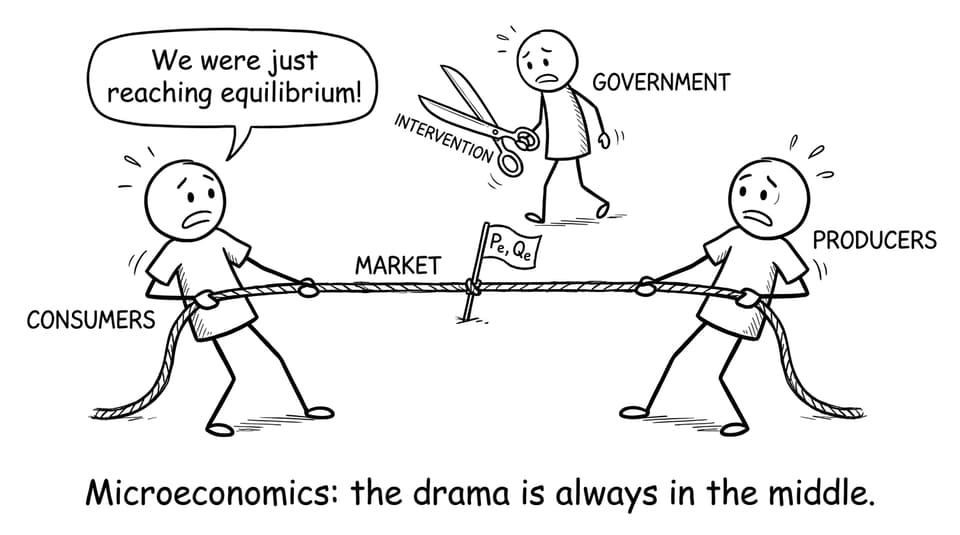
In IB Economics, market equilibrium is where Qd = Qs, creating an equilibrium price and quantity with no surplus or shortage. Learn the diagram, but also learn the narrative: when the market is pushed away from equilibrium, the price mechanism pulls it back.
If you want to turn that narrative into marks, revise with RevisionDojo’s Study Notes, drill with the Questionbank, lock definitions with Flashcards, and use AI Chat when your explanation feels almost right but not quite exam-ready.