Constructivism in IB Global Politics (the moment the world stops being “fixed”)
In IB Global Politics, most students start revision expecting the world to behave like a chessboard: power pieces move, alliances form, someone wins. Then constructivism arrives and quietly asks a different question: what if the board itself is a story we collectively agreed to believe? That shift feels small, but it changes how you explain conflict, cooperation, legitimacy, and even what counts as “national interest.”
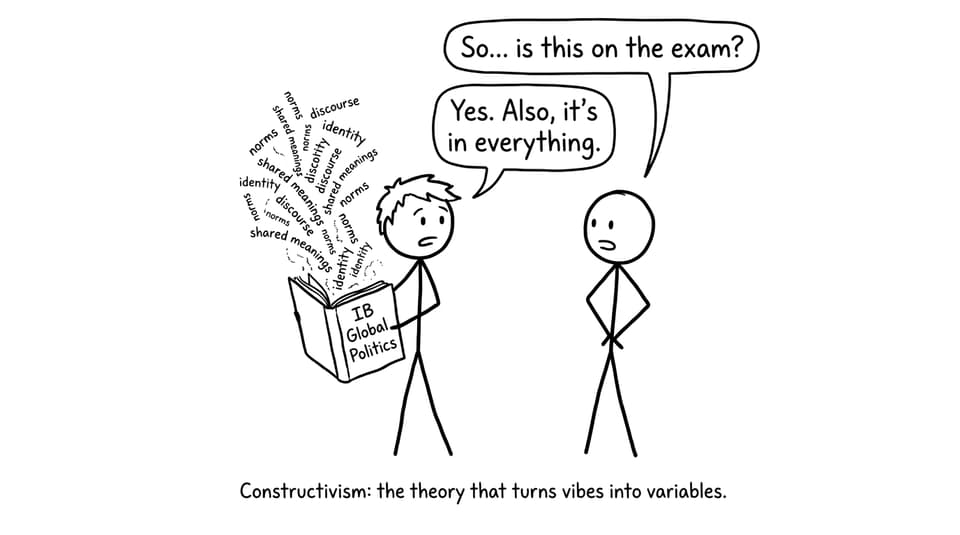
Constructivism comic: vibes into variables
If you want a quick home base for the course while you revise IB Global Politics, keep the Global Politics - IB Resources hub open alongside your notes.
Quick constructivism checklist (exam-ready)
Use this when you need to apply constructivism fast in IB Global Politics:
Ideas shape what actors believe is possible or normal
Norms set “appropriate behaviour” (and change over time)
Identity shapes interests (who an actor thinks they are)
Discourse/language frames what an issue
min read
min read
min read
min read
means
The international system is not just material; it is socially constructed
What constructivism actually claims in IB Global Politics
Constructivism is a major theoretical lens in IB Global Politics because it argues that political reality is built through shared meaning. Realists emphasise material power and security. Liberals emphasise institutions and cooperation. Constructivists focus on the “invisible architecture” underneath both: ideas, norms, identities, and the stories actors tell about themselves and others.
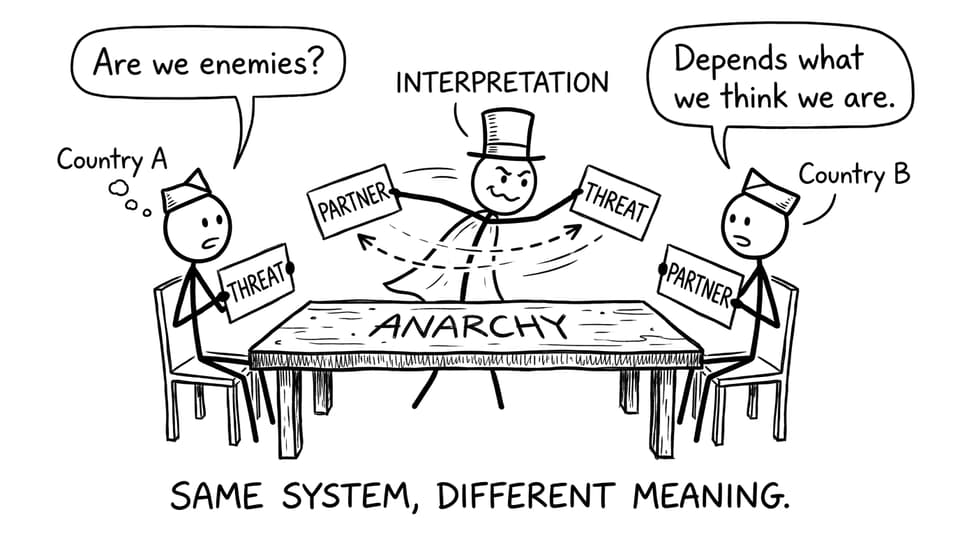
A core claim is that the international system is shaped by what states (and other actors) believe it is. Even “anarchy” is not a single, automatic outcome. It is a condition that gets interpreted. Those interpretations then shape behaviour.
Anarchy doesn’t force conflict; interpretation does
In IB Global Politics, you can score higher by showing that constructivists do not treat conflict as inevitable. Two states can face the same strategic situation and behave differently because they interpret each other differently. If they see each other as threats, they prioritise deterrence and competition. If they see each other as partners, they invest in trust-building and cooperation.
Anarchy interpretation comic
This is also where your comparisons get sharper. If you need a clean contrast for essays in IB Global Politics, see Realism vs Liberalism in Global Politics and then add constructivism as the “meaning and identity” lens.
Identity, norms, and discourse: the three levers you can actually use
Identity: interests aren’t fixed
Constructivism argues that actors pursue interests based on who they think they are. A state that identifies as humanitarian may justify intervention differently from a state that defines itself through nationalism or strategic dominance. In IB Global Politics, this helps explain why similar material capabilities can produce different foreign policy decisions.
Norms: what is “acceptable” shifts
Norms are shared expectations about appropriate behaviour. They shape laws, institutions, and reputations, and they evolve through interaction, debate, and social pressure. In exam answers, norms are a powerful bridge between evidence and theory: they help you explain change over time.
Discourse: language is a form of power
Constructivists pay close attention to framing. Calling something a “security threat” invites different policies than calling it a “humanitarian crisis.” This is how power can operate through legitimacy, persuasion, and agenda-setting, not only through force.
How to use constructivism in IB Global Politics exam answers
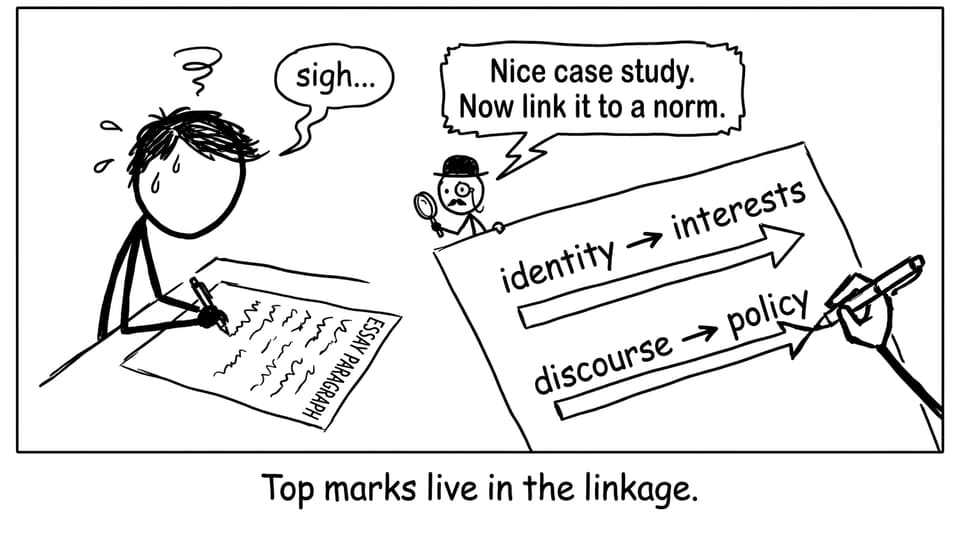
A reliable method is: define quickly -> apply to a specific example -> evaluate. The difference between mid-level and top-level answers is usually the linkage: you must show how identity, norms, or discourse caused behaviour.
Conclusion: why IB Global Politics students keep coming back to constructivism
Constructivism is worth mastering in IB Global Politics because it gives you language for the part of politics that is hardest to measure but easiest to miss: meaning. Once you can write about identity, norms, and discourse clearly, your essays start explaining why behaviour shifts, not just what happened.
If you want to turn that understanding into marks, build a routine on RevisionDojo: revise definitions with the Study Notes, drill applications in the Questionbank, lock in recall with Flashcards, test yourself with Mock Exams and Predicted Papers, and use AI Chat plus the Grading tools to tighten evaluation. When you need deeper support, the Tutors and Coursework Library help you keep your examples sharp and your theory accurate, exactly what examiners reward in IB Global Politics.