Communication is the reason your body can go from “sitting quietly” to “sprinting for the bus” without holding a team meeting first. In exercise physiology, communication means the way body systems send messages, receive feedback, and coordinate a response so movement stays efficient and internal conditions stay safe. For IB SEHS, this is a high-yield idea because it connects performance, control, and homeostasis in one neat loop.
If you can explain how the nervous system and endocrine system share the workload, you can earn marks in short definitions and long “discuss” questions. And you can stop writing answers that sound true but don’t score.
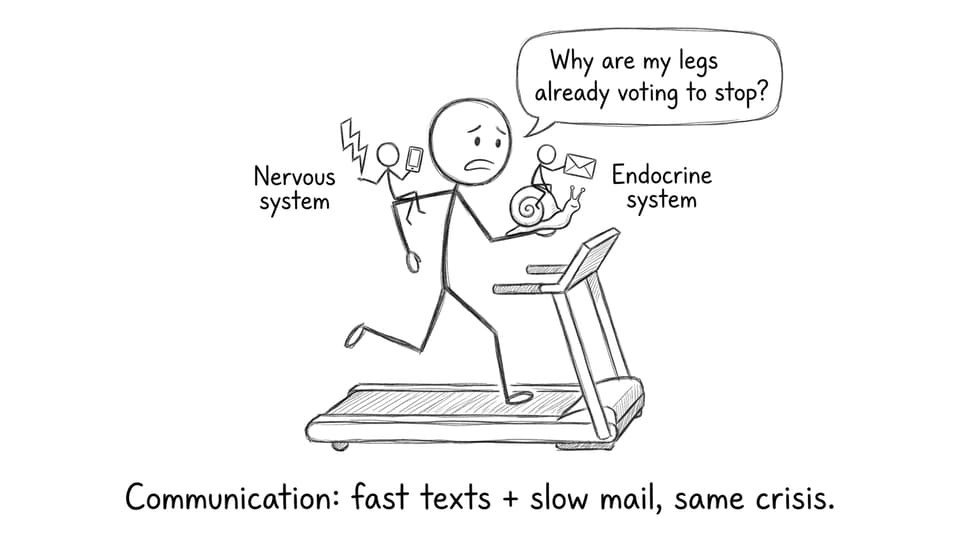
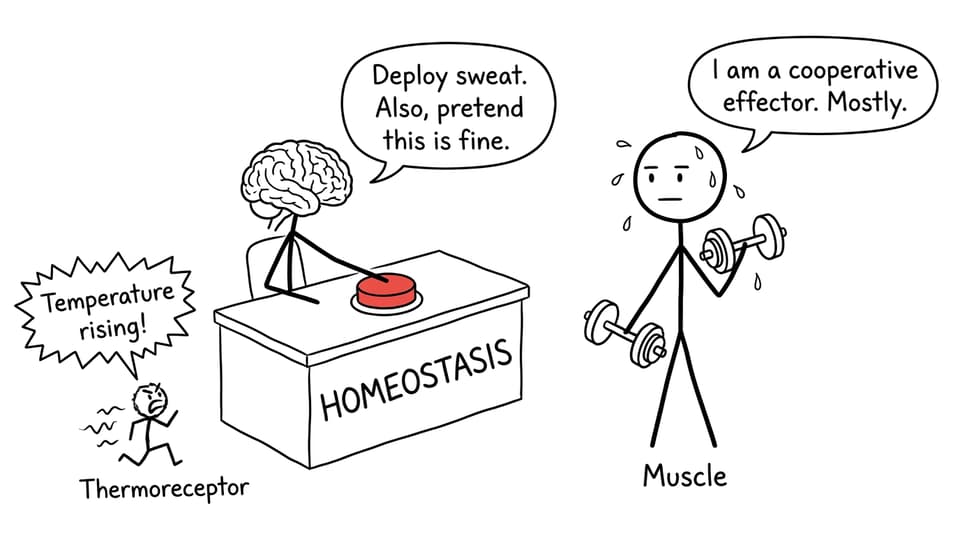
IB SEHS nervous vs endocrine comic
IB SEHS quick checklist: what to say in an exam answer
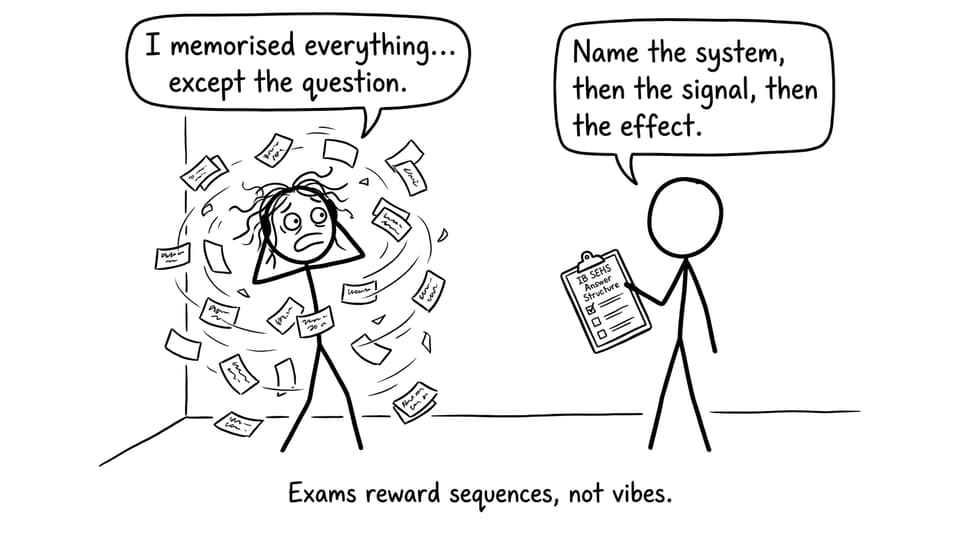
Use this mini-structure for IB SEHS questions on communication in exercise physiology:
State the two systems: nervous (fast) and endocrine (slower, longer-lasting)
Name the signal type: action potentials/neurotransmitters vs hormones in blood
Link to an exercise response: heart rate, ventilation, muscle contraction, fuel use
Add feedback: receptors send info back; the CNS/hypothalamus coordinates
Finish with the purpose: maintaining homeostasis while supporting performance
In IB SEHS, nervous system communication is your “instant message” pathway. Signals travel as electrical impulses along neurons, then cross synapses using neurotransmitters. The key advantage is speed: responses happen in milliseconds, which matters when you change pace, adjust technique, or react to an opponent.
During exercise:
The brain and spinal cord send motor commands through motor neurons to skeletal muscle
At the neuromuscular junction, neurotransmitters trigger muscle fibre contraction
Sensory receptors (proprioceptors, chemoreceptors, thermoreceptors) send feedback to the CNS
That two-way flow is how coordination, balance, and precision stay intact under fatigue. For a deeper, syllabus-aligned breakdown, use A.1.1 Inter-system communication Lessons.
Endocrine system communication during exercise (slower, sustained control)
The endocrine system is slower because hormones must be released from glands and carried in the bloodstream. But in IB SEHS, “slower” does not mean “less important.” Hormones are ideal for keeping longer efforts stable: regulating energy availability, fluid balance, and cardiovascular support across minutes to hours.
During exercise, hormones such as adrenaline (epinephrine) help raise heart rate and redistribute blood flow toward working muscles. Other hormones support glucose regulation and recovery processes. If you want the precise SEHS framing, revise A.1.1.2 The endocrine system and regulation of biological processes.
Communication and homeostasis (where marks usually live)
Most IB SEHS questions aren’t asking you to list facts. They want the logic of control: stimulus, detection, coordination, response, and return toward a set point.
That’s homeostasis: not “keeping everything constant,” but keeping key variables within safe limits while intensity changes.
Think: rising CO₂ triggers increased ventilation, rising temperature triggers sweating and skin blood flow changes, falling blood glucose triggers hormonal responses. Communication is the wiring that makes these corrections possible.
Use Questionbank plus RevisionDojo’s AI Chat and grading tools to tighten your phrasing
Then, when you are ready to simulate pressure, move to SEHS Papers or IB Predicted Papers to practise timing and stamina.
IB SEHS answer structure comic
Final takeaway for IB SEHS students
Communication in exercise physiology is your body’s internal coordination system: fast neural signals for immediate control, and slower hormonal signals for sustained regulation. In IB SEHS, the scoring move is to connect both systems to feedback and homeostasis, then anchor it in a real exercise example.
When you revise with RevisionDojo’s Study Notes, Flashcards, Questionbank, AI Chat, Predicted Papers, and Mock Exam-style practice, communication stops being a paragraph you memorise and becomes a process you can explain under pressure. That is the difference between “I kind of get it” and exam-ready clarity in IB SEHS.
IB SEHS goal setting in sport made simple: goal types, SMART targets, common mistakes, and exam-ready tips using RevisionDojo practice tools.